
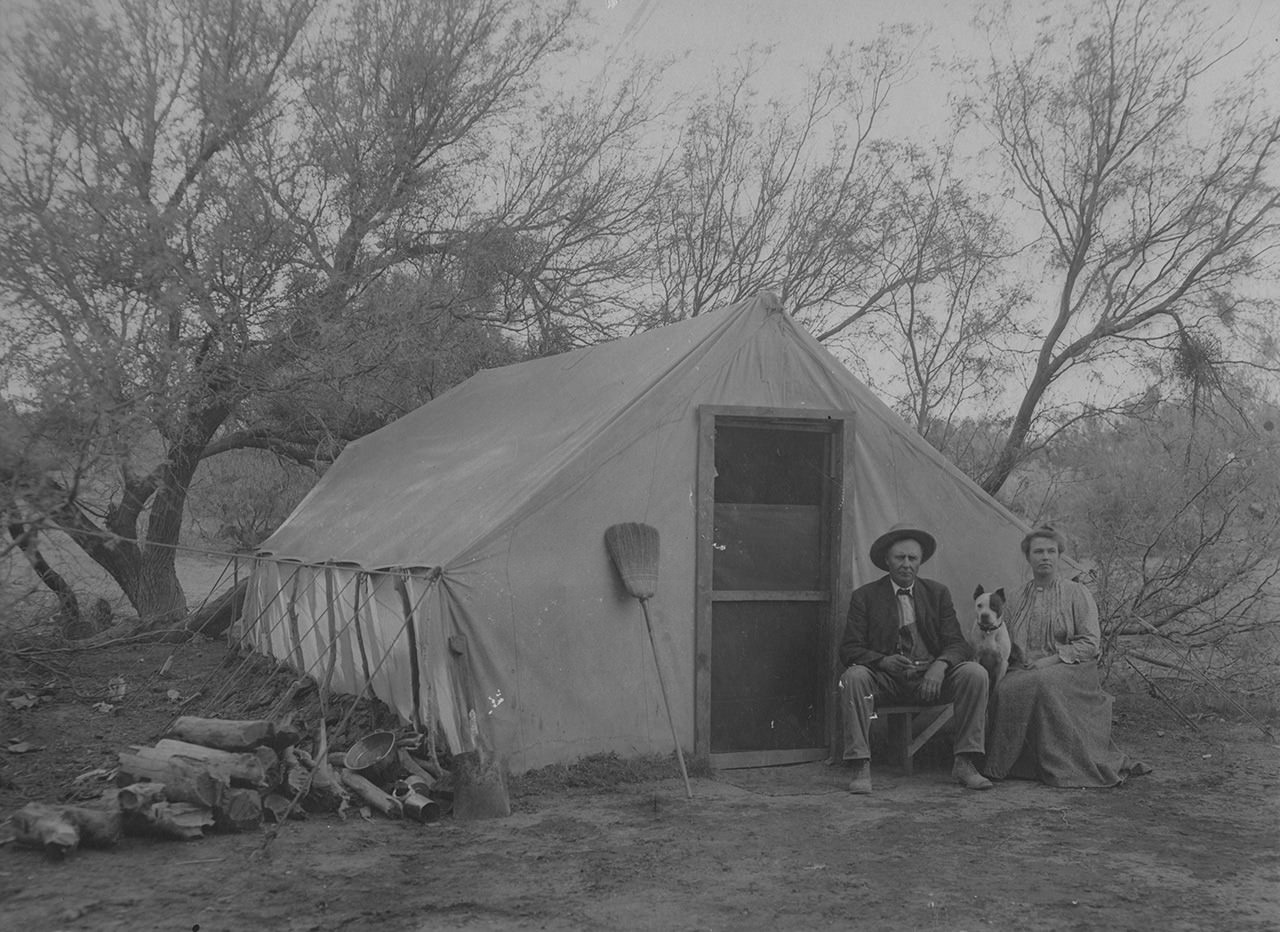
Before the first decade of the 1900s ended, the land that would become Las Vegas was dry, flat, and mostly empty. The Mojave Desert stretched in every direction. Summer temperatures pushed past 110°F. Water was scarce, and the few springs that existed were known only to the Southern Paiute people who had lived in the region for centuries. The valley floor had no permanent American settlements, no railroads, and no roads worth naming.
The Railroad Changes Everything
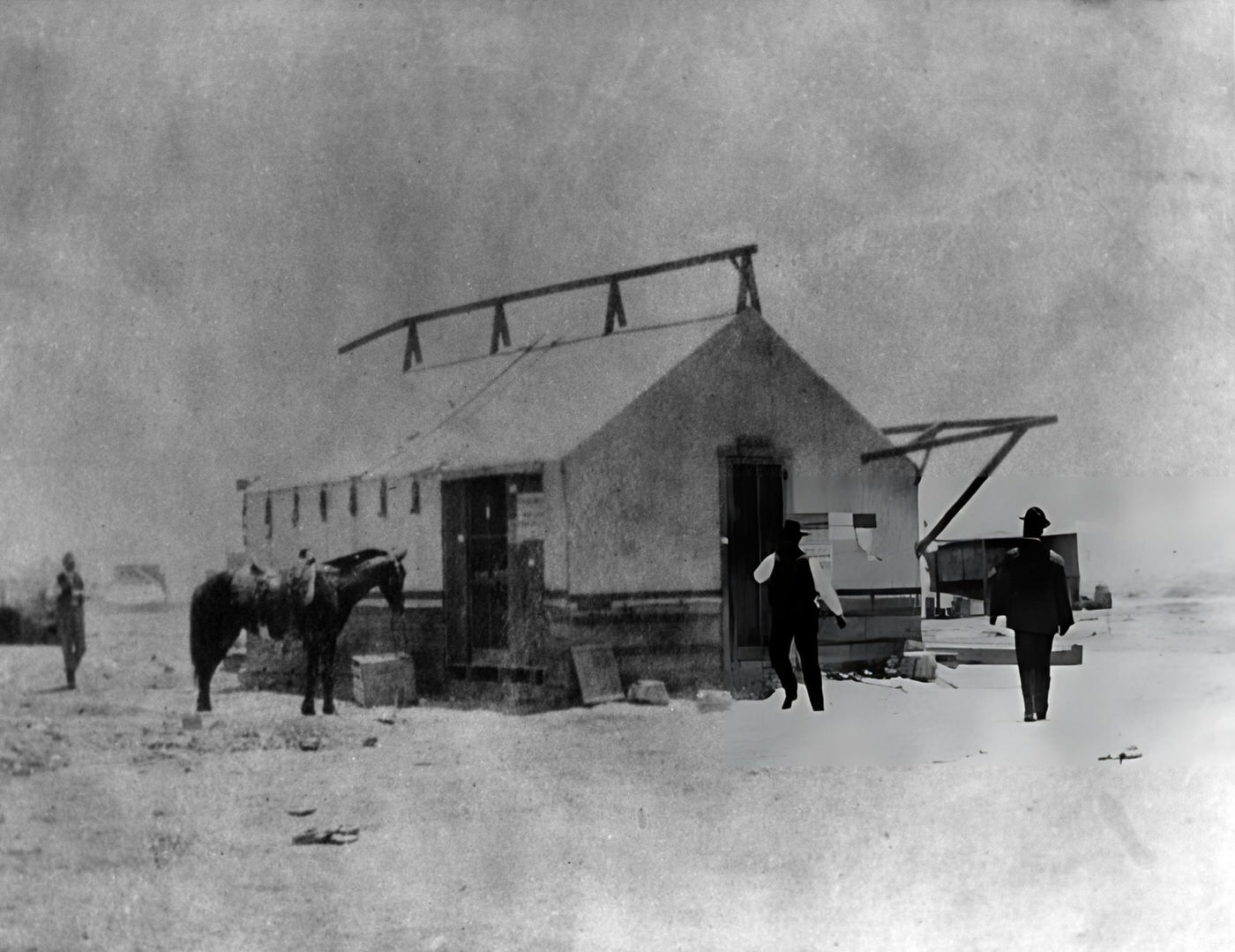
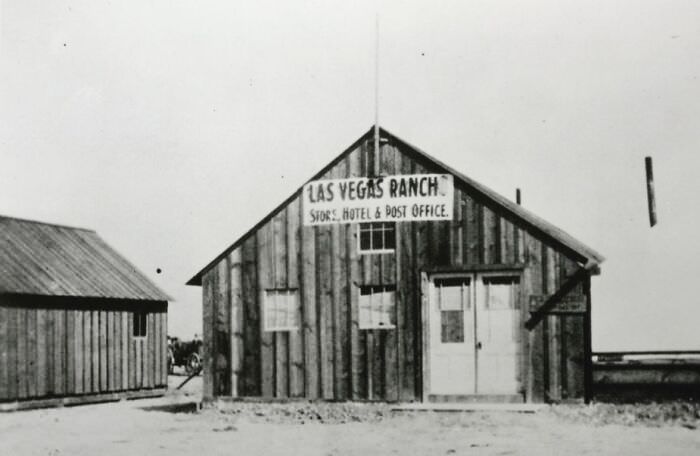
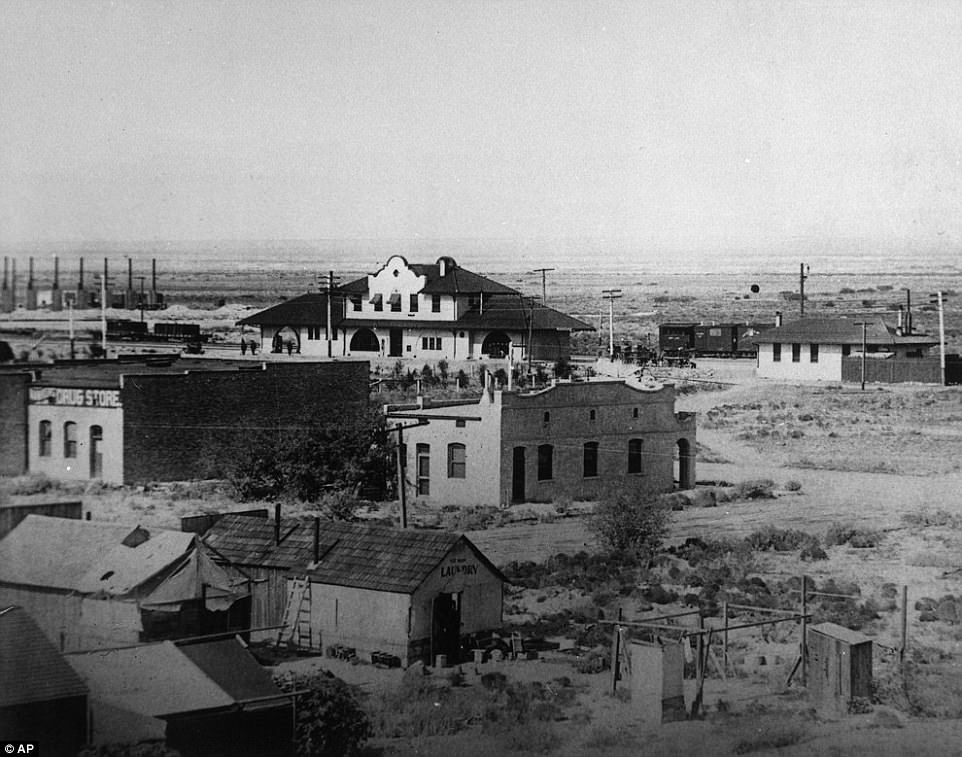
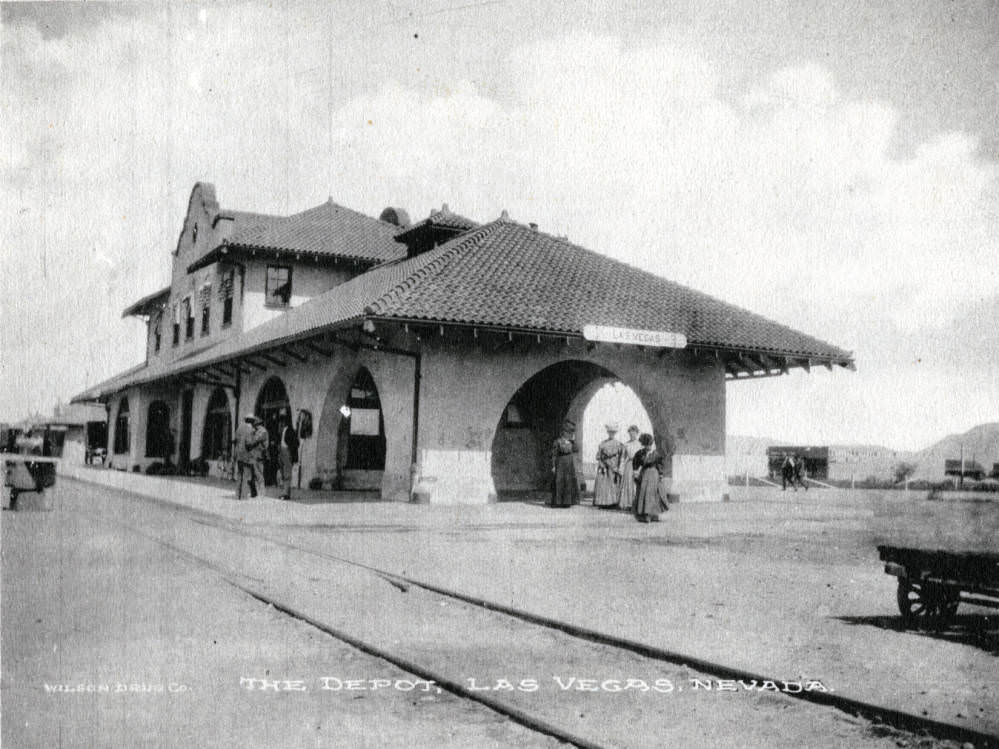
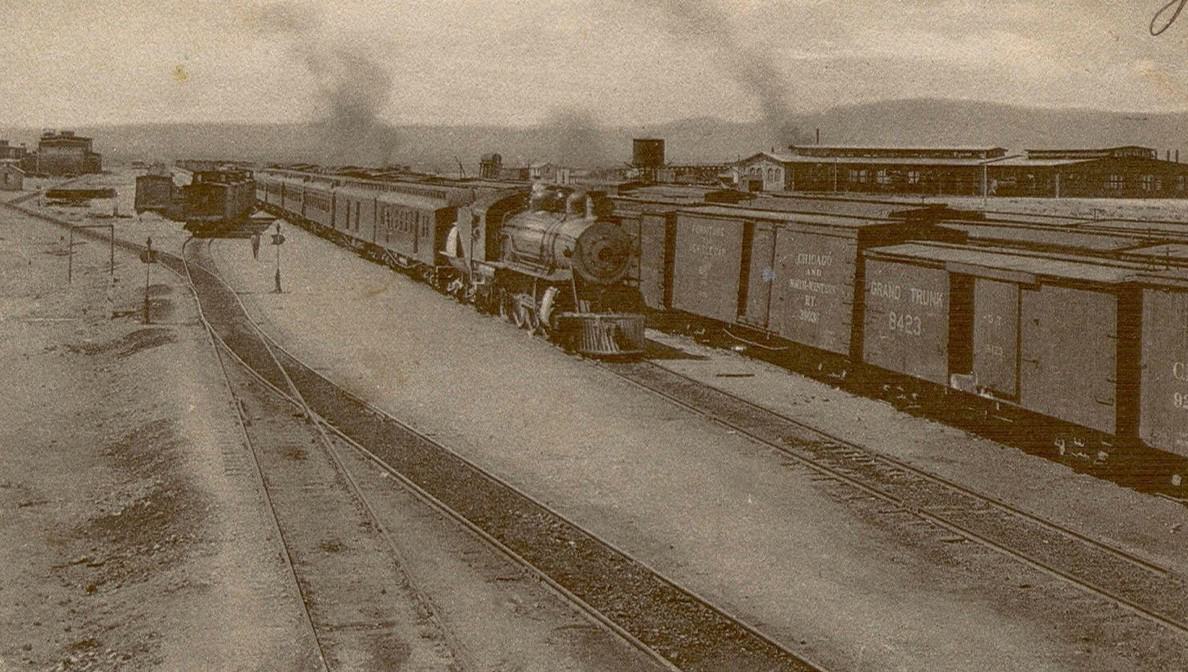
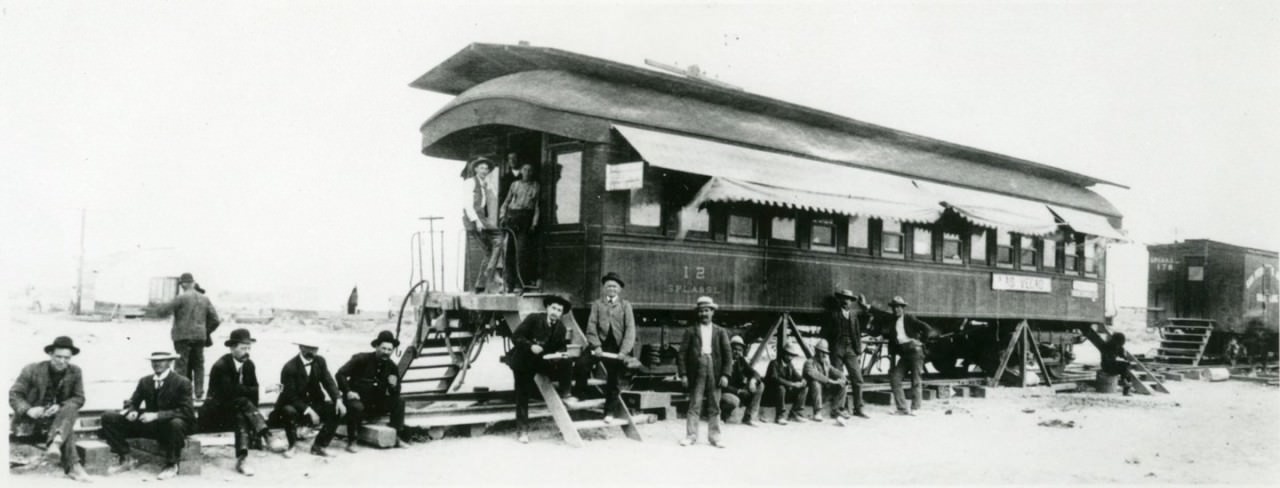
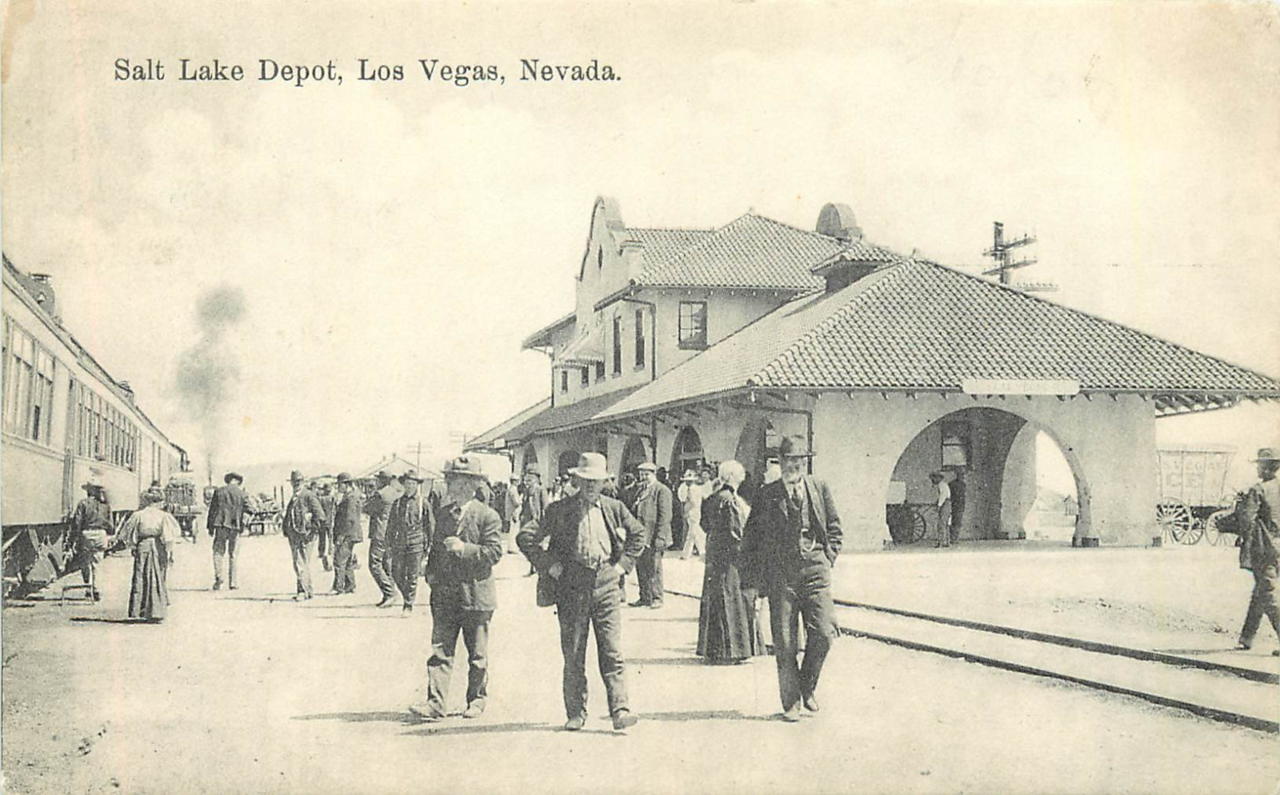
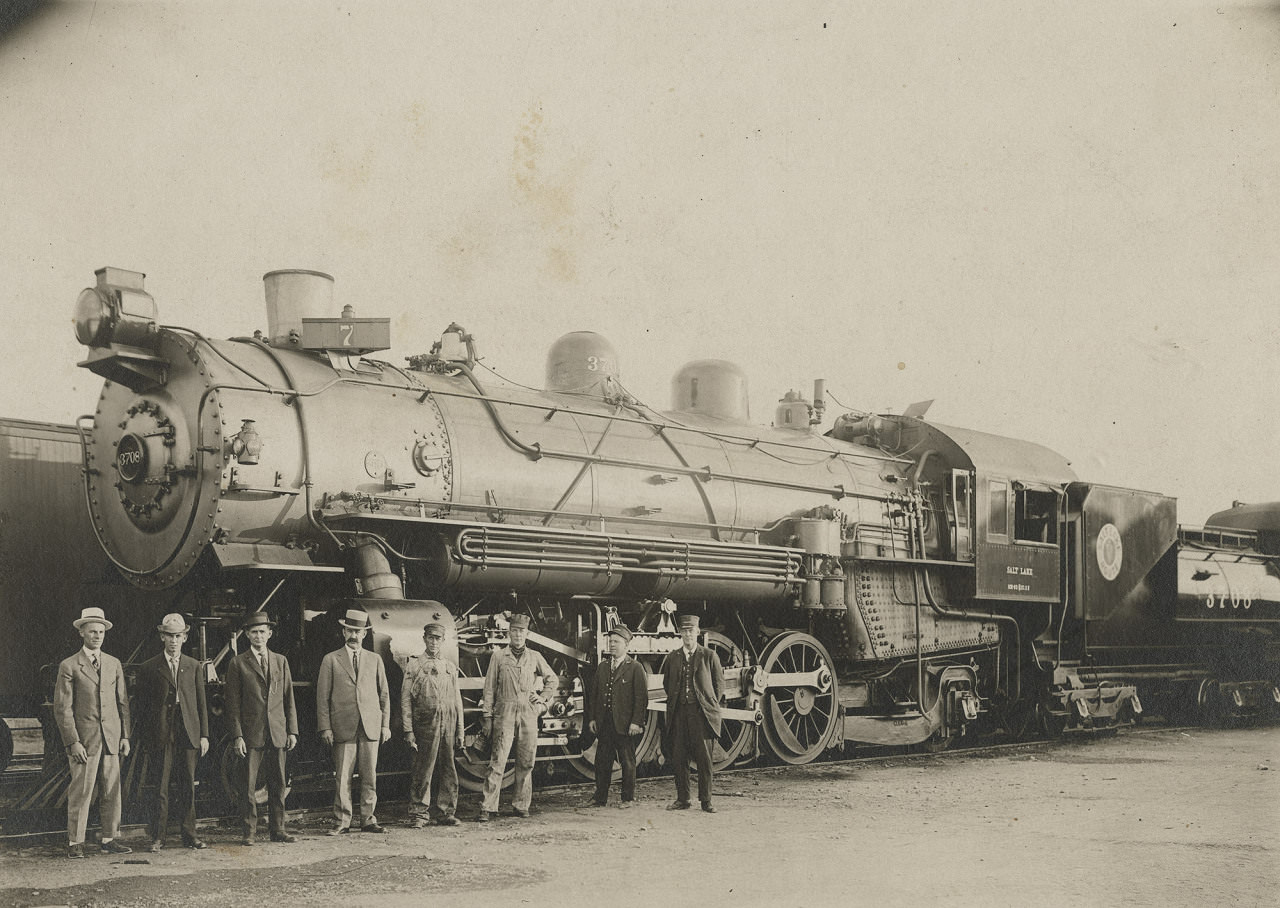
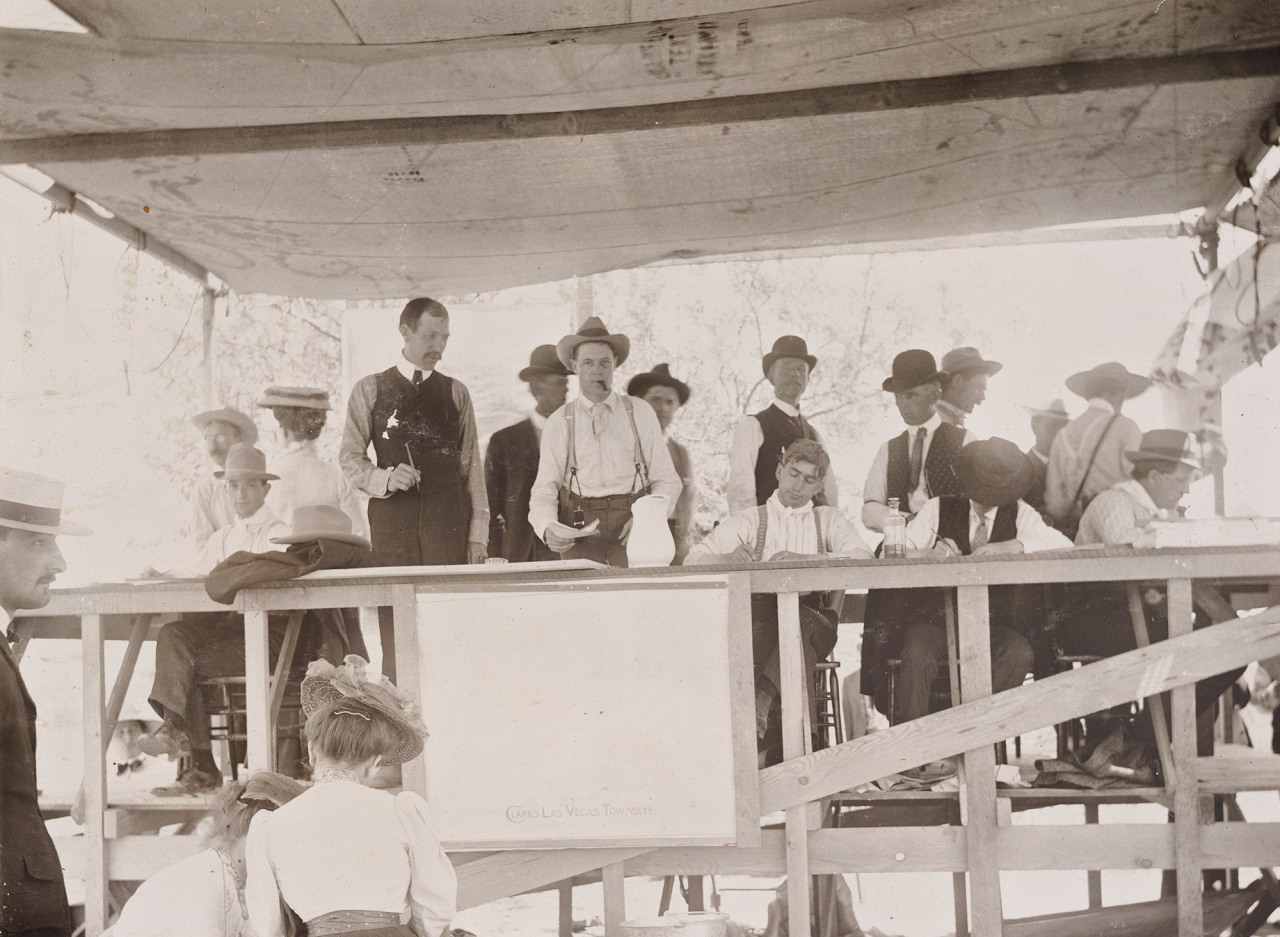
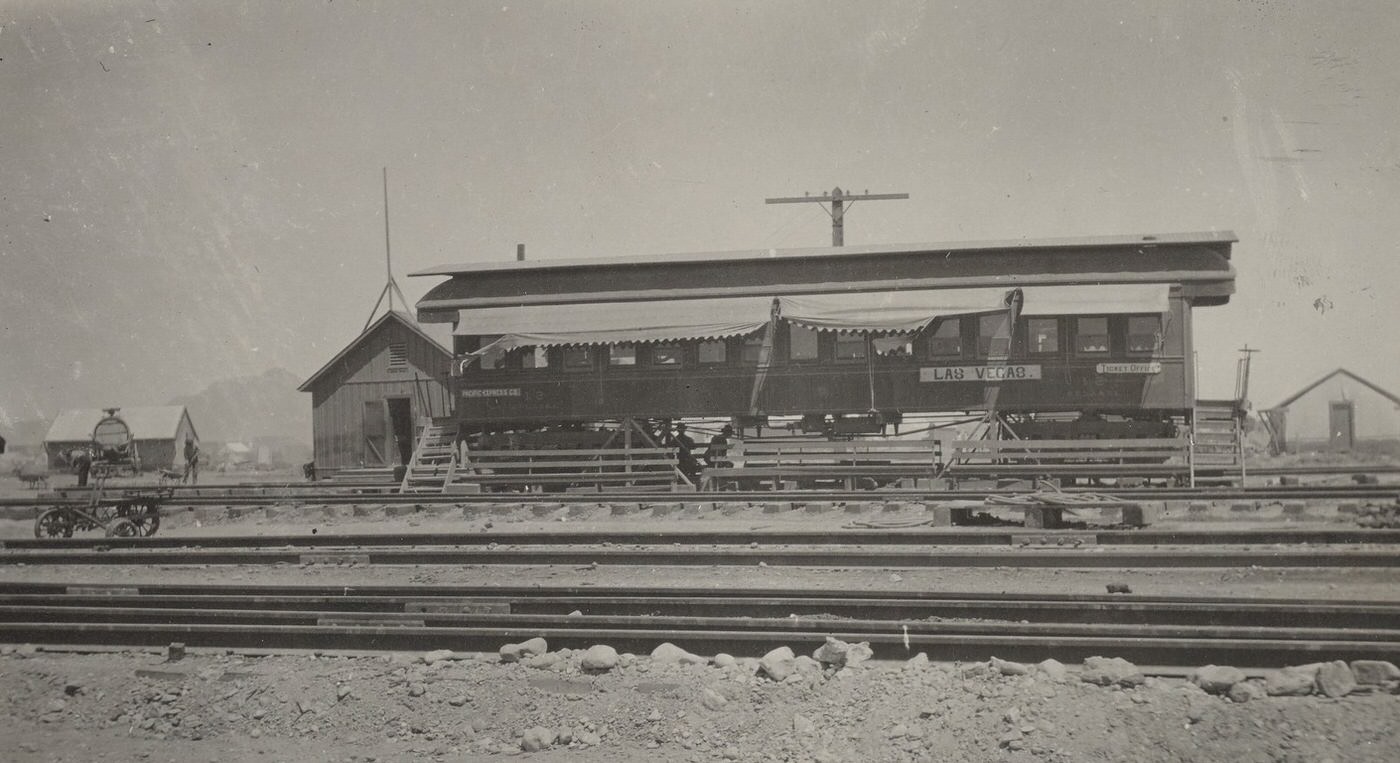
On May 15, 1905, the San Pedro, Los Angeles & Salt Lake Railroad held a land auction in the Las Vegas Valley. The railroad company had surveyed the area and realized it sat almost exactly halfway between Salt Lake City and Los Angeles on their new line. They needed a service stop — a place where trains could take on water and coal, where crews could rest, and where passengers could stretch their legs. The valley’s underground water supply, fed by ancient aquifers beneath the desert floor, made it a practical choice.
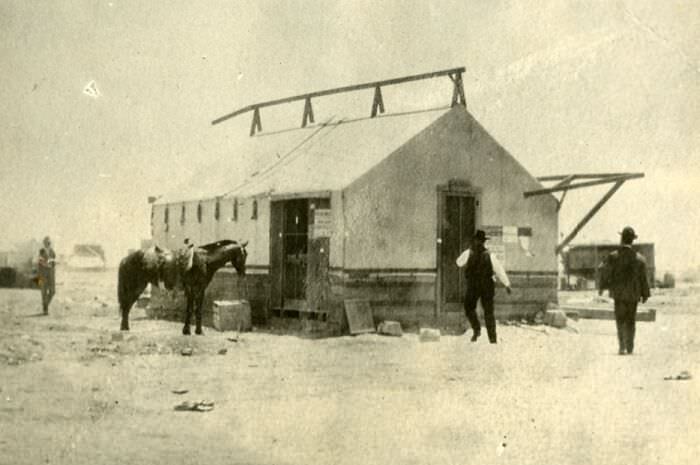
The auction drew hundreds of buyers, speculators, and settlers who arrived by train the day before. On auction day, 1,200 lots went up for sale in a single afternoon. By sundown, the railroad company had collected over $265,000. Men in suits haggled in the open desert heat while others bought sight unseen, betting that a railroad town in the Mojave would grow into something worth owning.
Two months later, Las Vegas was incorporated as a town. Its population was already around 1,500 people.
Block 16 and the Rules of a Railroad Town
The railroad controlled much of the early town’s layout and its rules. They divided the townsite into a grid and set strict restrictions on most of it. Alcohol was banned from most blocks under the terms of many property sales — but not all of them.
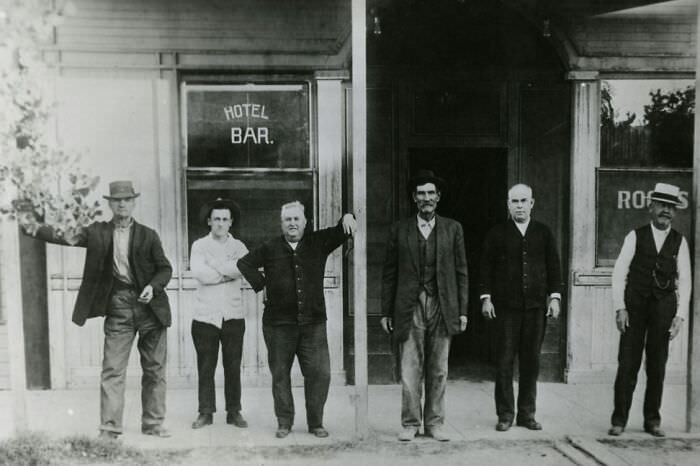
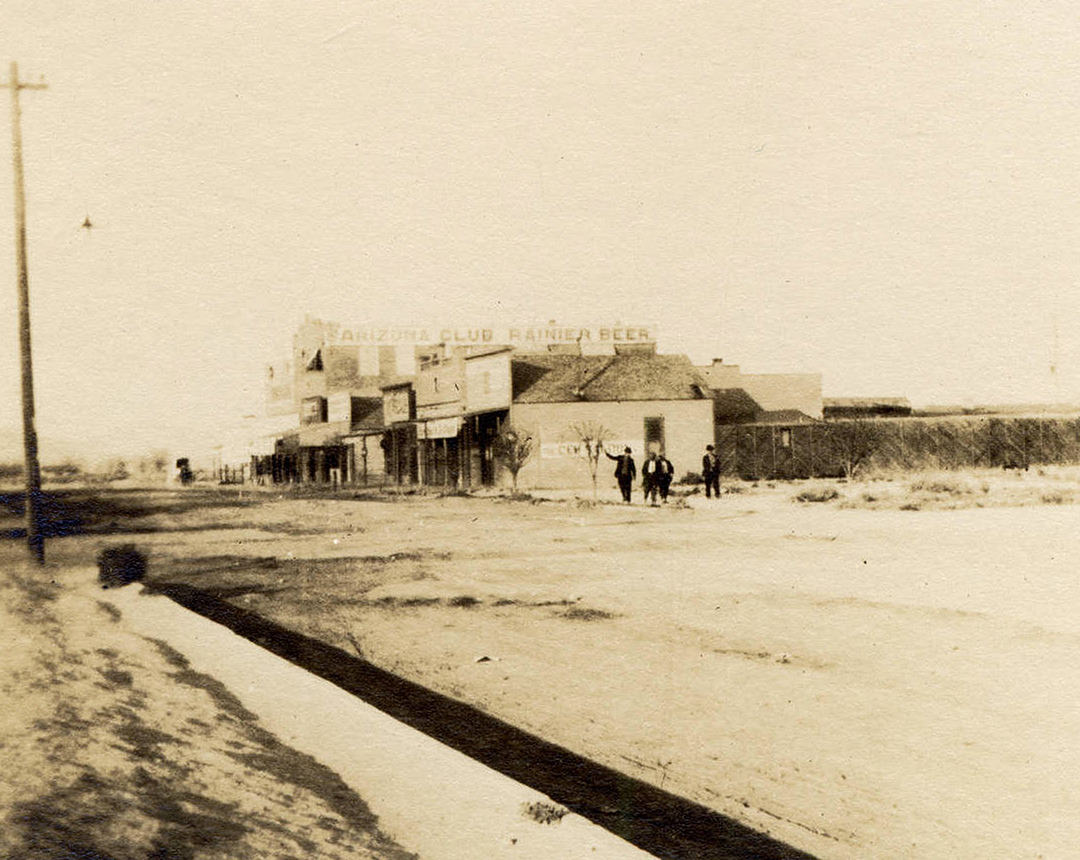
Block 16, one block north of the main railroad tracks on First Street, was specifically designated as the place where saloons, gambling halls, and brothels could operate legally. This wasn’t an accident or a loophole. Railroad towns all across the American West used the same system: keep the rowdy businesses in one zone so the rest of the town could develop as a respectable commercial and residential area. Block 16 became the raw, open core of early Las Vegas nightlife almost immediately after the auction.
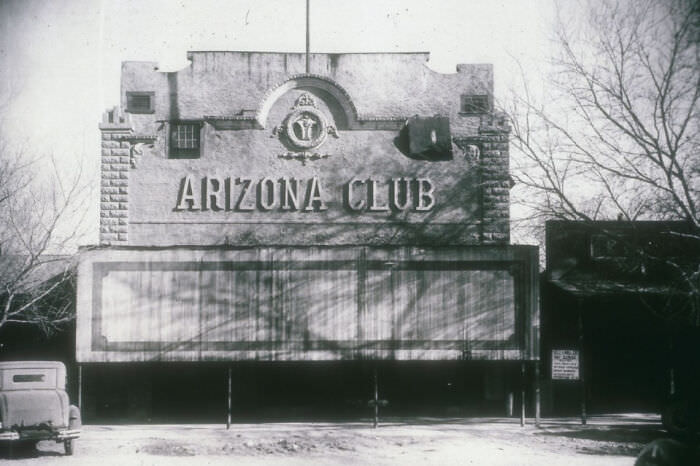
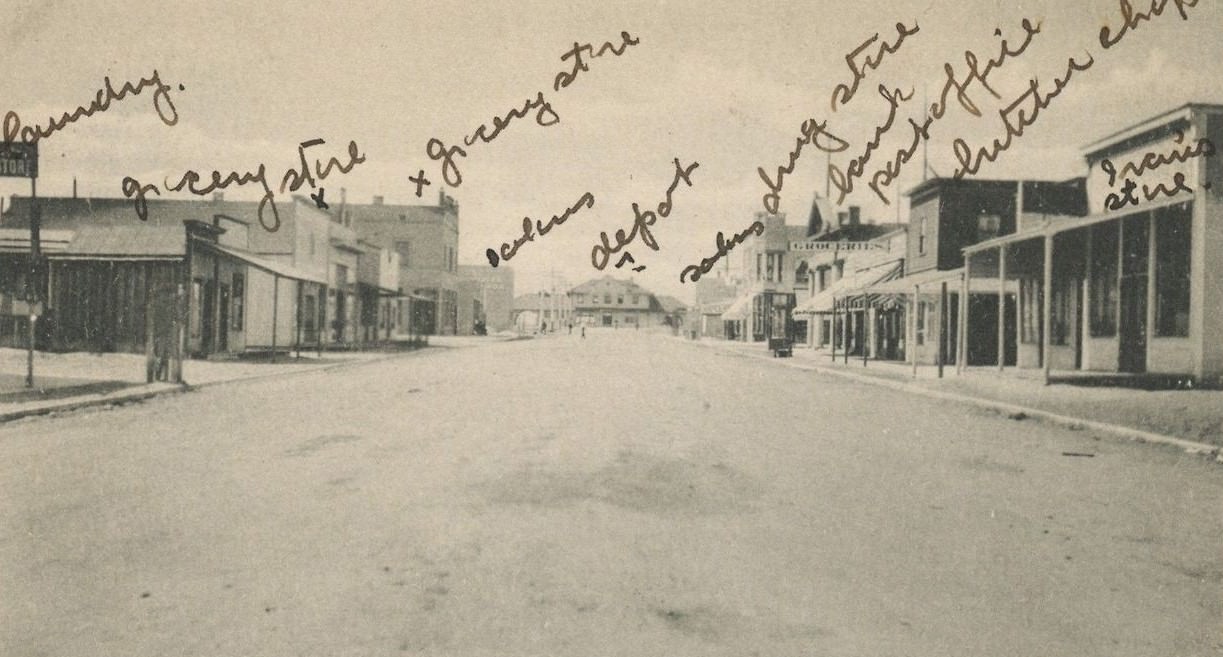
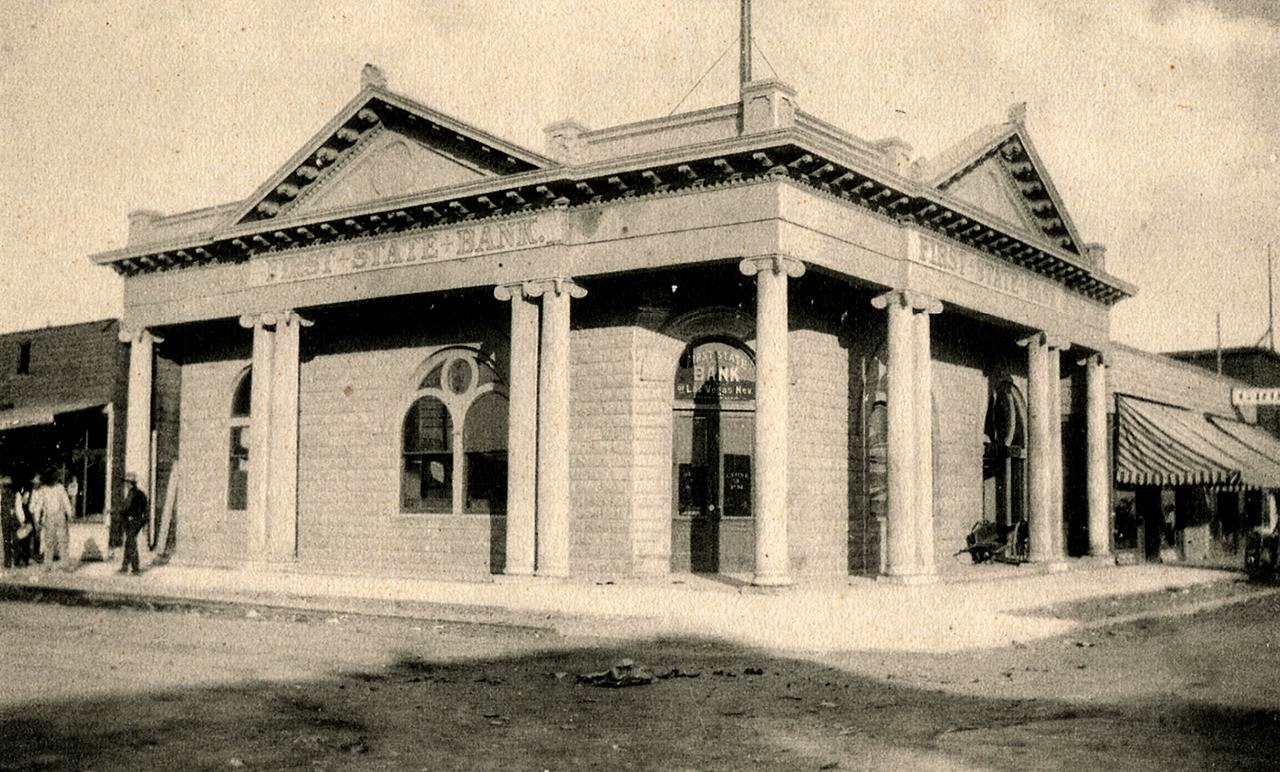
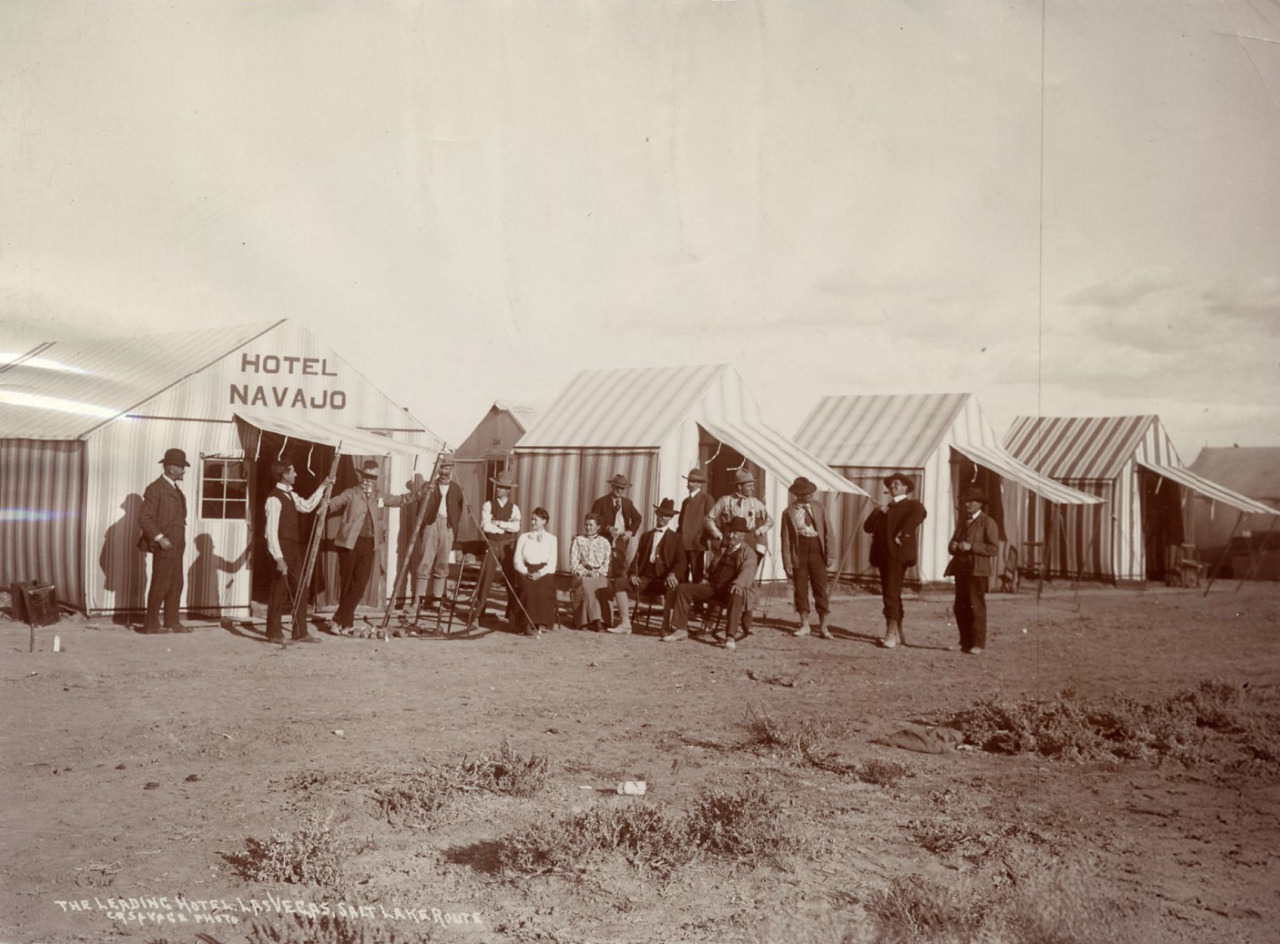
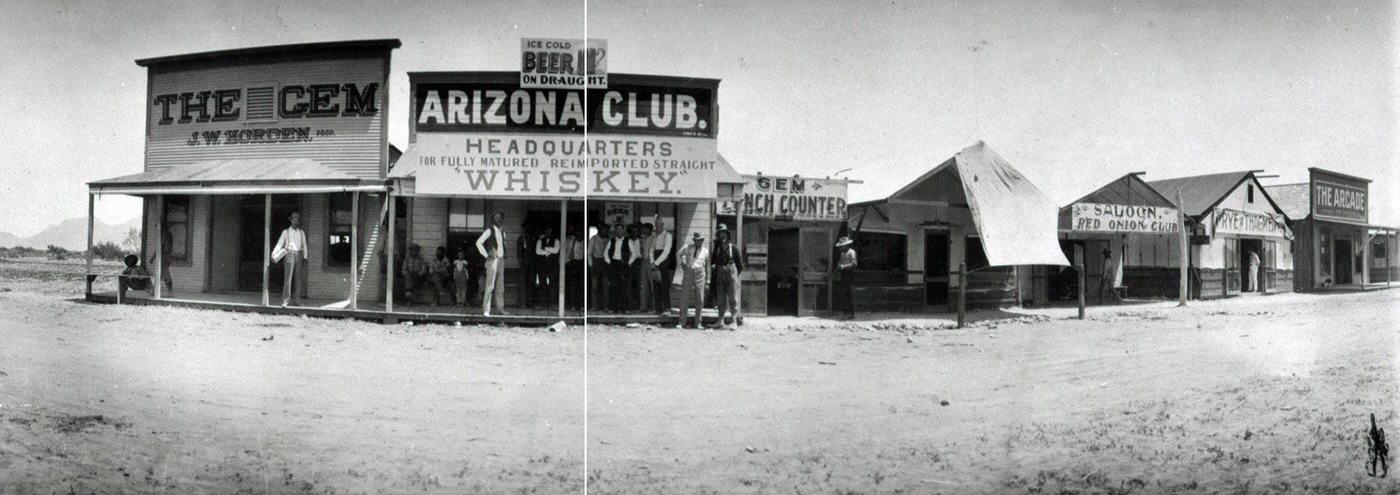
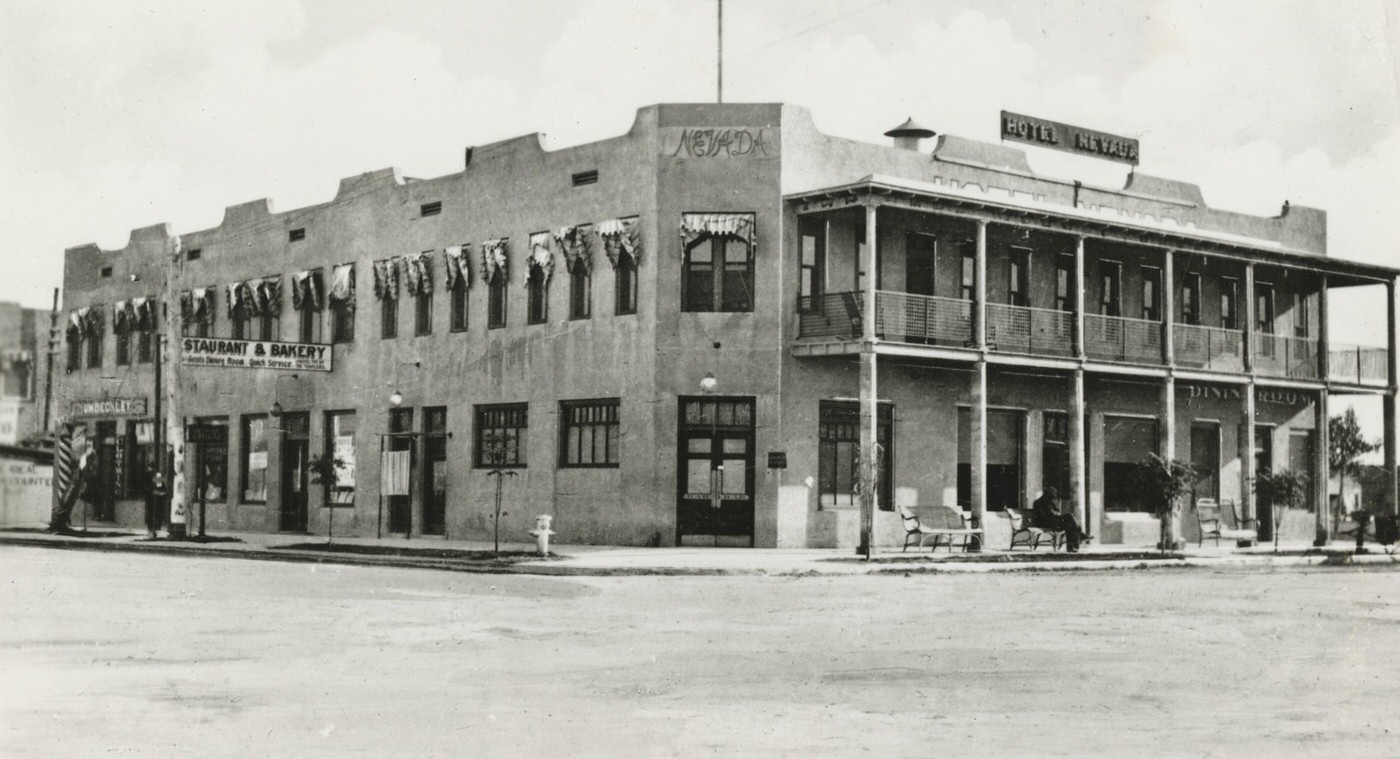
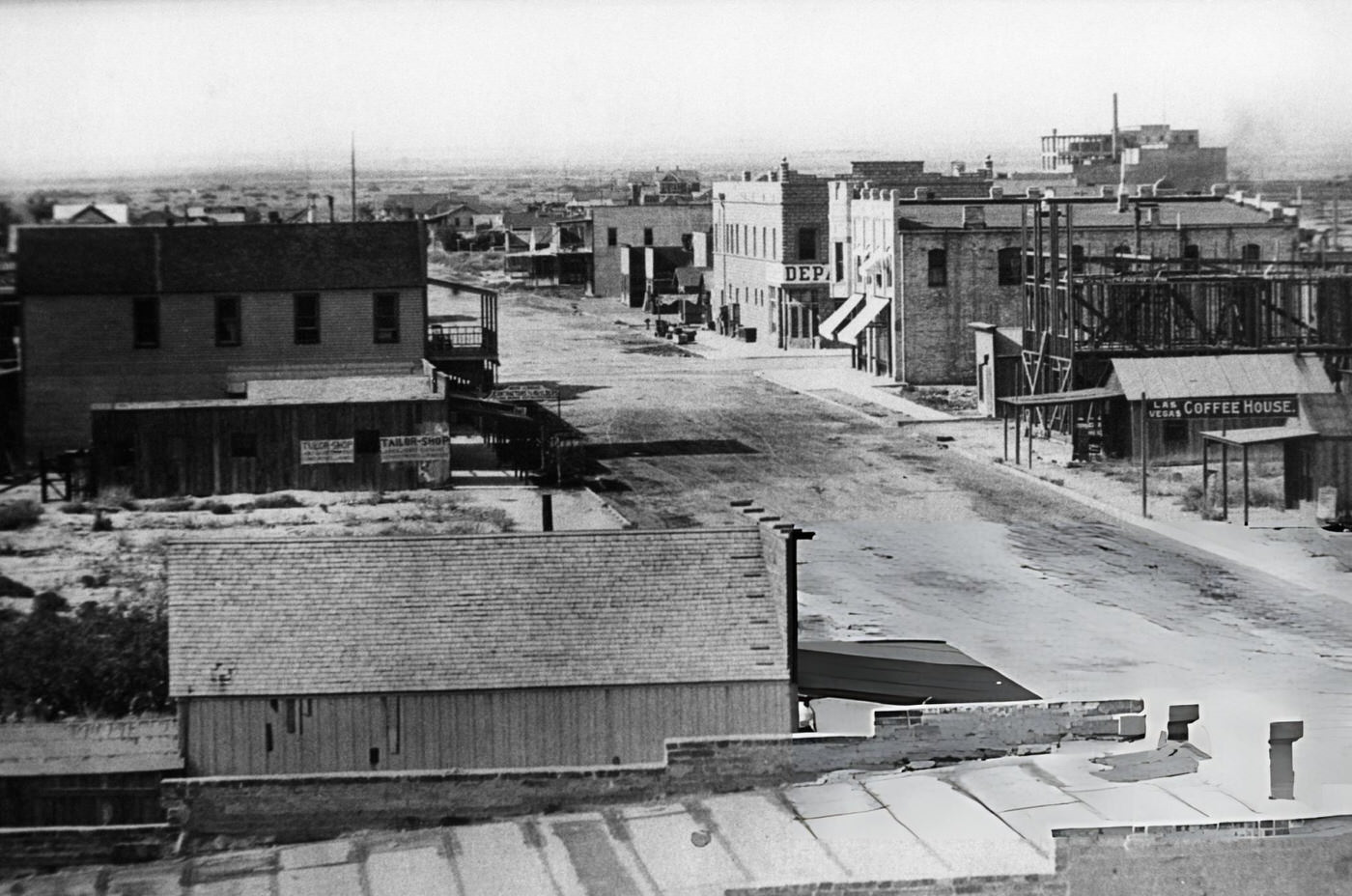
Saloons opened within days. By the end of 1905, Fremont Street — the town’s main commercial strip — had hardware stores, a newspaper, a bank, and several hotels. Block 16 had everything else. The Arizona Club, one of the most prominent establishments on the block, served liquor around the clock, operated a casino floor with card tables and roulette, and ran a brothel on its upper floors. It was not subtle about any of this. Neither were its competitors.
The Population and Who Came
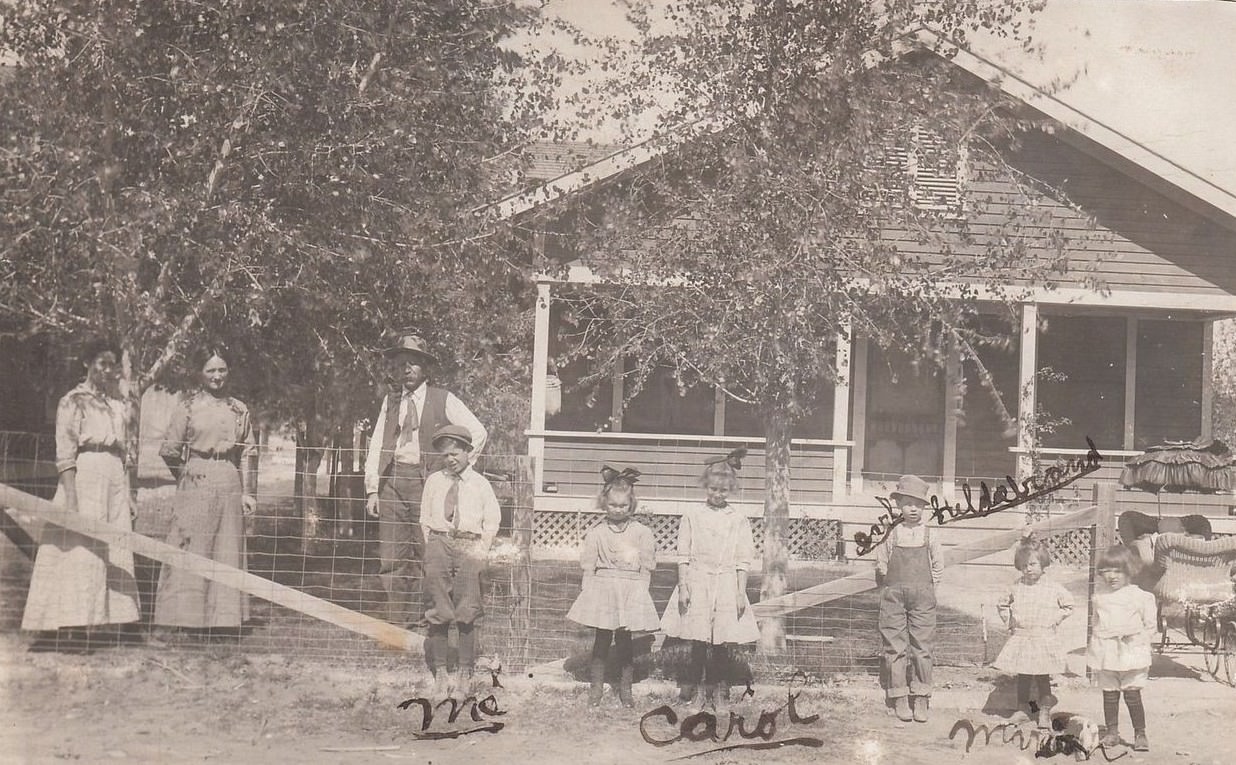
The early residents of Las Vegas were not settlers looking for farmland. Most of them came because of the railroad, and they came for specific reasons tied to it.
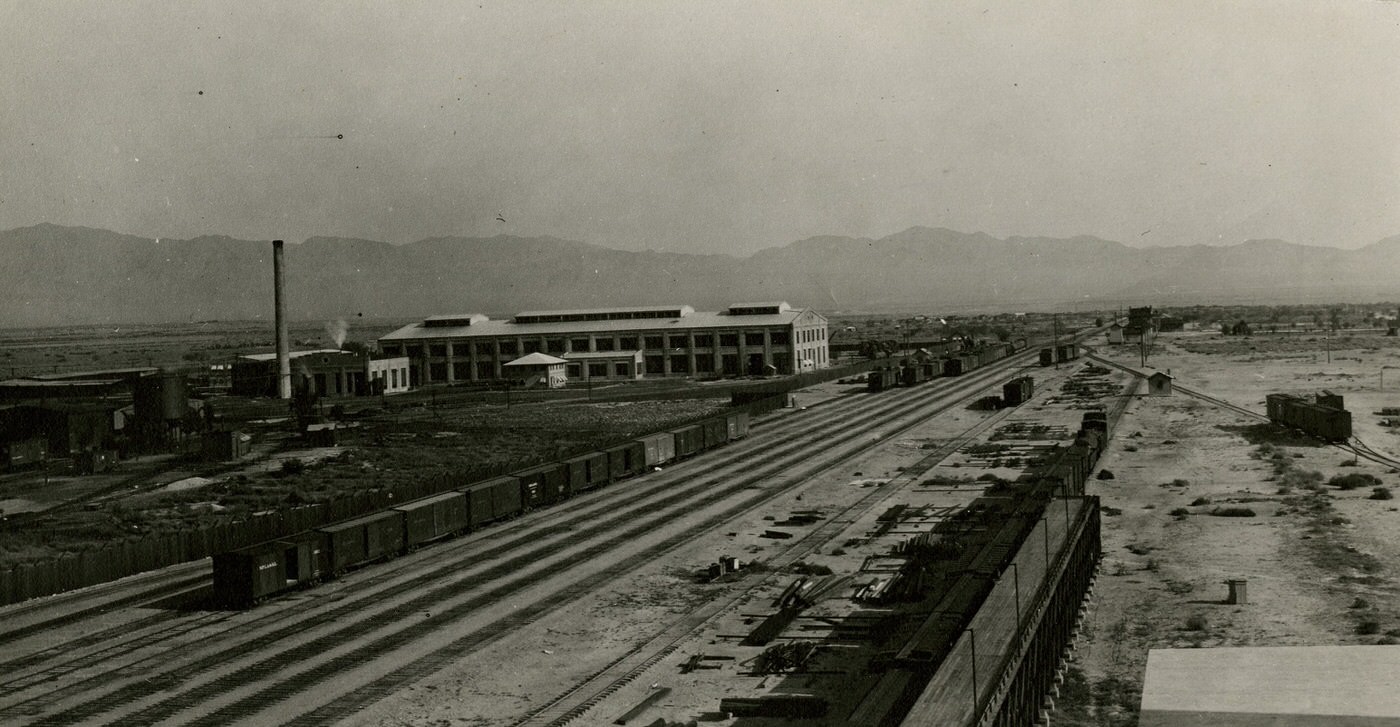
Railroad workers made up a huge portion of the population. The repair yards, called the Las Vegas Shops, employed hundreds of men who maintained locomotives and rolling stock. These workers needed housing, food, and places to spend money — and Las Vegas was built to provide all three. Their wages flowed directly into the stores and saloons along Fremont Street.
Miners came next. Nevada’s history was already defined by silver and gold rushes going back to the Comstock Lode in the 1860s, and new strikes in the early 1900s brought another wave. The town of Tonopah, about 200 miles north, had a major silver strike in 1900. Goldfield, even farther north, hit a gold strike in 1902. Rhyolite, in the Death Valley region, boomed between 1904 and 1908. Las Vegas sat on the rail line that connected these mining camps to the rest of the country, and miners passed through constantly. Some stayed.
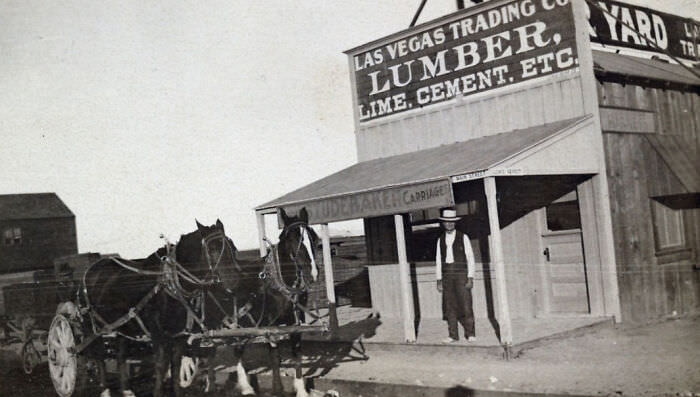
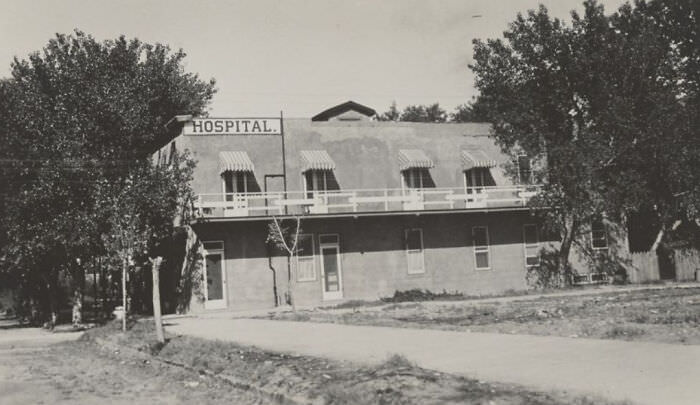
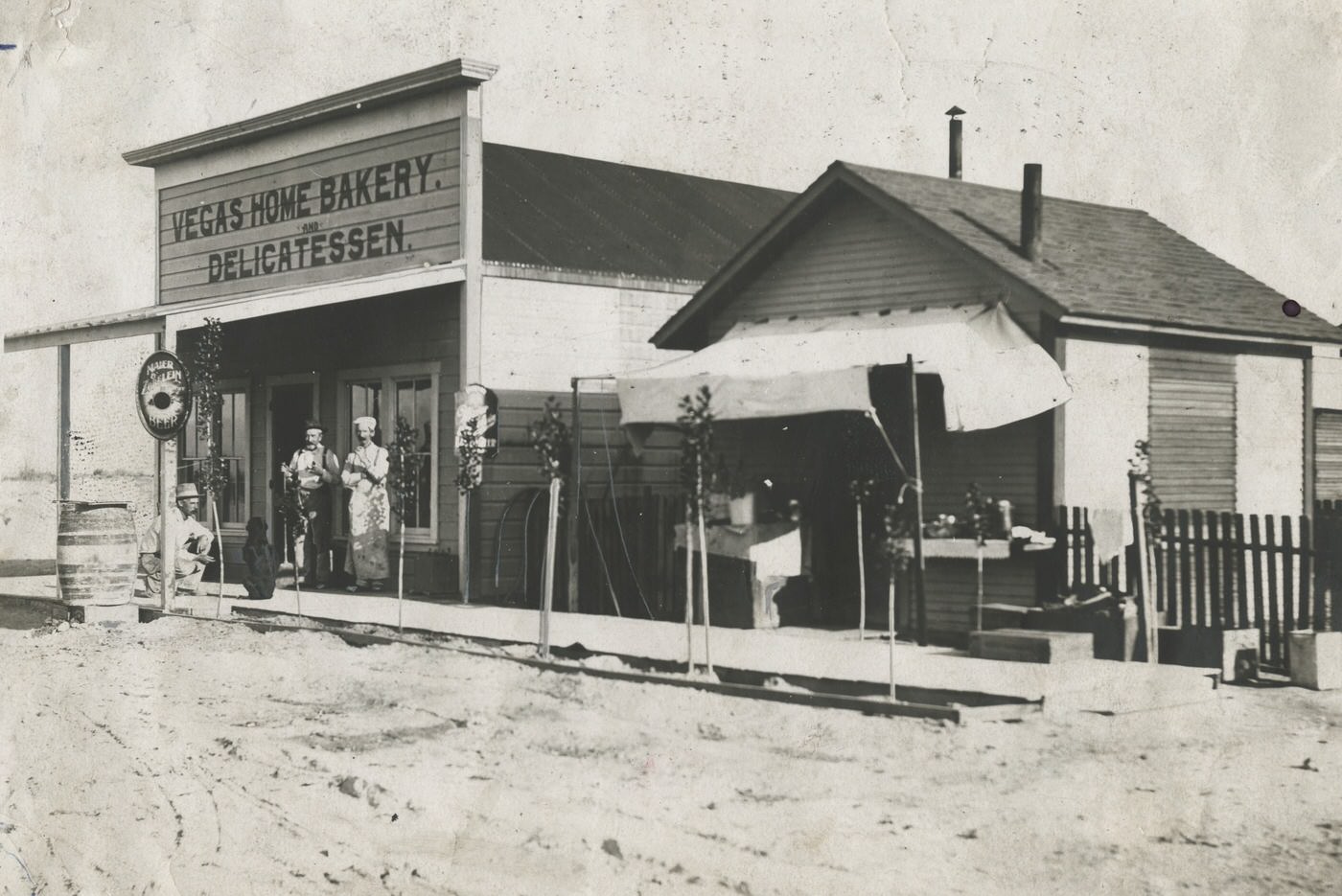
Entrepreneurs arrived too. The first attorneys, doctors, and merchants saw a captive market — a growing town with no established competition. They built law offices and general stores and set up shop on Fremont Street while the dust from the land auction was still settling.
Water and the Town’s Survival
Las Vegas existed in the 1900s because of water, and water shaped every major decision the town made.
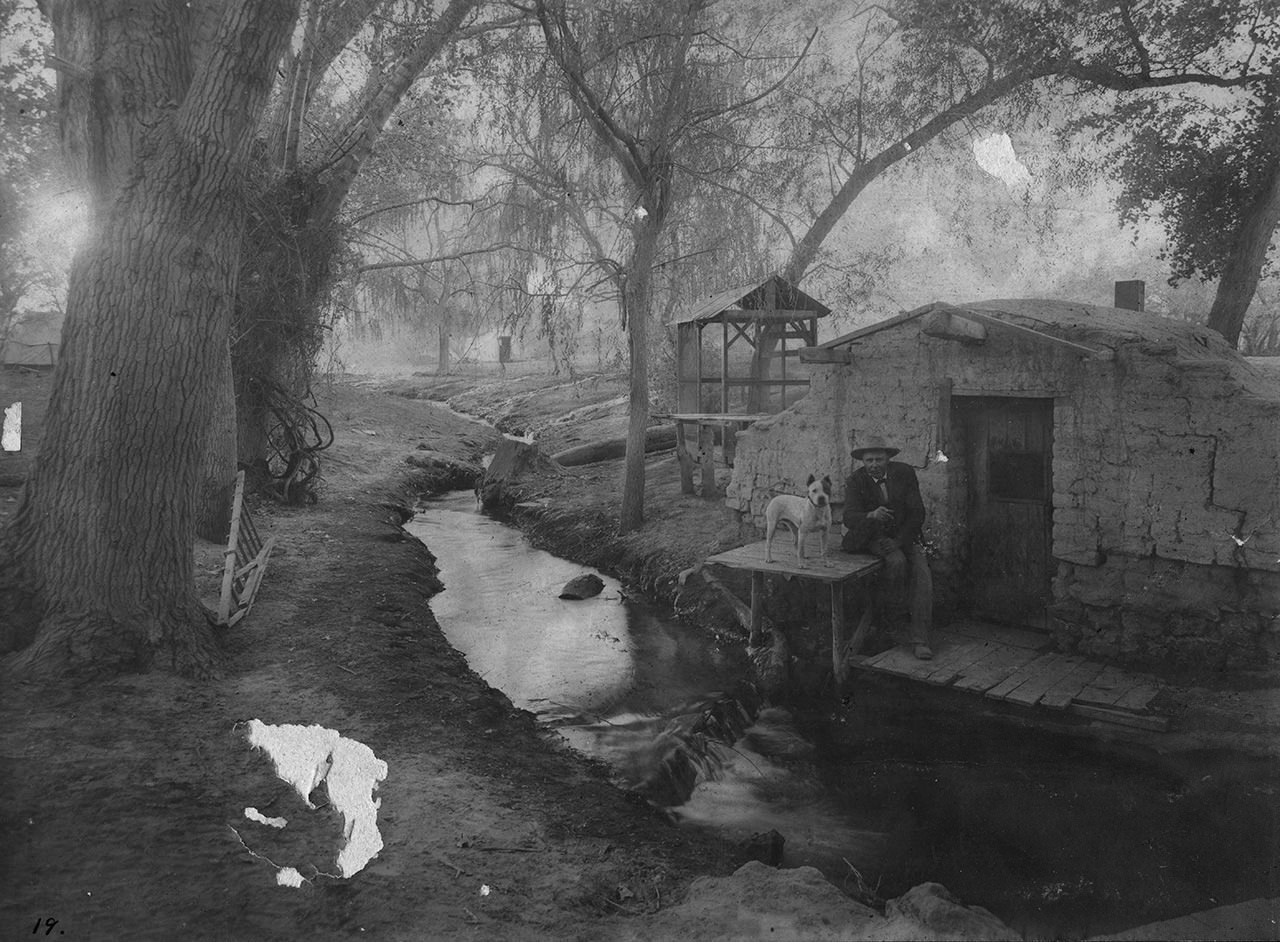
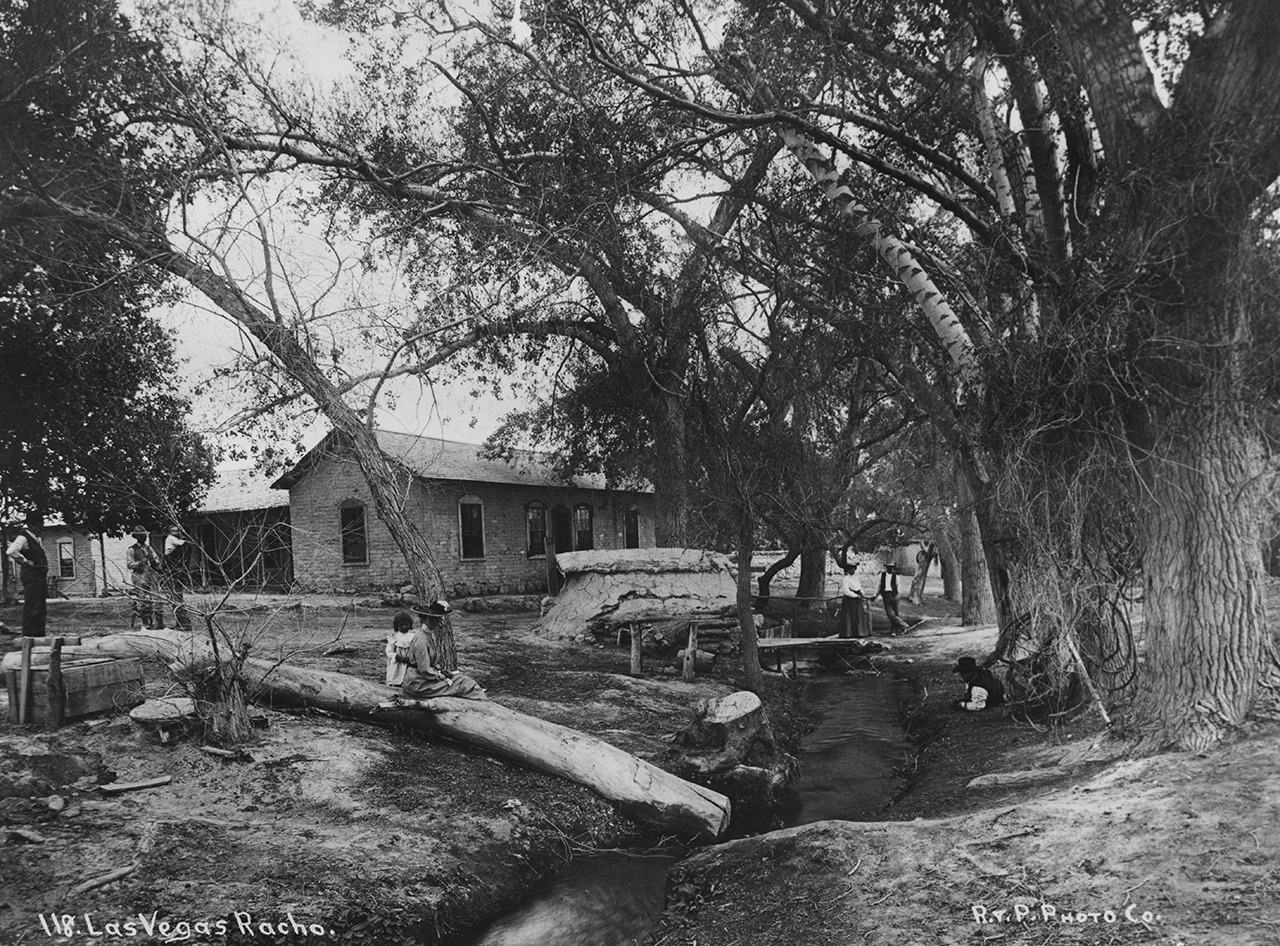
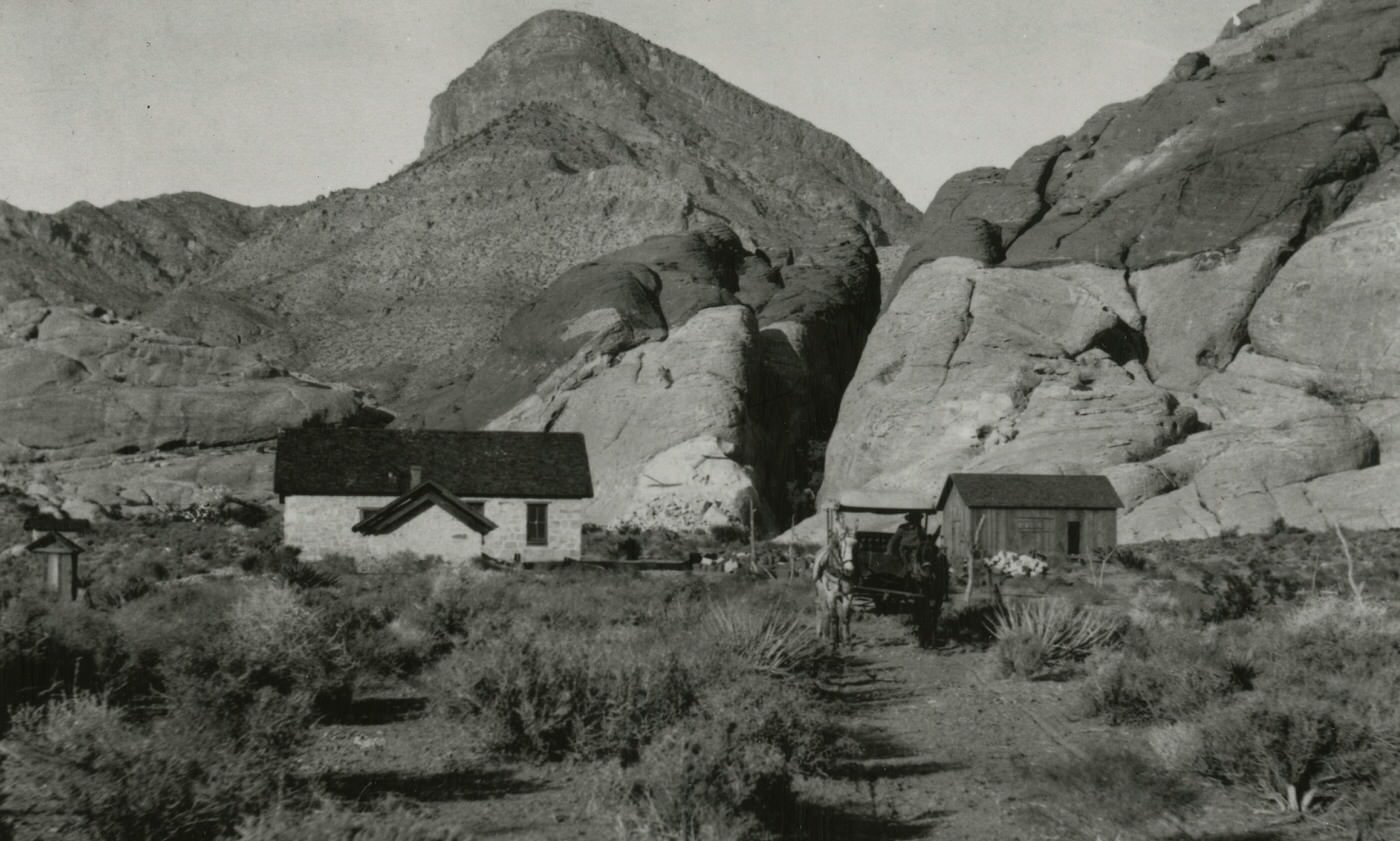
The valley’s artesian wells — wells where underground pressure pushes water to the surface without pumping — had been used by the Paiute for generations and were rediscovered by American settlers in the 1840s. By the time the railroad arrived, these wells were understood to be the valley’s most critical resource. The railroad drilled its own wells near the depot and constructed a large water tower to supply steam locomotives.
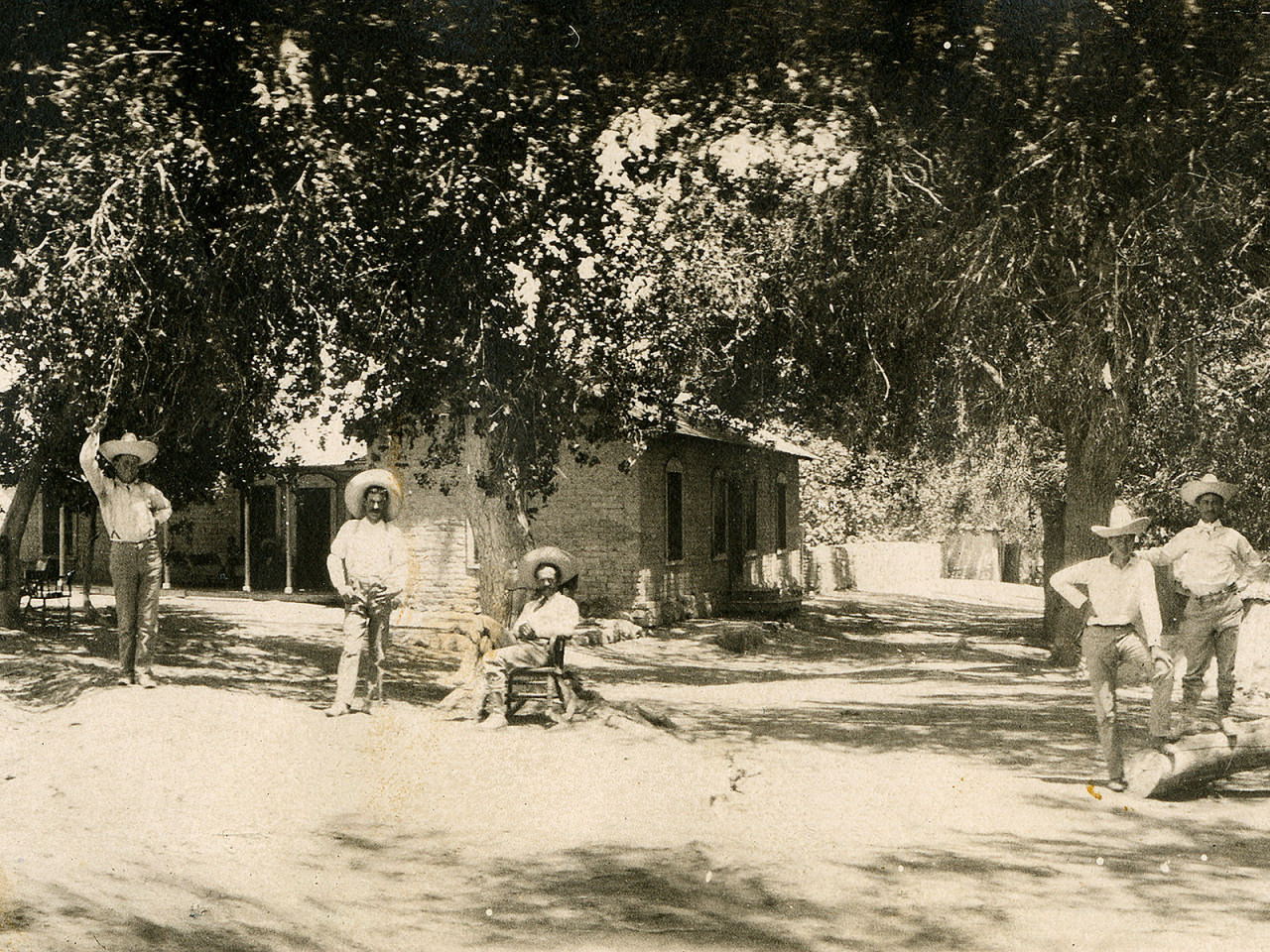
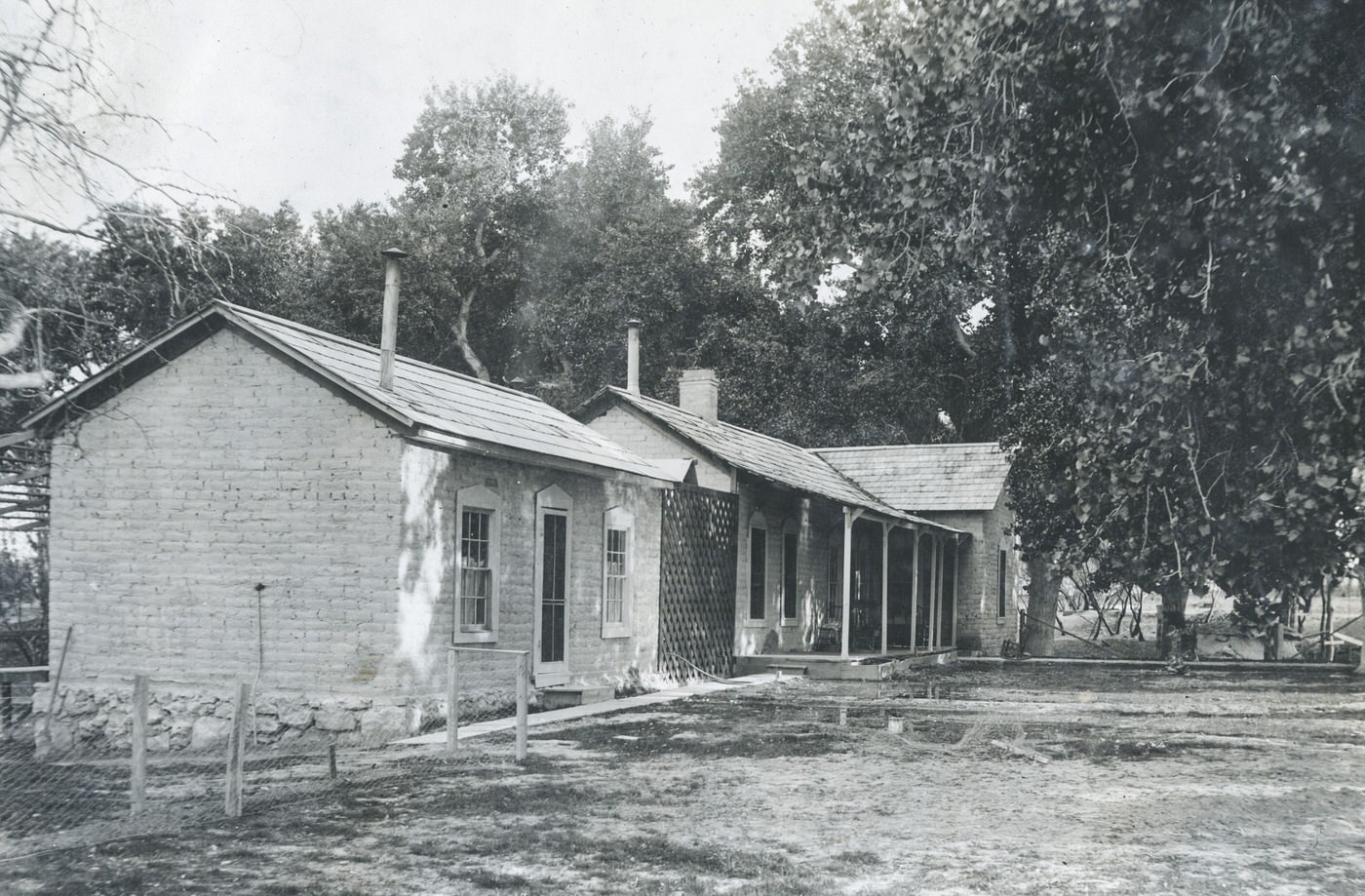
The general population depended on these same underground sources. Irrigation ditches were dug early to carry water to gardens and small farms on the outskirts of town. Alfalfa was the main crop — it was hardy, valuable as animal feed, and relatively easy to grow in the desert with regular watering. Small farms dotted the north and west edges of the settlement, and many families kept chickens and cattle alongside their crops.
The town government understood from the beginning that population growth depended on water access. By the end of the decade, municipal discussions about how to regulate and expand water distribution were already taking place. Las Vegas would return to this problem again and again throughout its history, but in the 1900s, the aquifers held.
Water and the Town’s Survival
Las Vegas existed in the 1900s because of water, and water shaped every major decision the town made.
The valley’s artesian wells — wells where underground pressure pushes water to the surface without pumping — had been used by the Paiute for generations and were rediscovered by American settlers in the 1840s. By the time the railroad arrived, these wells were understood to be the valley’s most critical resource. The railroad drilled its own wells near the depot and constructed a large water tower to supply steam locomotives.
The general population depended on these same underground sources. Irrigation ditches were dug early to carry water to gardens and small farms on the outskirts of town. Alfalfa was the main crop — it was hardy, valuable as animal feed, and relatively easy to grow in the desert with regular watering. Small farms dotted the north and west edges of the settlement, and many families kept chickens and cattle alongside their crops.
The town government understood from the beginning that population growth depended on water access. By the end of the decade, municipal discussions about how to regulate and expand water distribution were already taking place. Las Vegas would return to this problem again and again throughout its history, but in the 1900s, the aquifers held.
Fort Baker and the Military Presence
Fort Baker, established a few miles outside of town, represented the U.S. Army’s interest in the region during this period. The military monitored the area partly because of its position along a critical rail corridor and partly to maintain a presence in a part of Nevada that was still sparsely policed.
The fort’s soldiers added another layer to Las Vegas’s economy. Military paydays brought spending into town, and the men stationed there used Block 16’s establishments regularly. The relationship between the army post and the town’s entertainment district was an open arrangement — commanders knew where their men went on leave, and the saloon owners knew the fort’s payday schedule.
The Paiute and the Land
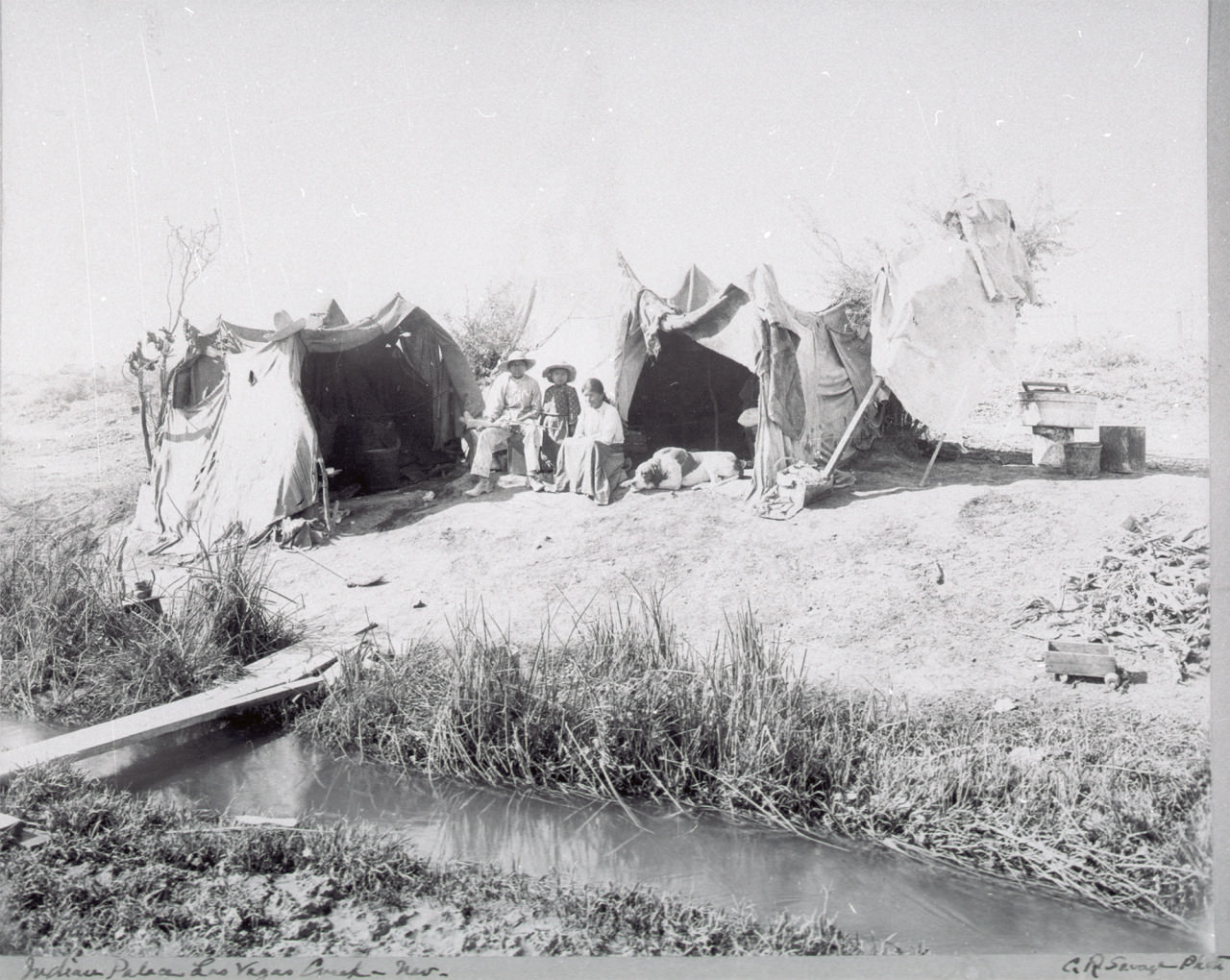
The Southern Paiute people who had called the Las Vegas Valley home for centuries were largely pushed to the margins during this period. The land auction of 1905 treated the valley as federal land available for sale, ignoring the Paiute’s long use of it. The spring sites and water sources that Paiute communities had relied on were absorbed into railroad and municipal infrastructure.
A small Paiute settlement formed near the edge of town, close to the artesian wells that had been central to their traditional land use. This settlement was not acknowledged by the town’s government in any official capacity. The residents were excluded from the social and economic systems being built around them — they couldn’t own lots purchased at the land auction, and they had no representation in local government.
Their presence near the springs was tolerated rather than recognized. It was one of the uglier realities beneath the boom-town energy of Las Vegas in its first decade.
Fremont Street in 1907
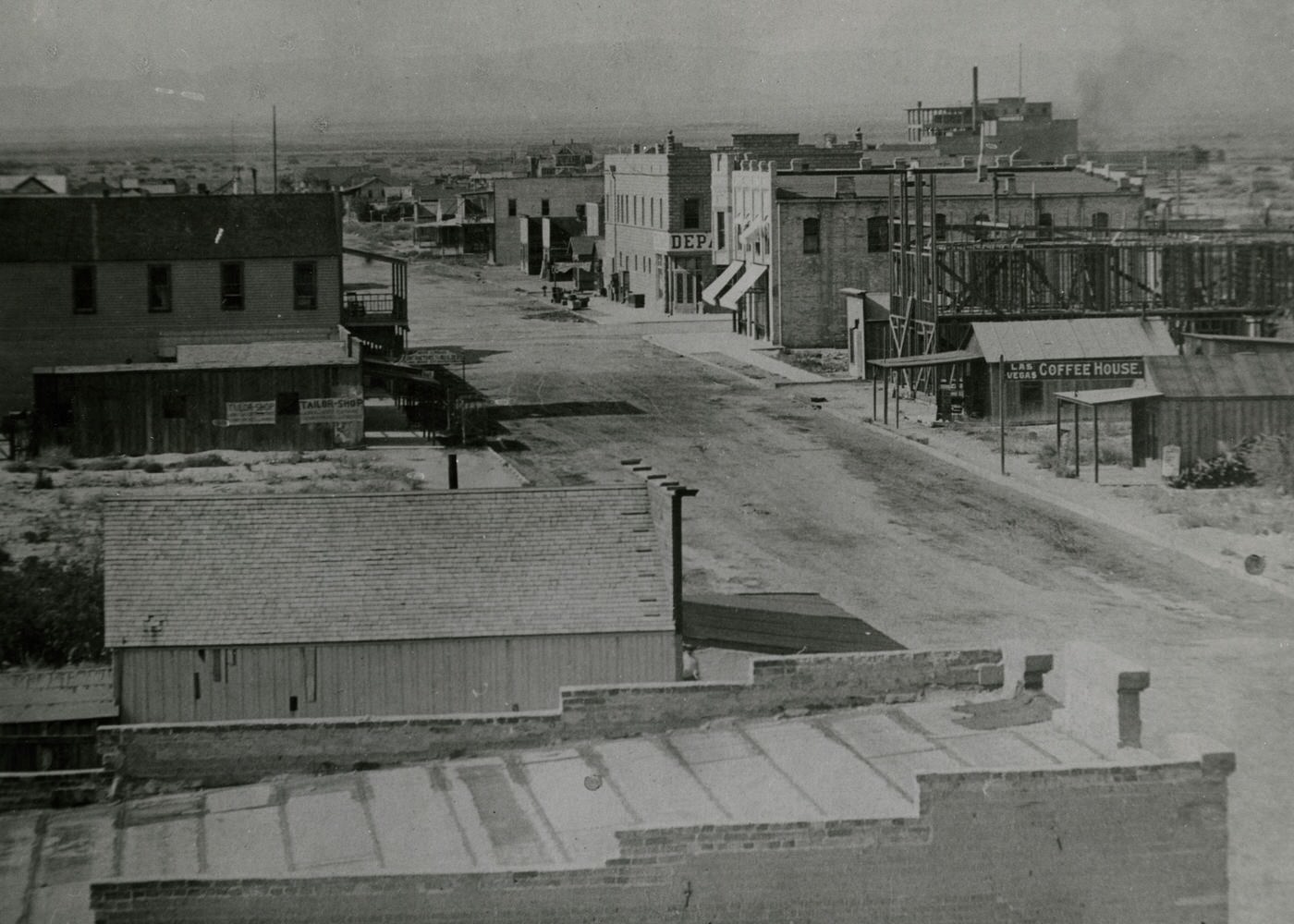
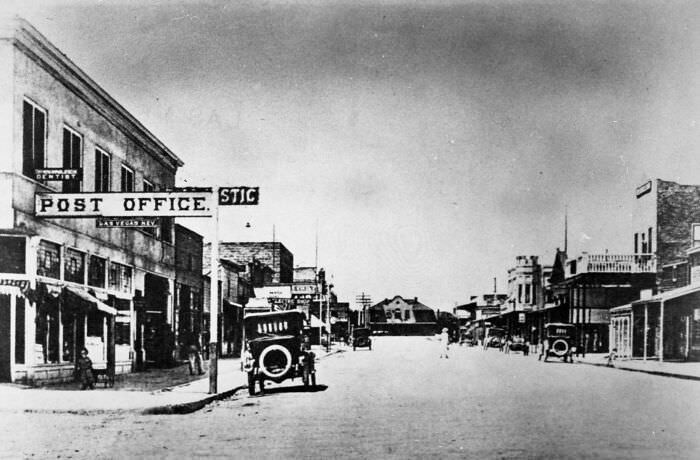
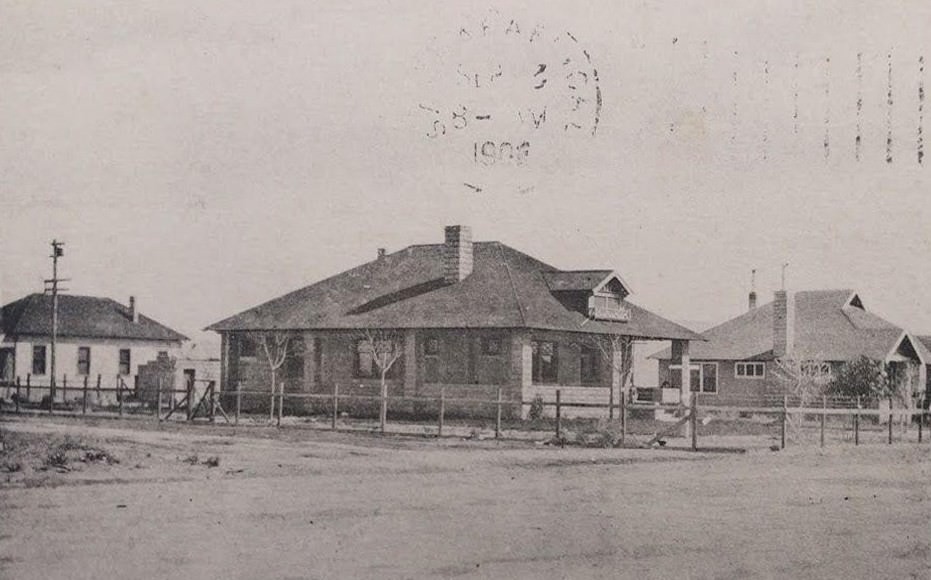
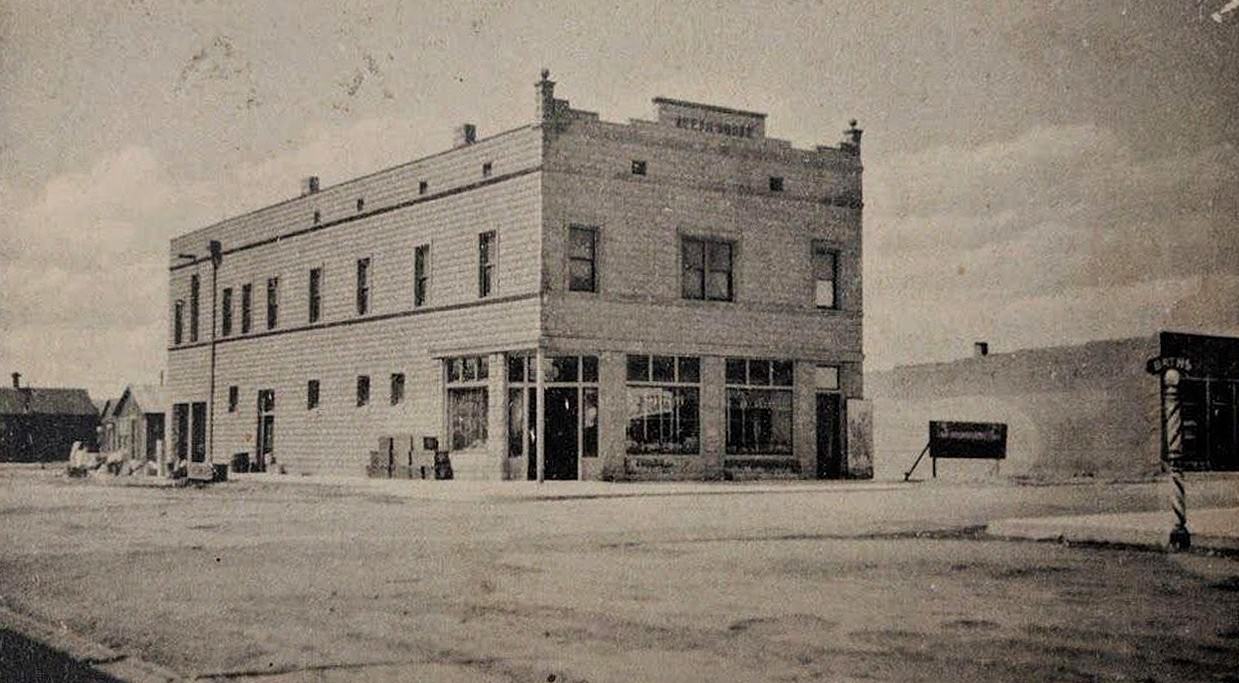
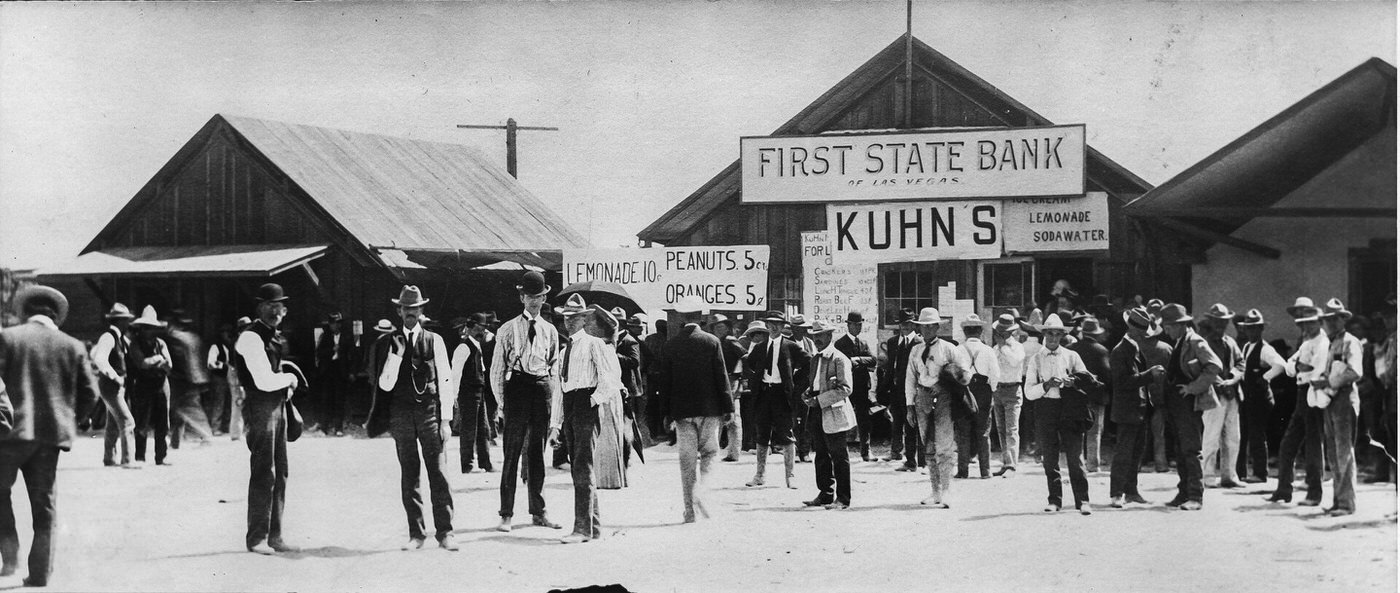
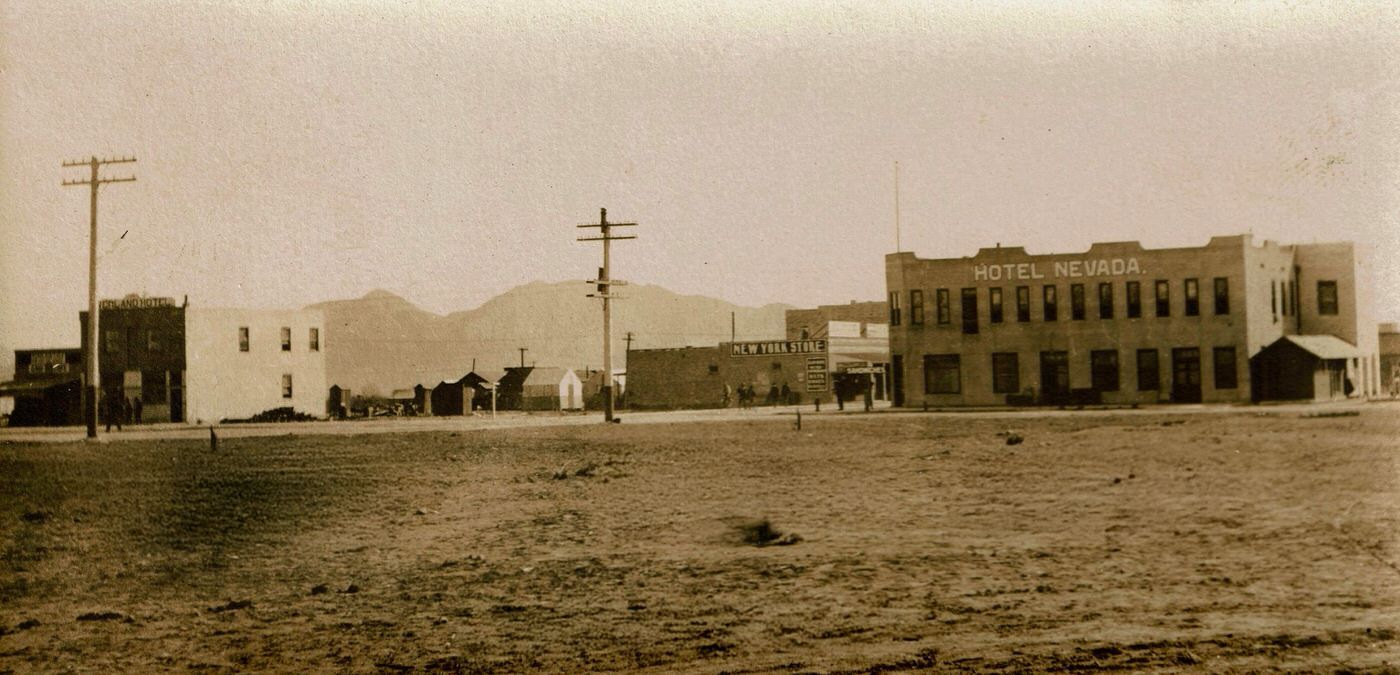
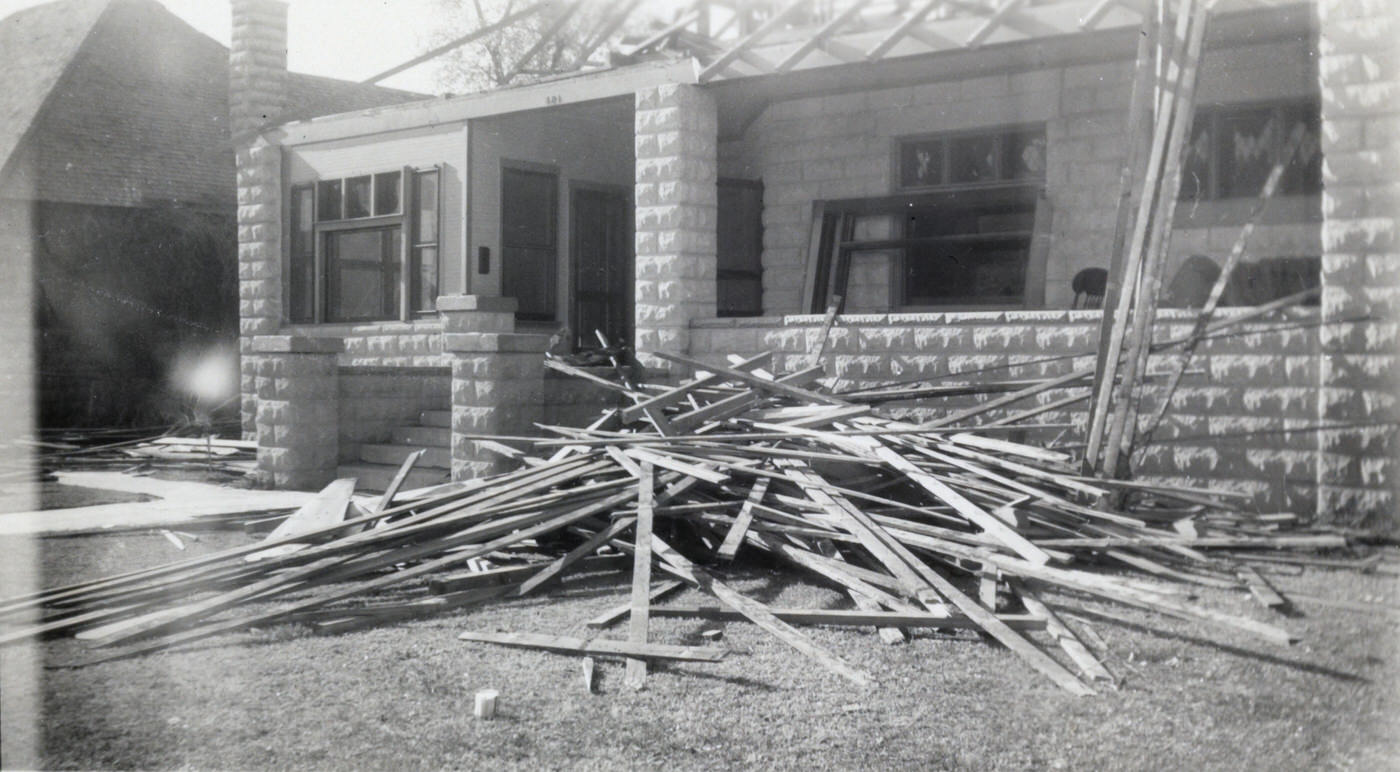
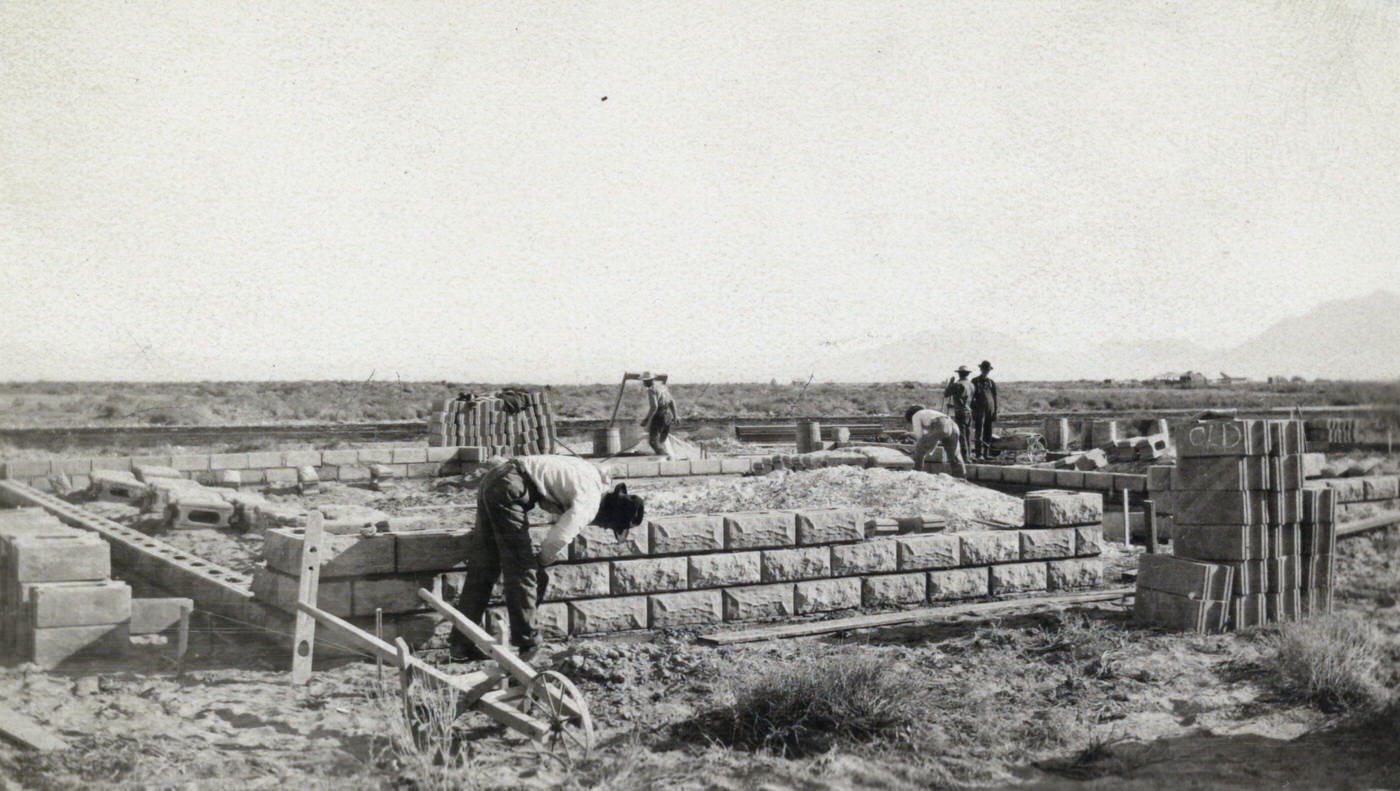
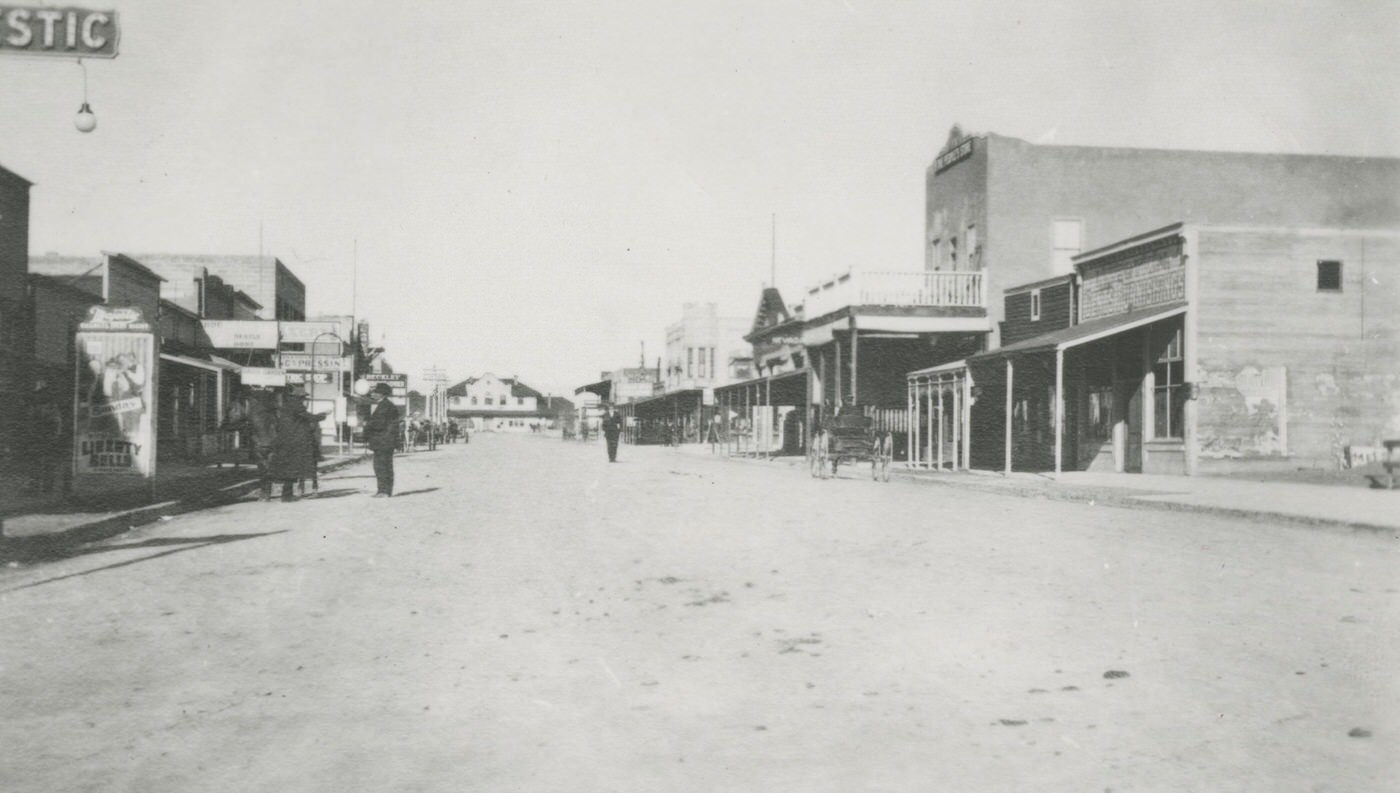
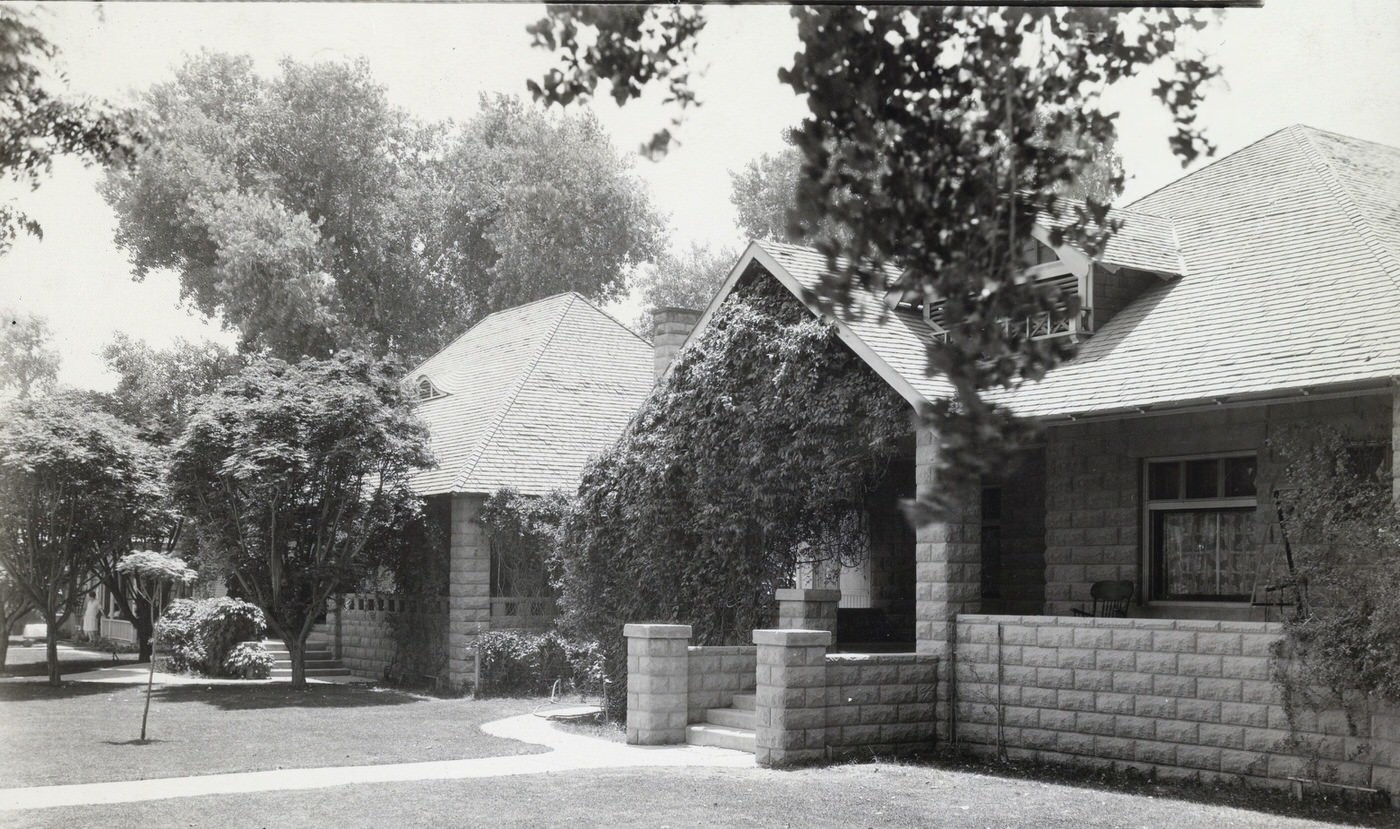
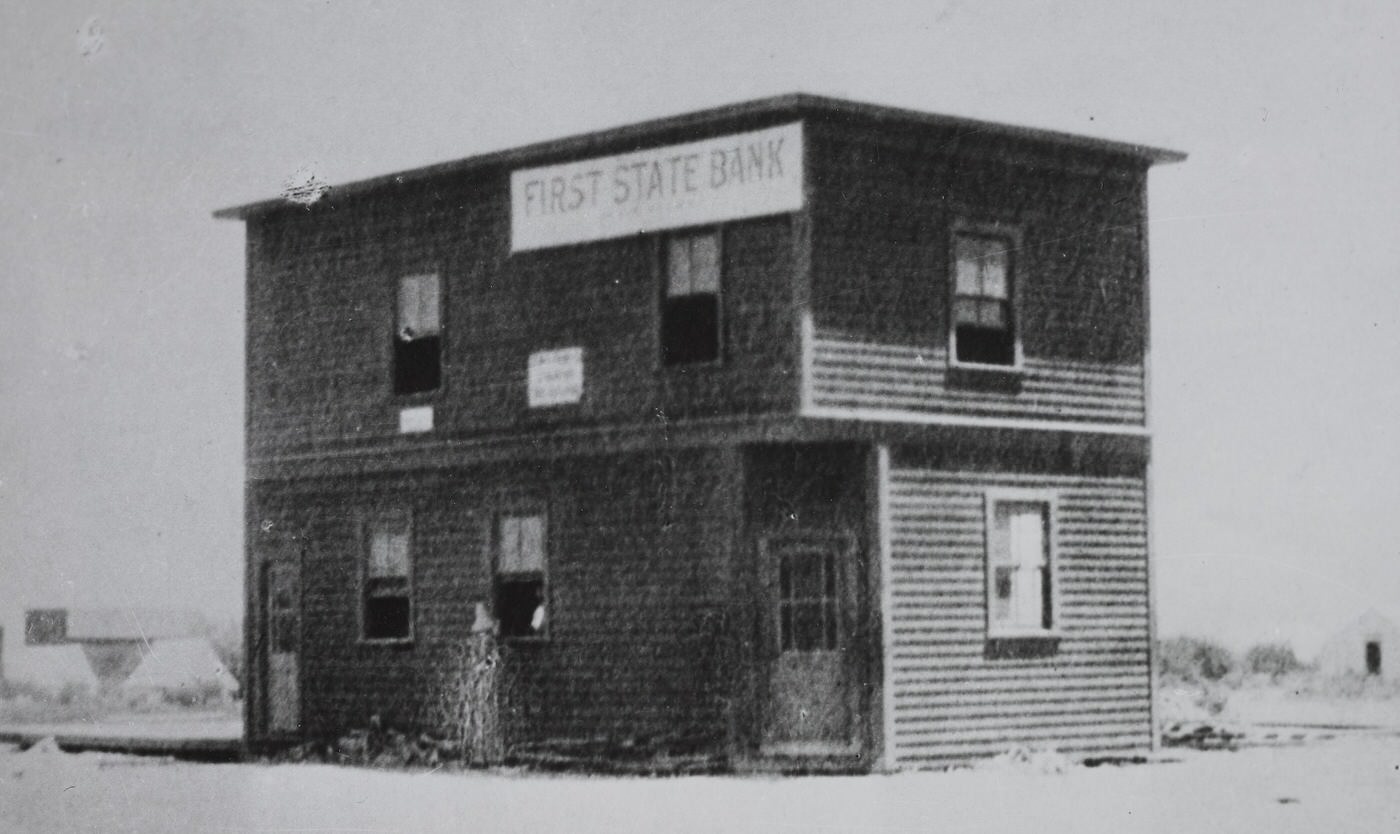
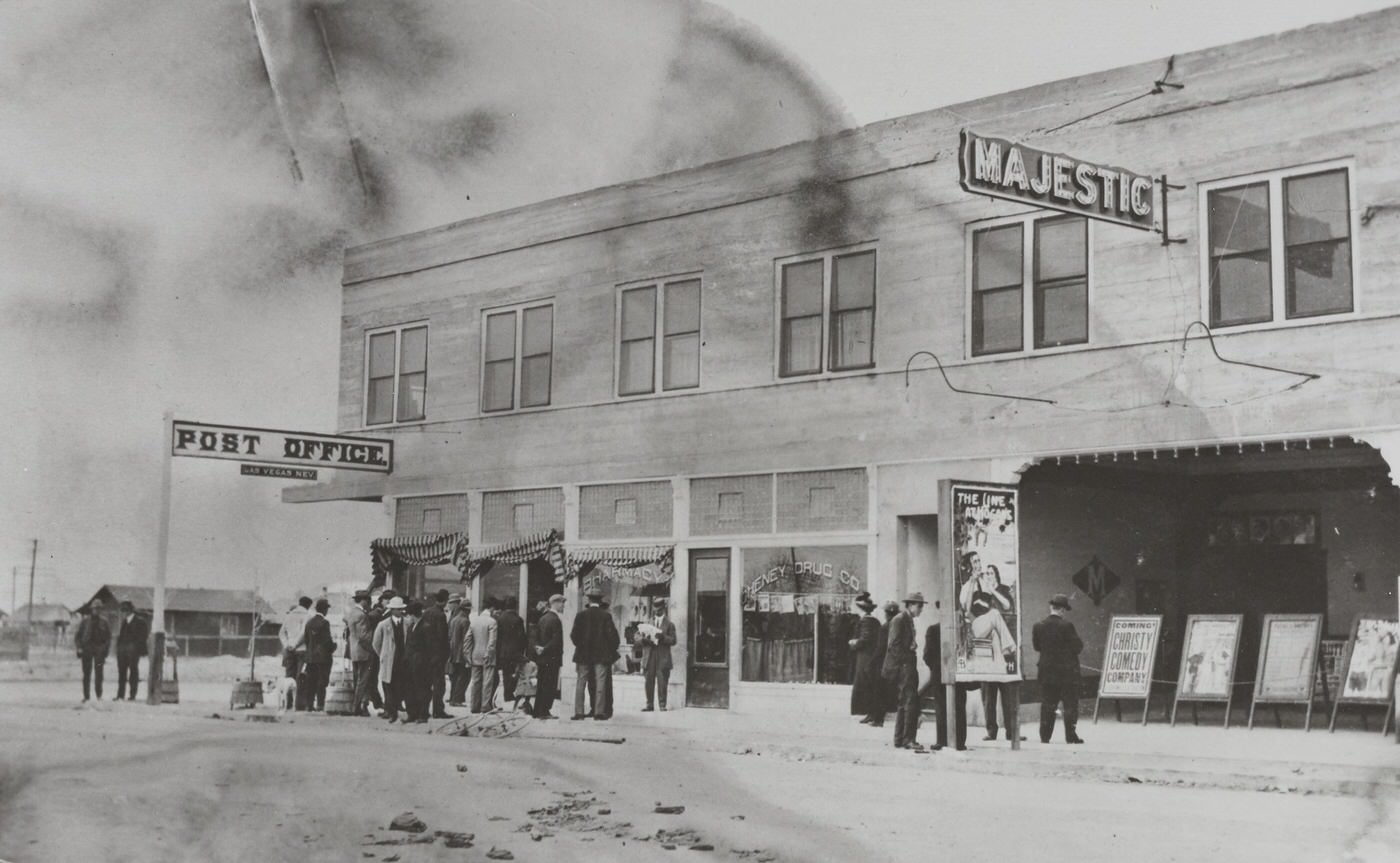
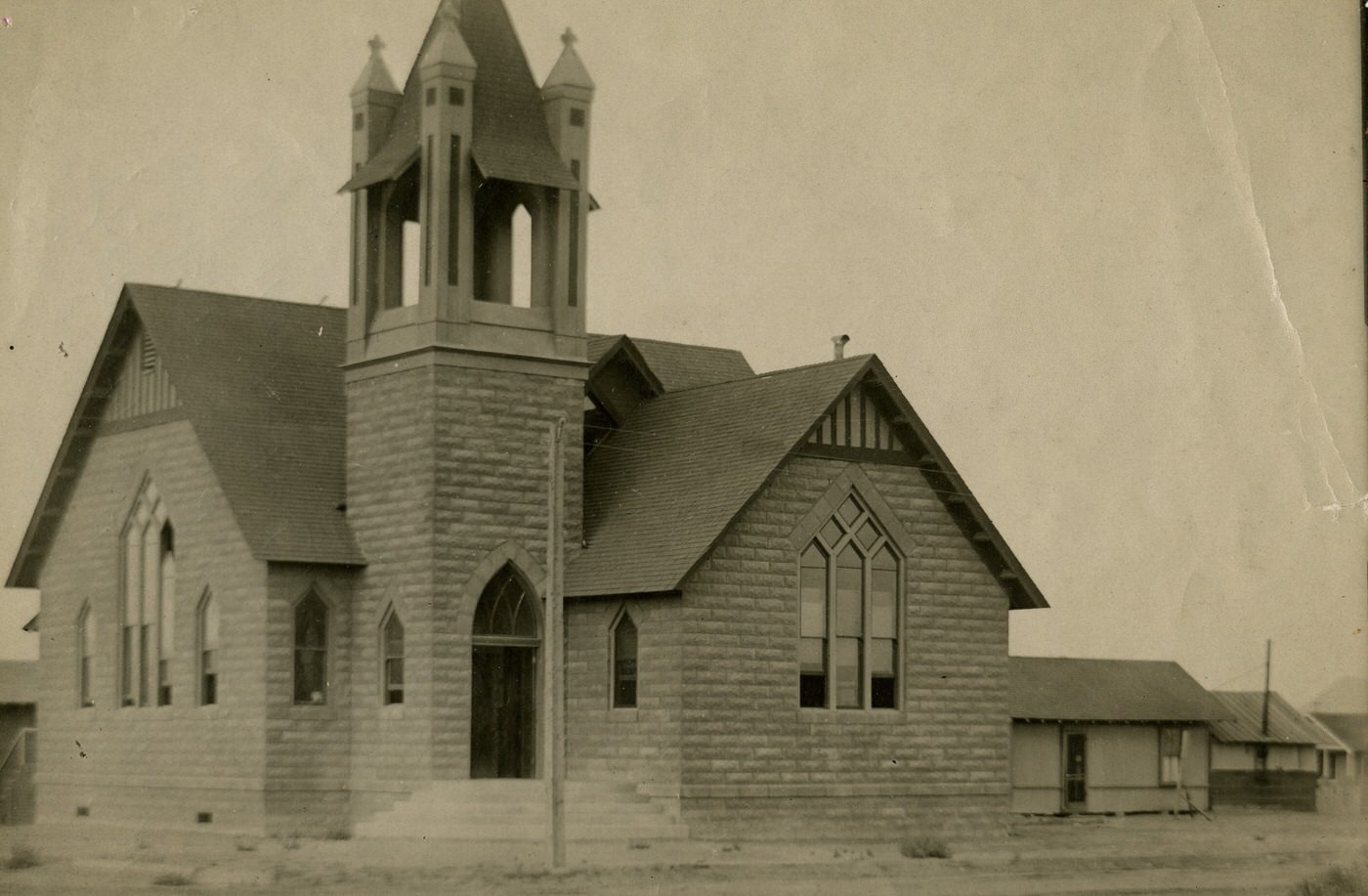
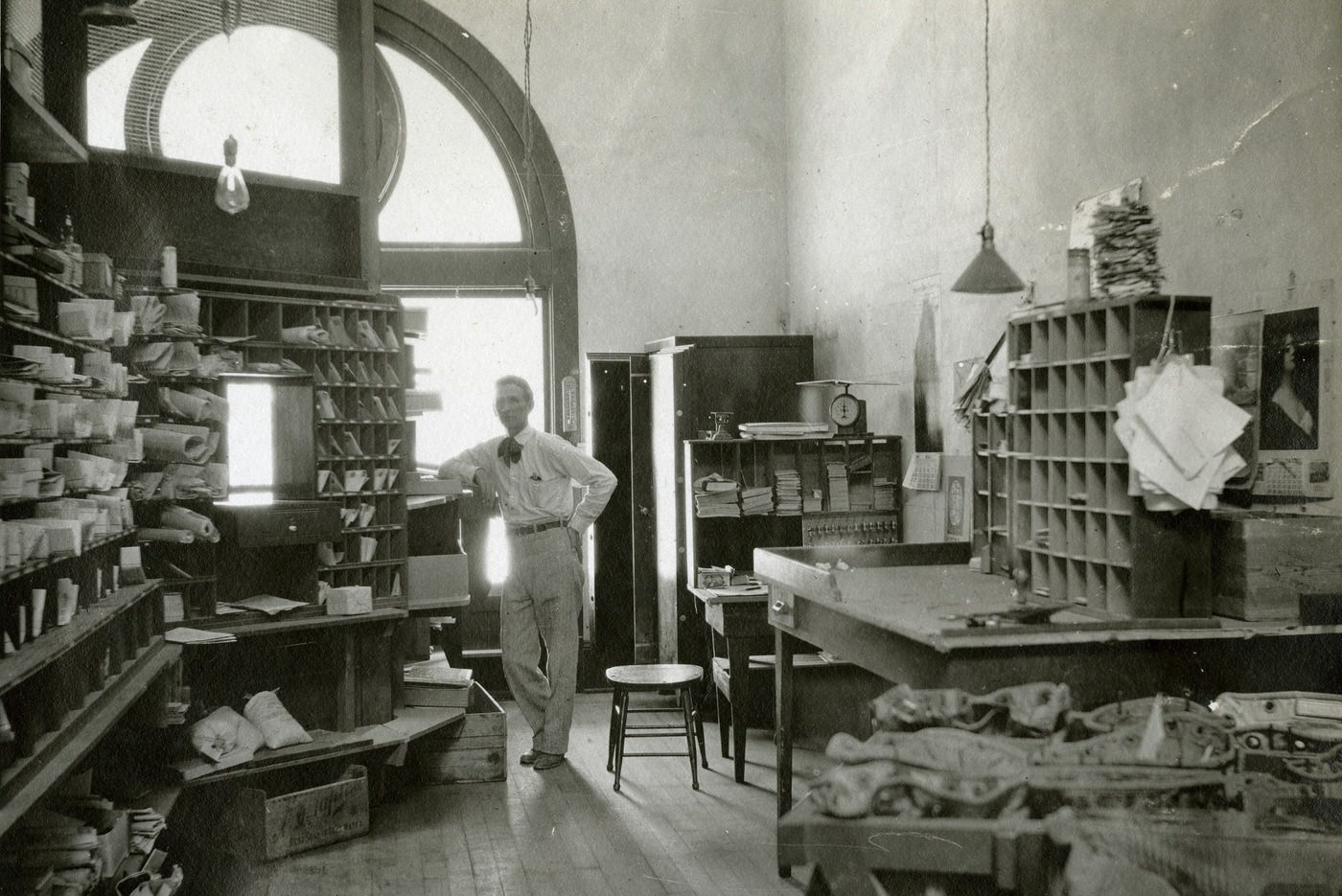
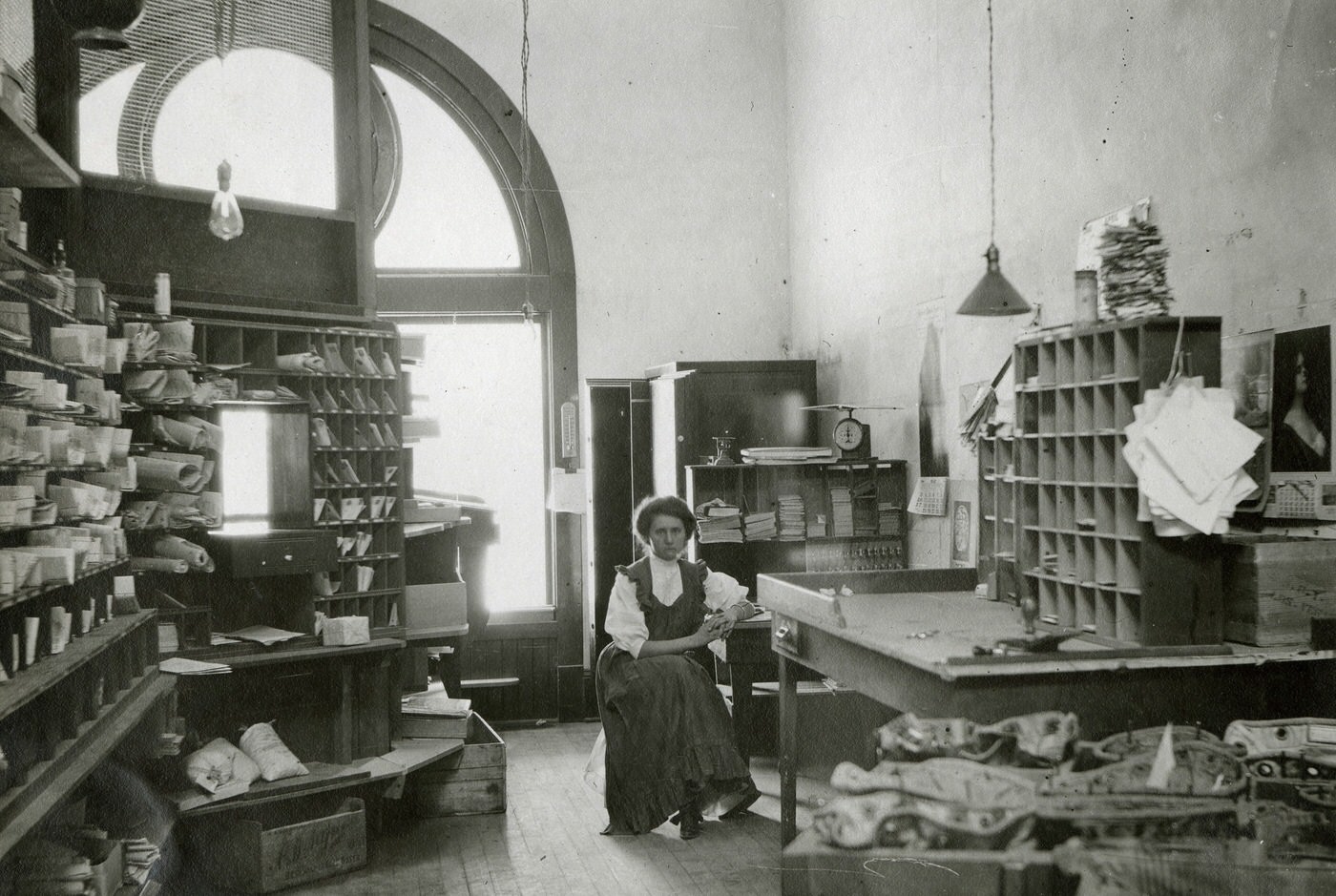
By 1907, Fremont Street looked nothing like the empty desert it had been two years earlier. Two-story brick buildings stood where there had been bare lots. A telephone exchange connected businesses. The Las Vegas Age newspaper published local and national news. The Bank of Nevada had opened a branch. There was a post office, a school, and several churches.
The contrast between the religious and civic buildings and Block 16, which was two blocks away, defined the split personality of the young town. The two zones existed in full awareness of each other. Preachers gave sermons against the gambling halls on Sunday mornings while the Arizona Club dealt cards through the night. Neither side moved. Both were profitable.
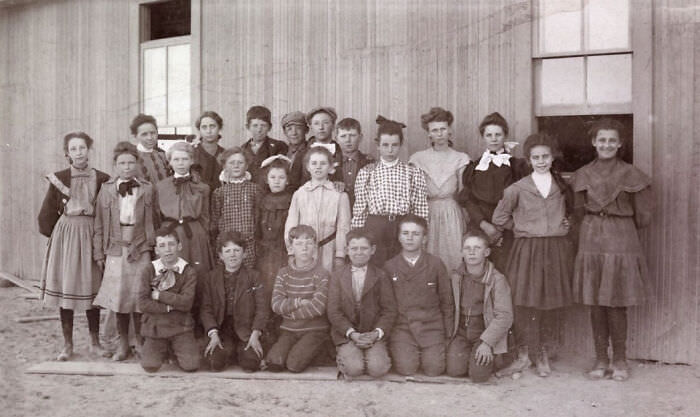
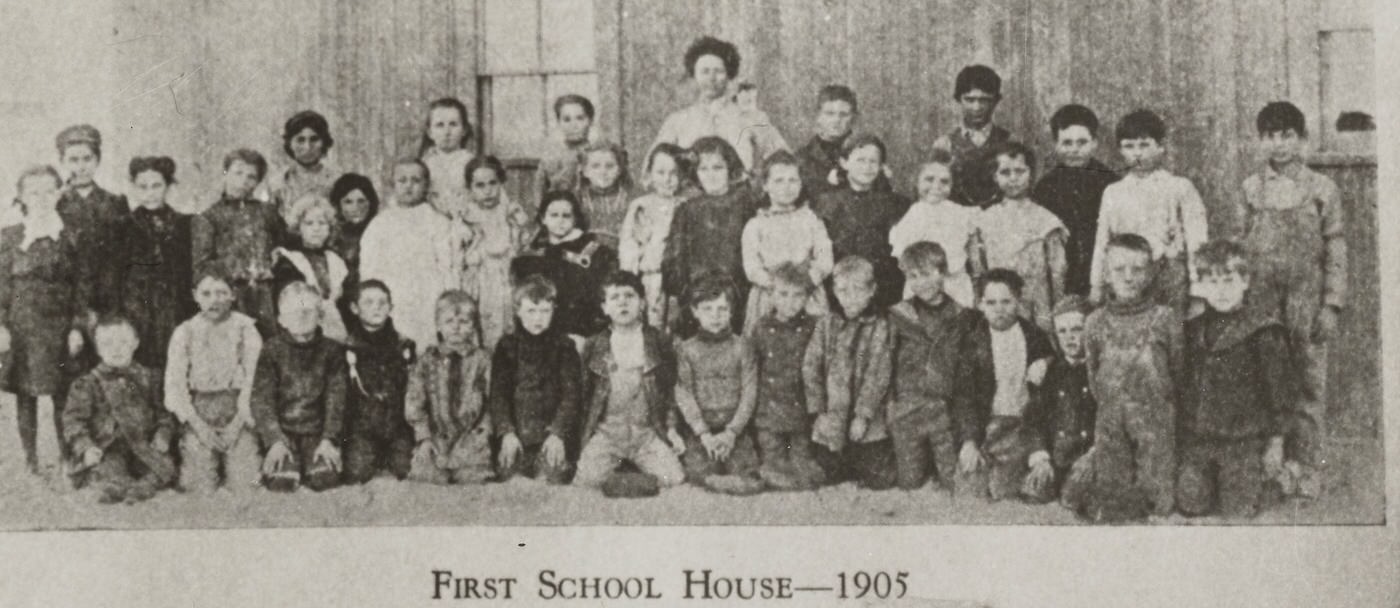
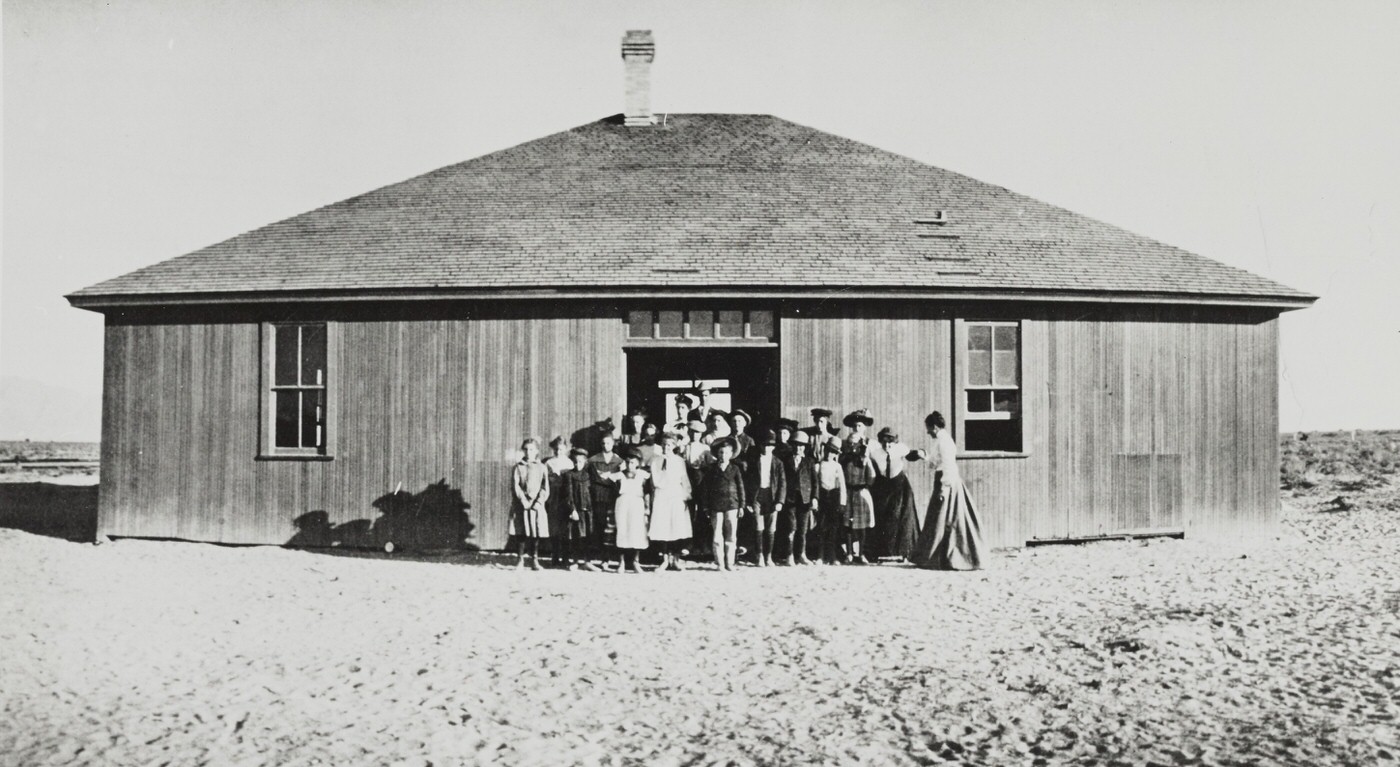
The town’s first school opened in 1905, the same year the railroad arrived. By 1907, it had enough students to require a second teacher. Parents who had come to Las Vegas to work the railroad yards were putting down roots, enrolling their children, and building something that looked like a permanent community.
The 1909 Gambling Crackdown
Nevada’s state legislature made a decision in 1909 that dramatically changed Las Vegas’s entertainment economy. The state banned most forms of gambling. Slot machines, card games, roulette — all of it was outlawed under the new law. The ban was part of a broader national reform movement, influenced by Progressive Era politics that were pushing for cleaner government and stricter moral standards across the United States.
Block 16 didn’t disappear. Saloons stayed open and alcohol remained legal until national Prohibition arrived in 1920. Prostitution continued largely uninterrupted. But the casino floors went dark, the card tables were packed away, and the formal gambling operations that had been a centerpiece of the block’s business model were shut down.
The ban hurt revenue on Block 16 but didn’t kill the neighborhood. Operators found ways to run card games informally, in back rooms and private clubs, with the understanding that enforcement was inconsistent. Local law enforcement, which was underfunded and small in number, did not pursue every violation aggressively. Still, the official closure of legal gambling was a real economic blow to the businesses that had built their entire model around it.
This ban would last until 1931, when Nevada reversed course entirely and legalized gambling again — setting off the chain of events that would eventually turn Las Vegas into something unrecognizable from its 1900s form.
The Regional Economy Beyond the Town
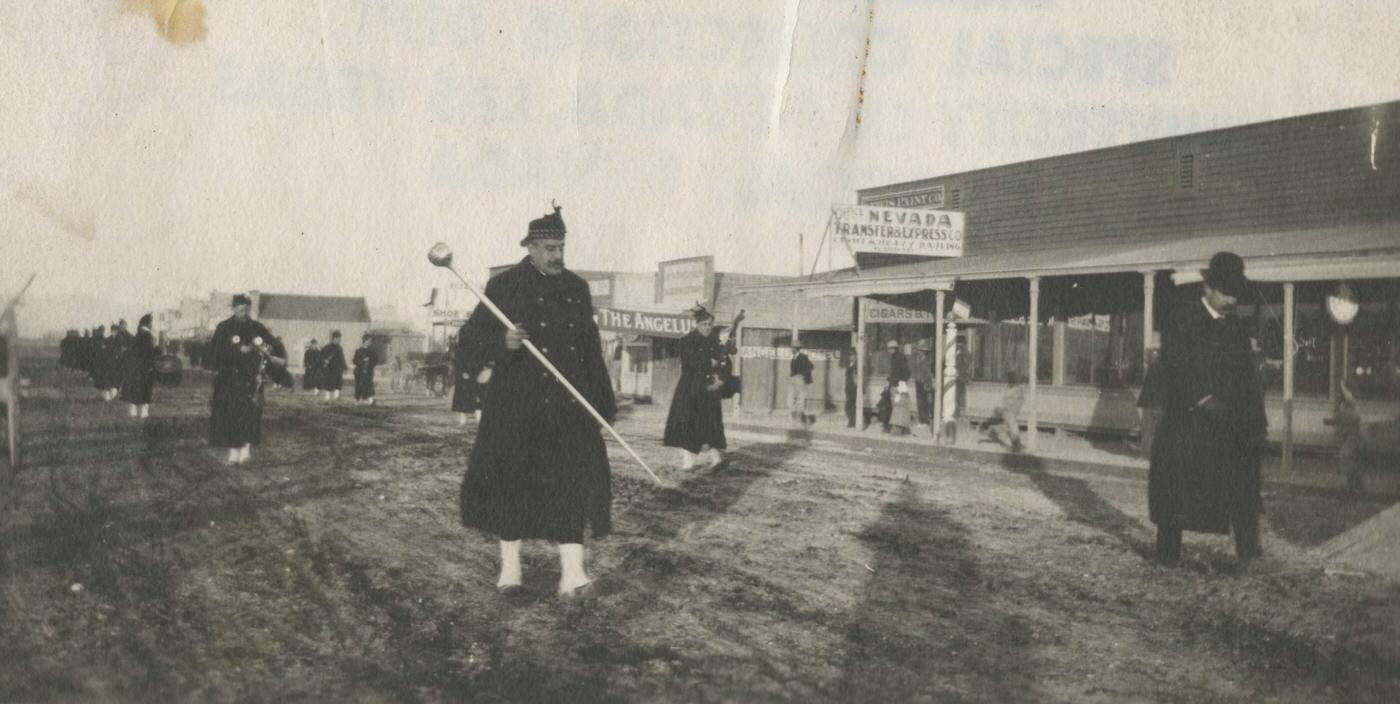
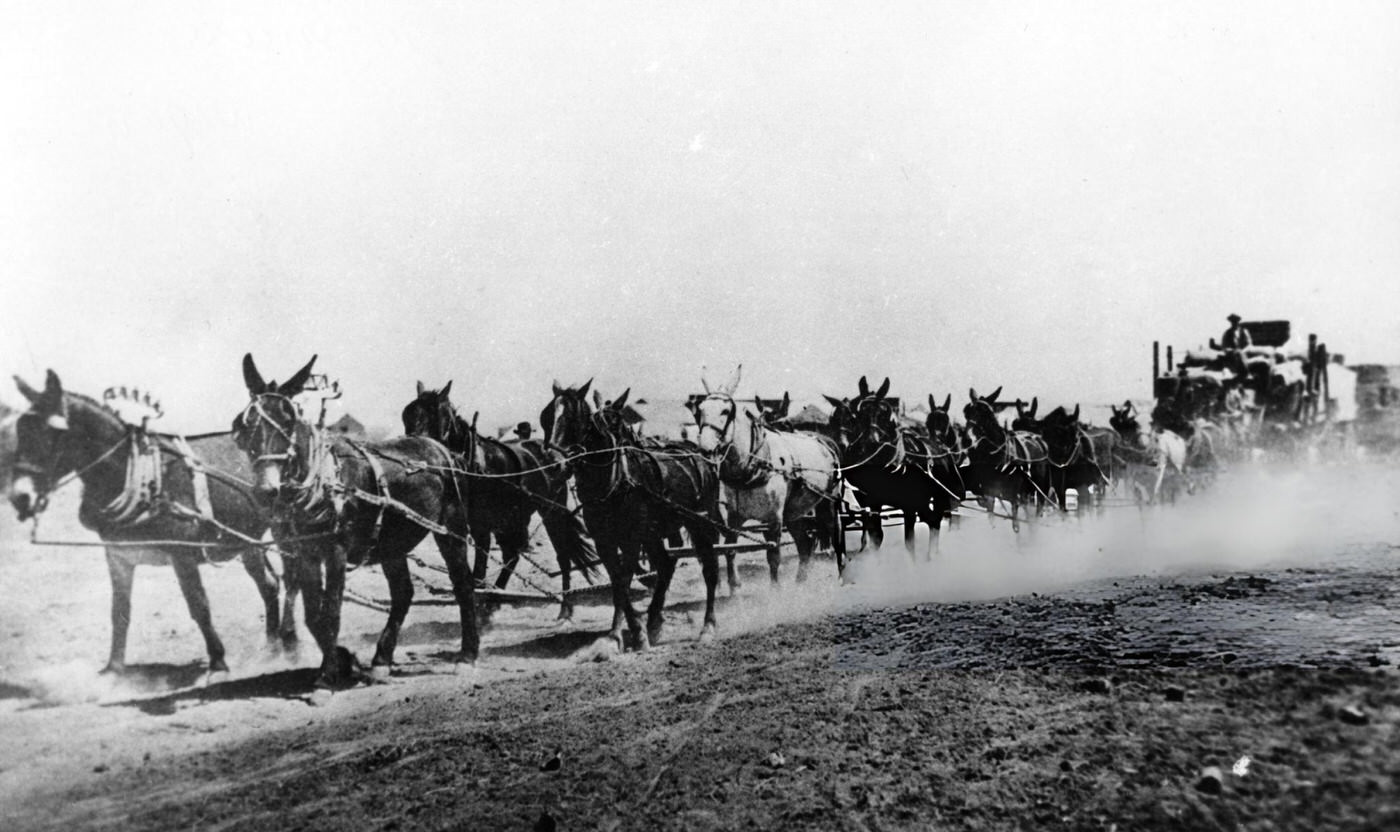
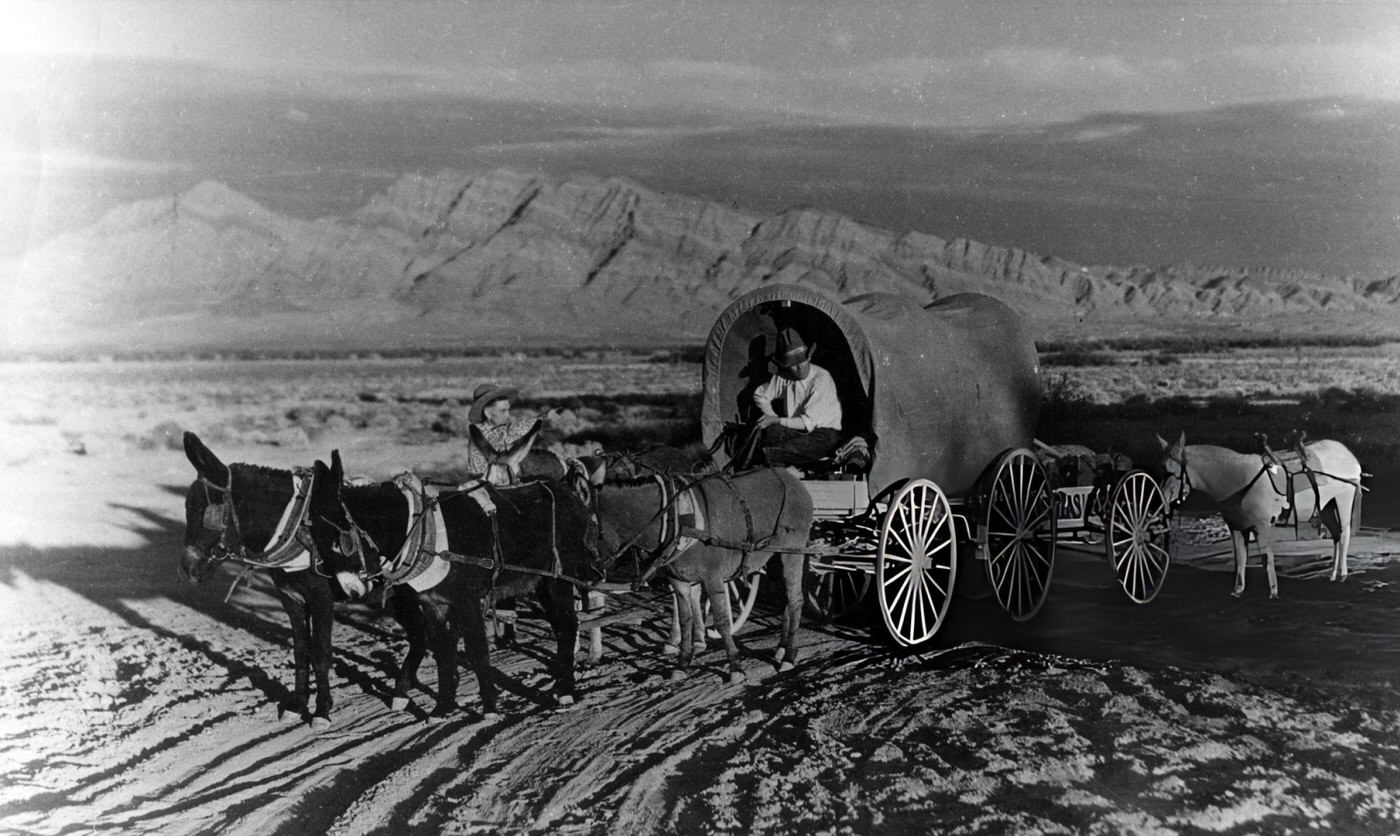
Las Vegas in the 1900s was not just a town — it was a supply hub for a wide region. Ranchers from the surrounding valleys came in for supplies. Mining camps to the north ordered equipment and provisions through Las Vegas merchants, who received them by rail and shipped them on by wagon. The town acted as a commercial throat through which goods flowed in and out of a large section of southern Nevada.
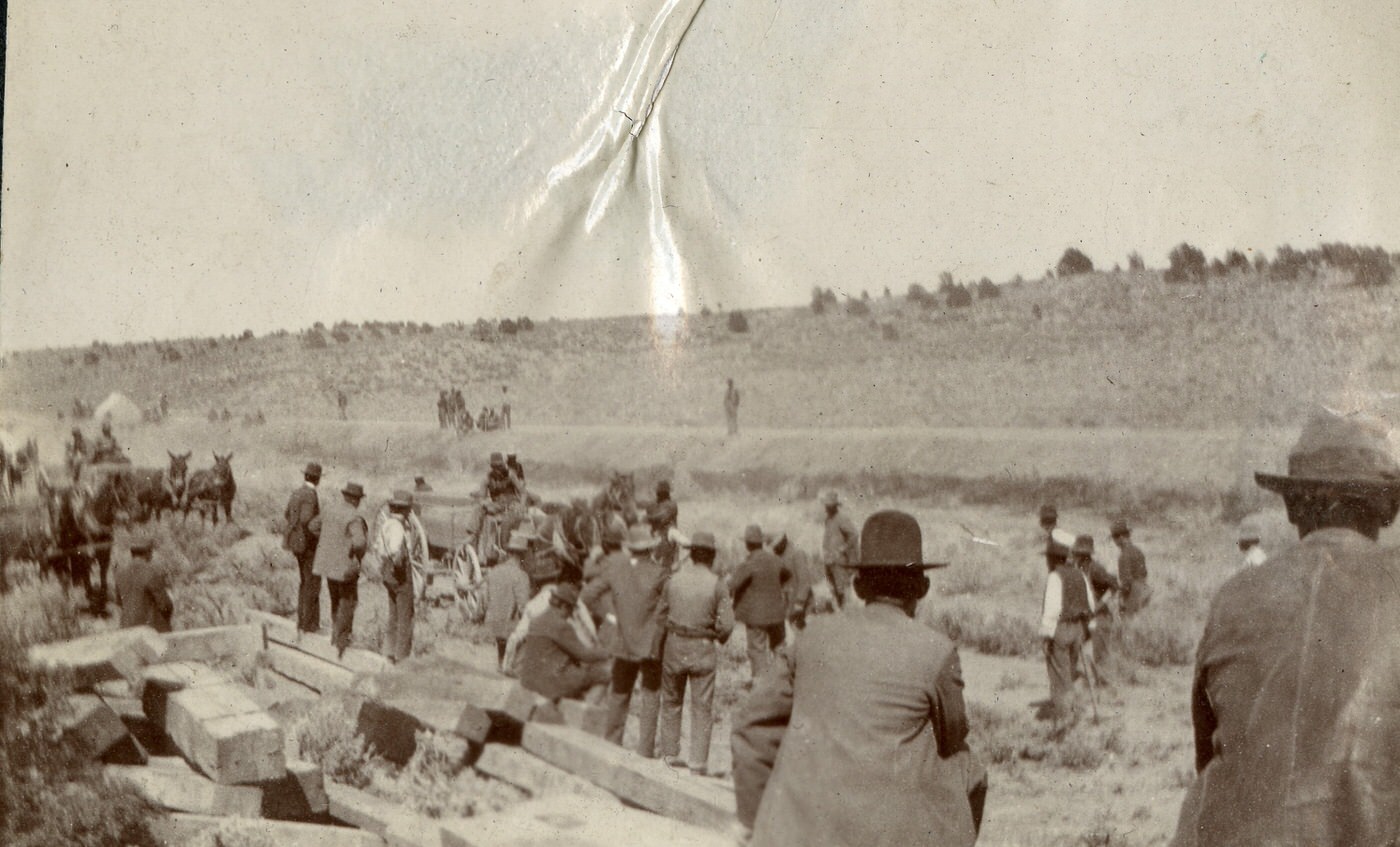
The Las Vegas and Tonopah Railroad, a separate narrow-gauge line that branched off the main rail corridor, was chartered in 1905 specifically to connect the Las Vegas Valley to the booming mines to the north. It was finished in 1907 and immediately began carrying ore, equipment, and passengers between Las Vegas and Goldfield. This line brought new workers through Las Vegas and increased freight traffic significantly.
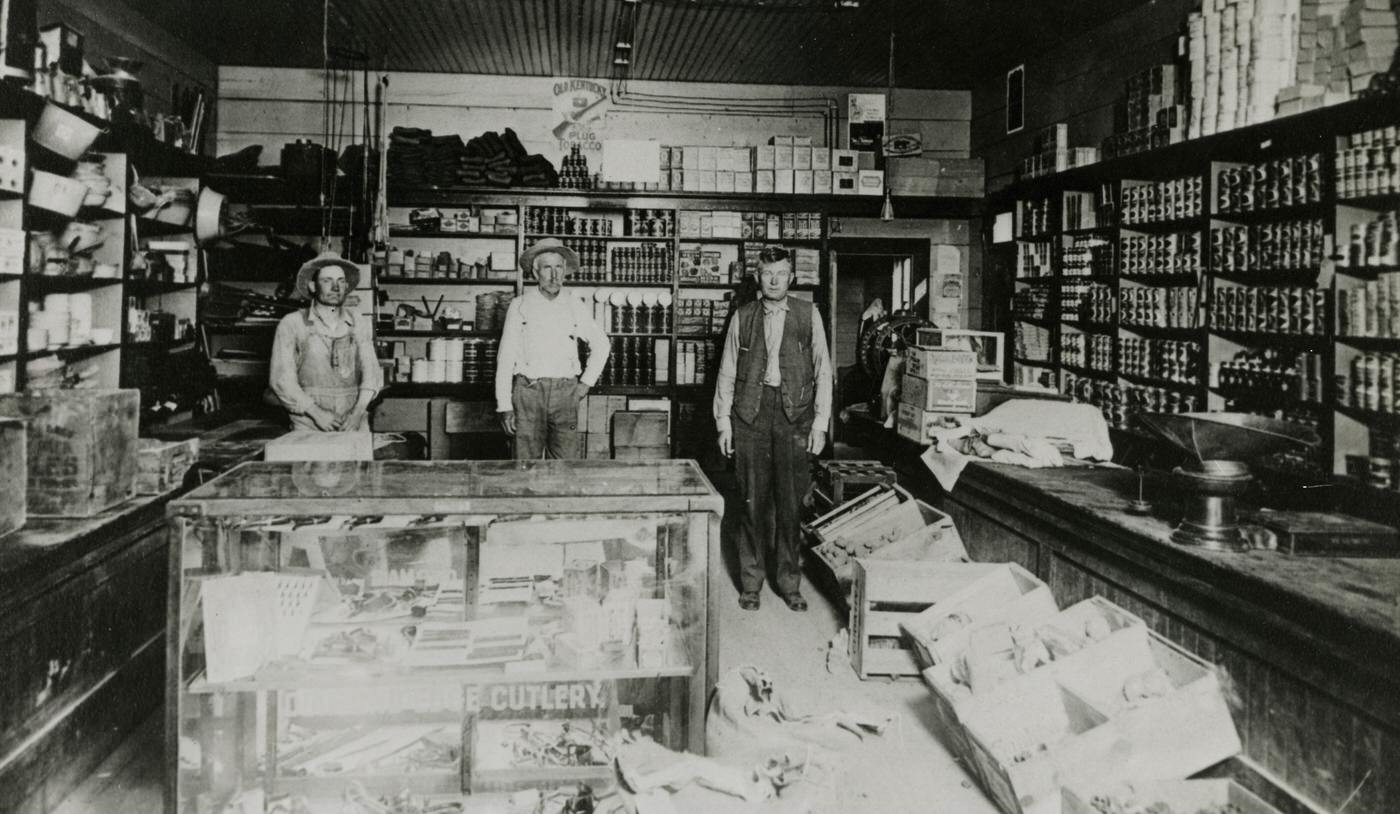
Merchants on Fremont Street expanded their inventories in response. Hardware stores stocked mining equipment. General stores carried clothing suitable for desert labor. Freighting companies set up operations to move goods the final distances to camps that even the railroad didn’t reach.
The Clark County Question
Las Vegas spent most of the 1900s as part of Lincoln County, a vast stretch of southern Nevada whose county seat was in Pioche, about 175 miles to the north. This was a bureaucratic headache. Legal matters, property records, and court hearings all required a trip to Pioche, which meant a full day of travel at minimum.
Residents pushed hard throughout the decade for their own county. The argument was simple: Las Vegas was growing quickly, it was the largest community in the southern part of the state, and it had almost nothing in common economically or geographically with Pioche. The railroad, the mines, and the commercial activity of the Las Vegas Valley belonged to a different world than the cattle ranches of Lincoln County.
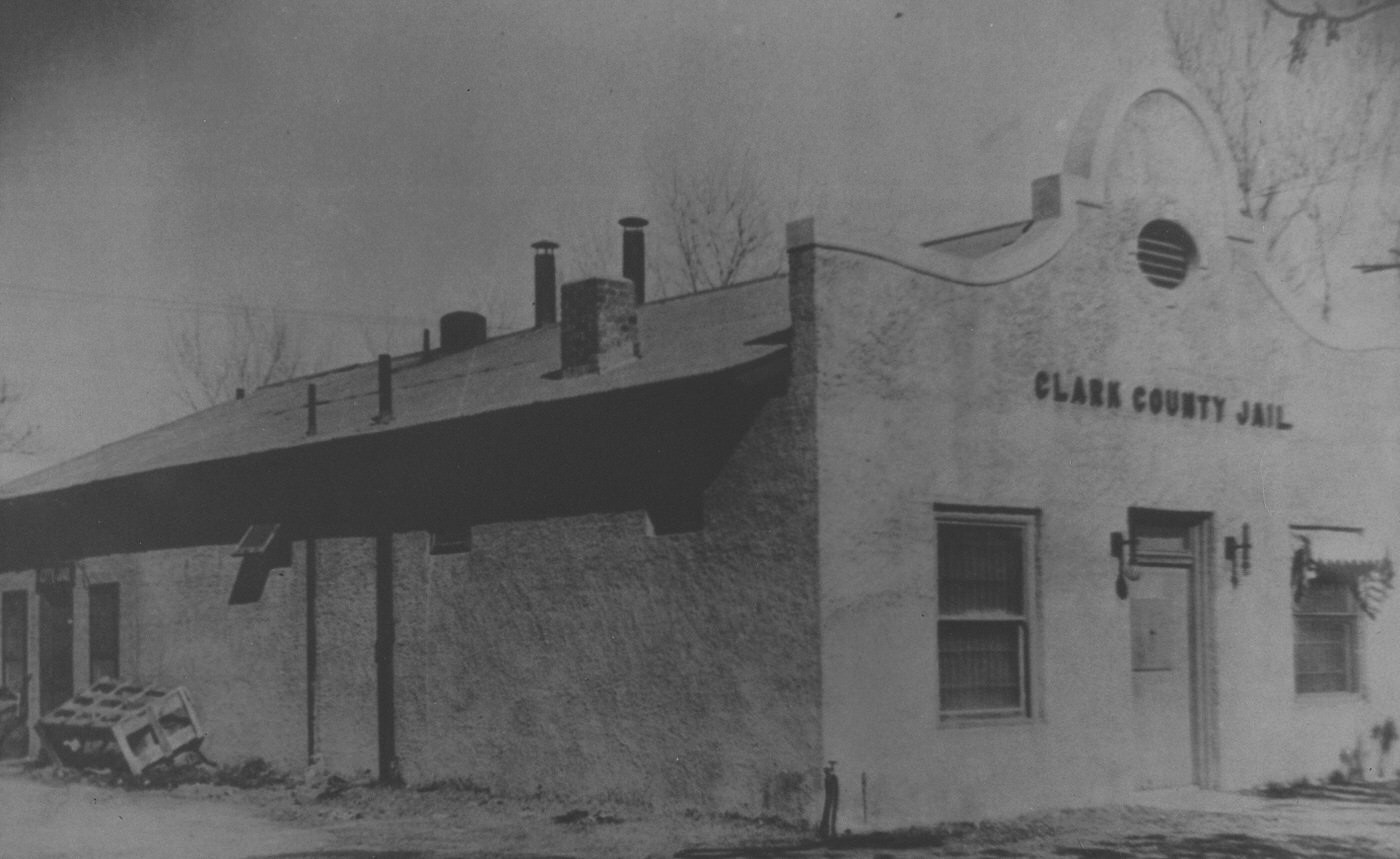
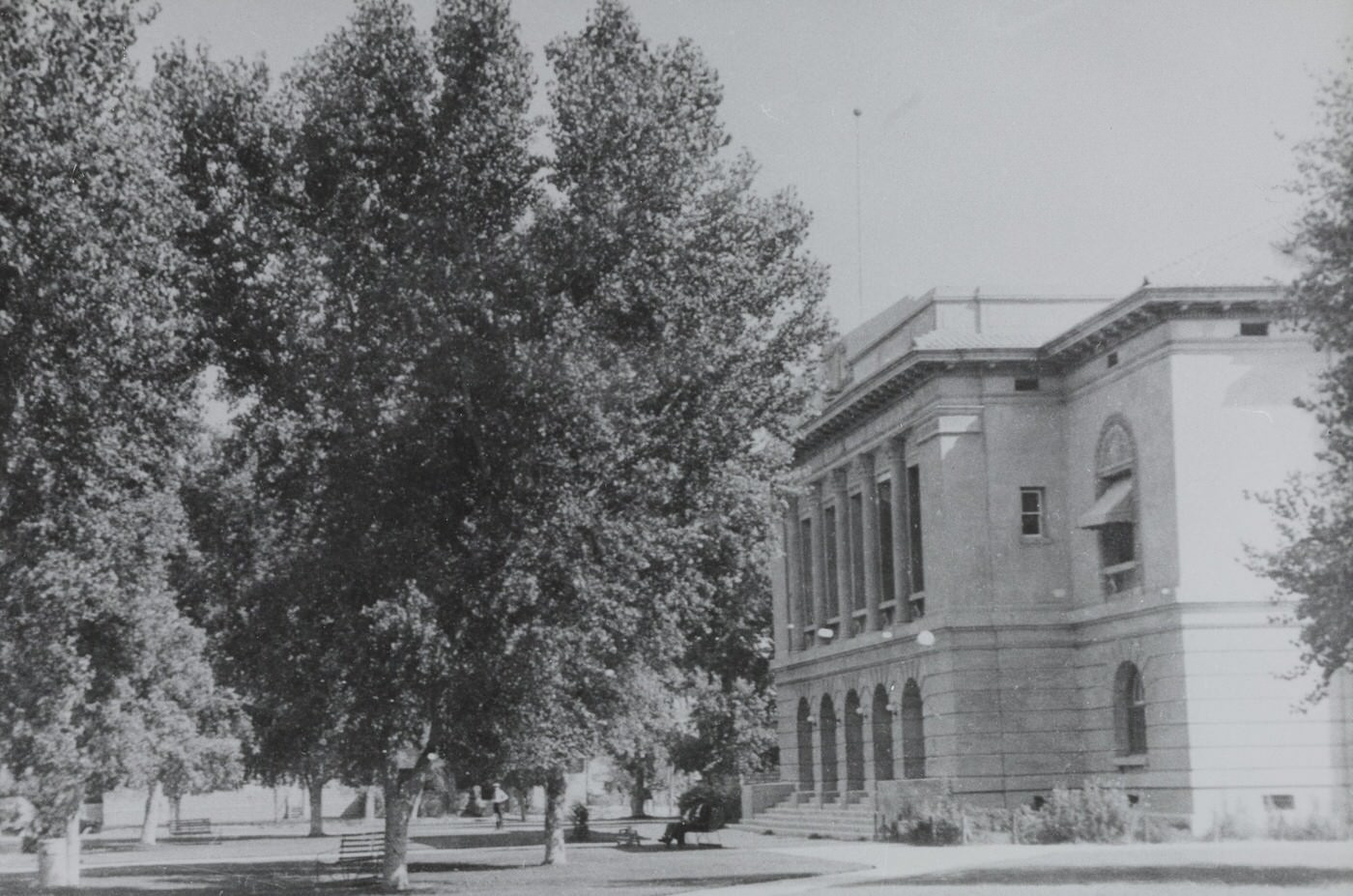
The Nevada legislature agreed. In 1909, Clark County was officially created, carved out of the southern portion of Lincoln County. Las Vegas became the county seat. The new county was named after Senator William A. Clark, the copper magnate who had financed the construction of the San Pedro, Los Angeles & Salt Lake Railroad. Clark had personal reasons to want a county that recognized his railroad’s importance, and the naming honored that.
Having a local government made a practical difference almost immediately. Property disputes could be resolved locally. Tax revenue stayed closer to where it was generated. The new county courthouse on Third Street gave Las Vegas its first real administrative center.
Law, Order, and the Limits of Both
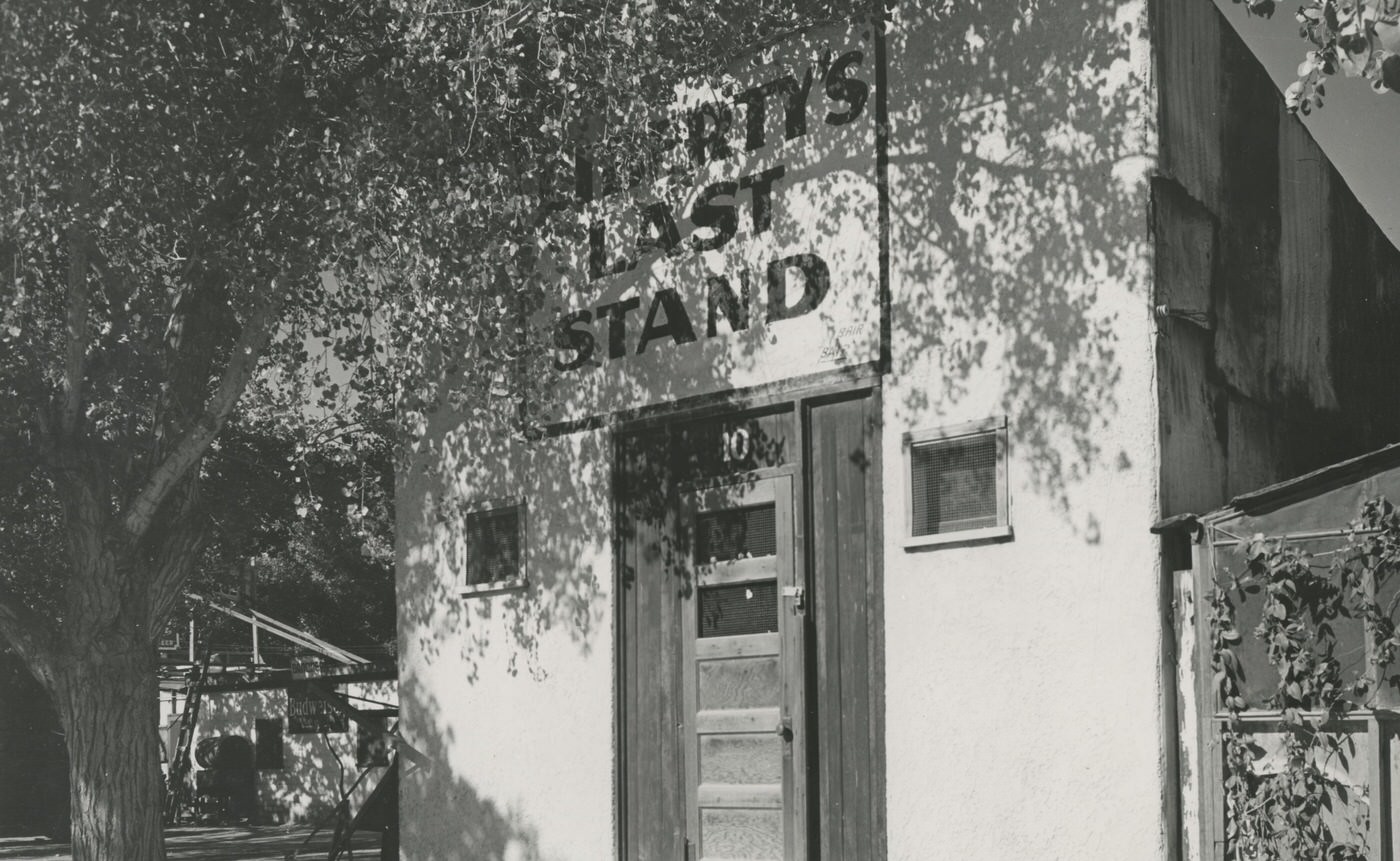
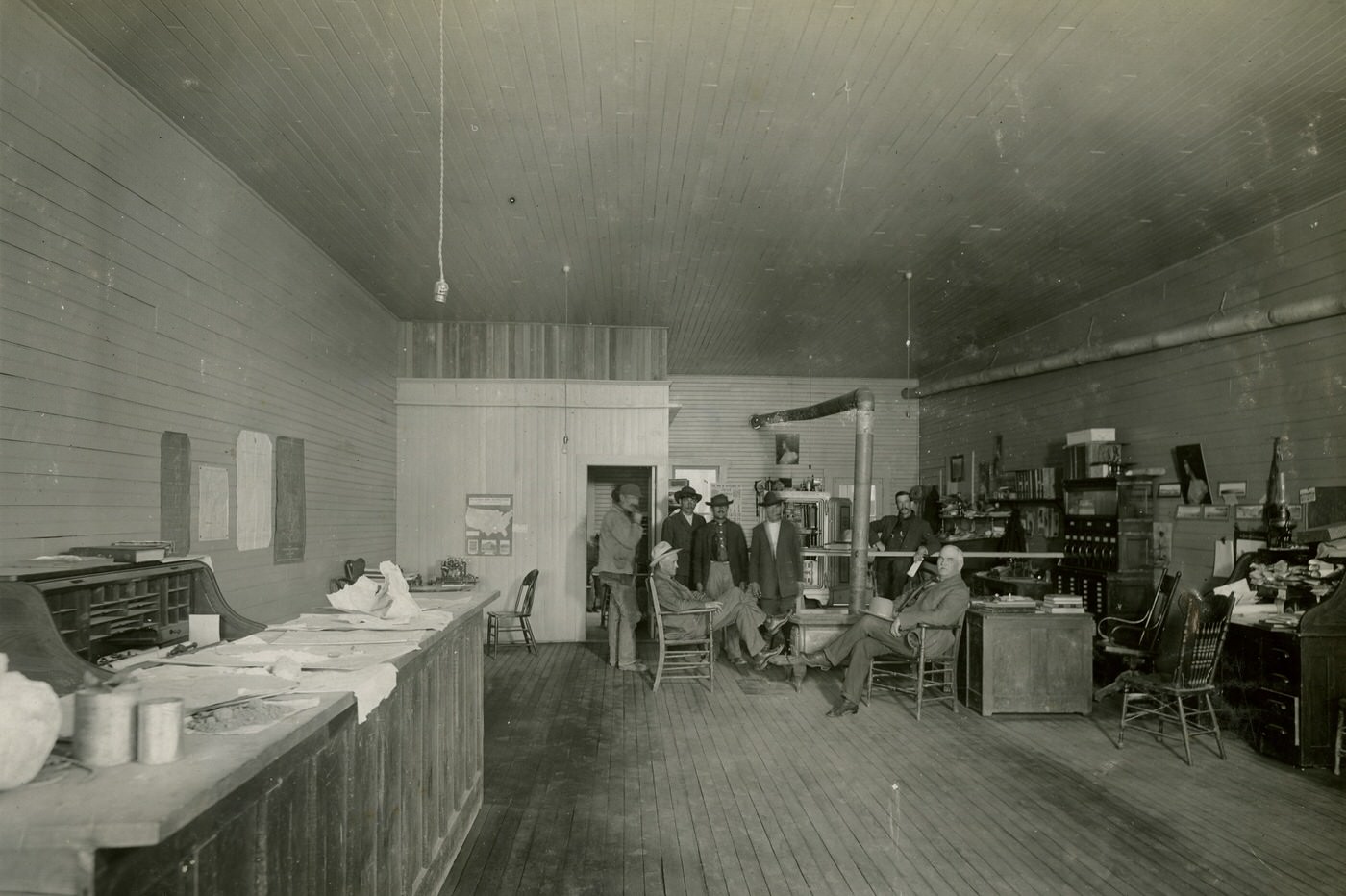
Las Vegas in the 1900s was not a lawless place, but it was a place where law was thin and selectively applied. The town had a marshal, and Clark County had a sheriff after 1909, but the enforcement capacity was small relative to the population and the geography being covered.
Violence happened, mostly in or near Block 16. Arguments at card tables, disputes between miners, fights fueled by cheap whiskey — these were regular occurrences. The Arizona Club and other establishments kept bouncers whose job was to handle trouble before it reached the street. They were not always successful.
Theft was the most common crime recorded in the early town records. Transient workers, men passing through on their way to or from the mines, sometimes left with things that didn’t belong to them. Horses, cash, and tools were the most commonly stolen items. The marshal’s office dealt with these cases with limited resources and varying results.
More serious crimes — murders, armed robberies — were rarer but not unheard of. When they happened, they drew attention from across the state. Nevada’s newspapers covered Block 16’s more dramatic incidents in detail, which only reinforced the reputation the block had already earned.
The Town at the End of the Decade
By 1910, Las Vegas had roughly 1,500 to 2,000 permanent residents, depending on which census methodology was used and whether the surrounding ranches and camps were counted. Fremont Street was a functional main street with most of the commercial establishments a small Western town needed. The railroad repair shops employed several hundred men. Clark County had its own government. The schools were growing. The churches had regular congregations.
Block 16 still operated, stripped of legal gambling but still running on alcohol and sex work. The artesian wells still supplied water. Alfalfa farms still grew on the edges of town.
Las Vegas was not famous. It was not particularly interesting to anyone outside the region. No one looking at it in 1910 would have predicted what was coming — the Hoover Dam construction in the 1930s, the legalization of gambling again, the rise of the resort hotels, the transformation into one of the most visited cities on earth.
In the 1900s, it was just a railroad town in the desert that happened to be in exactly the right place at exactly the right time.
Image Credits: Josephine Scott Collection, UNR, Elbert Edwards Photograph Collection, University of Nevada, Wikimedia, Donaldson Collection, Flickr,
Found any mistakes? 🥺 Let us Know