
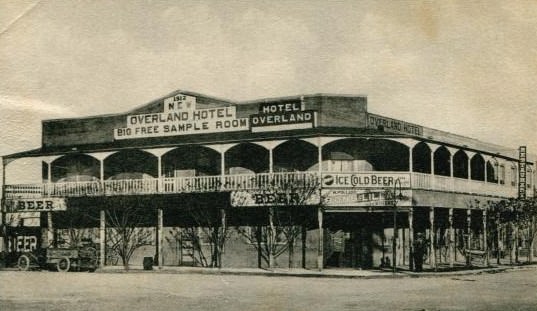
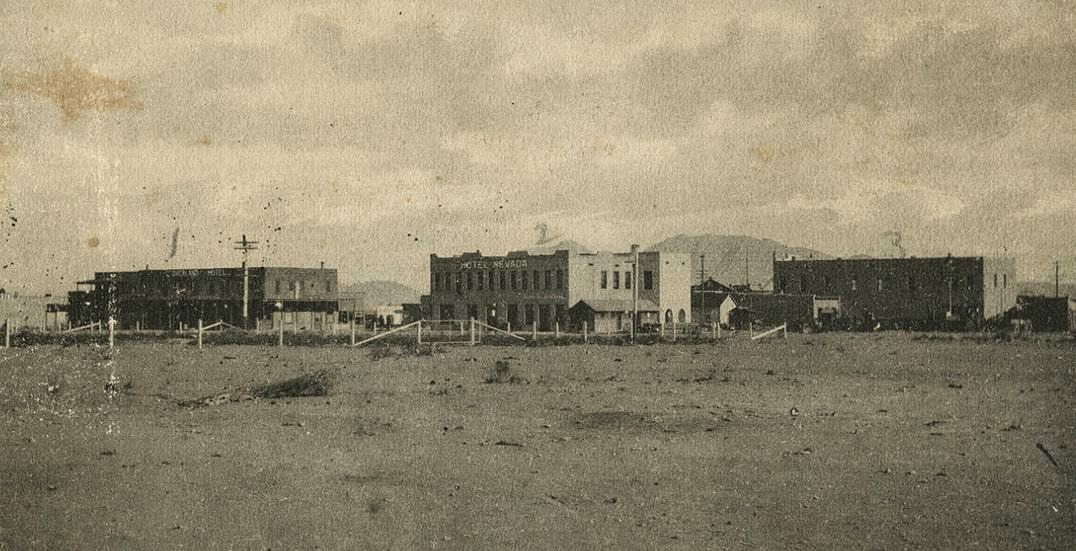
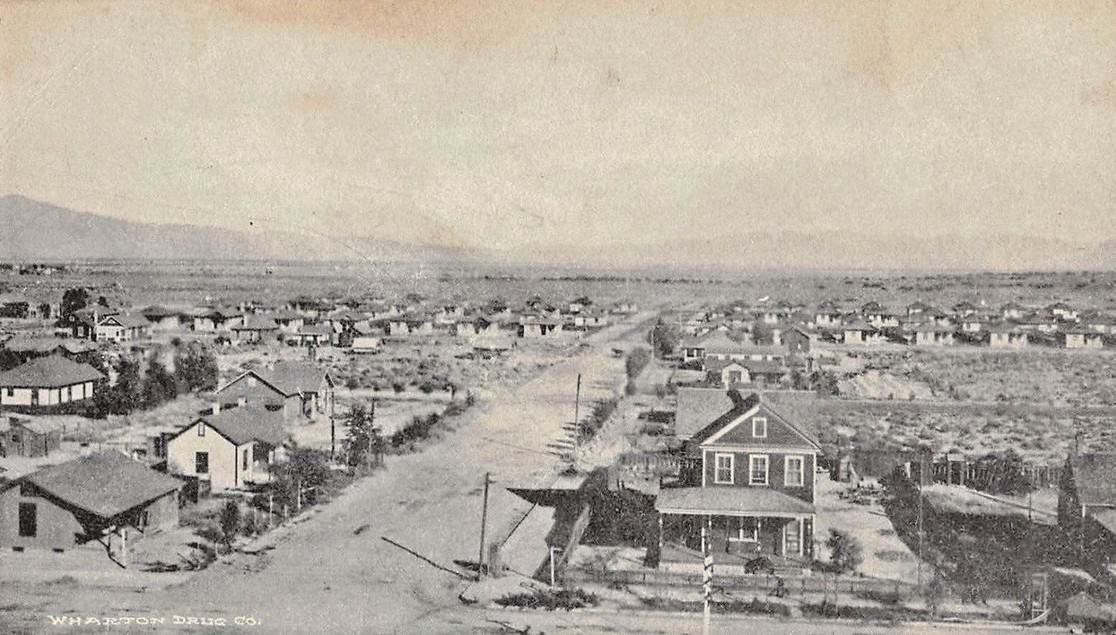
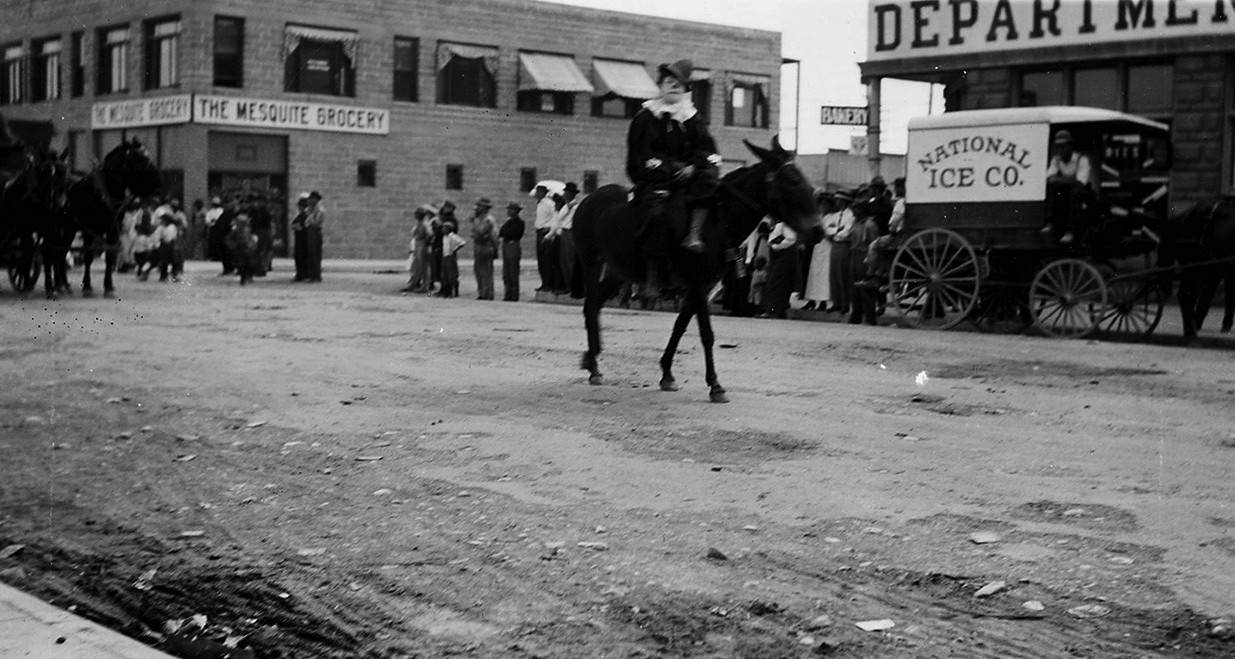
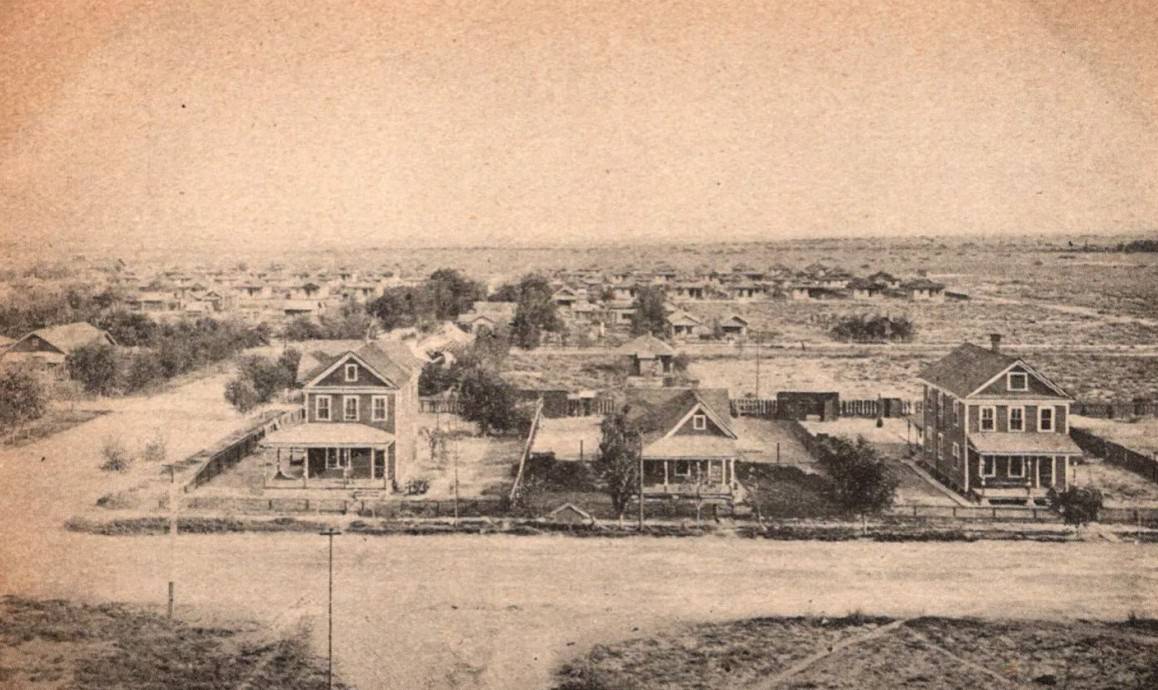
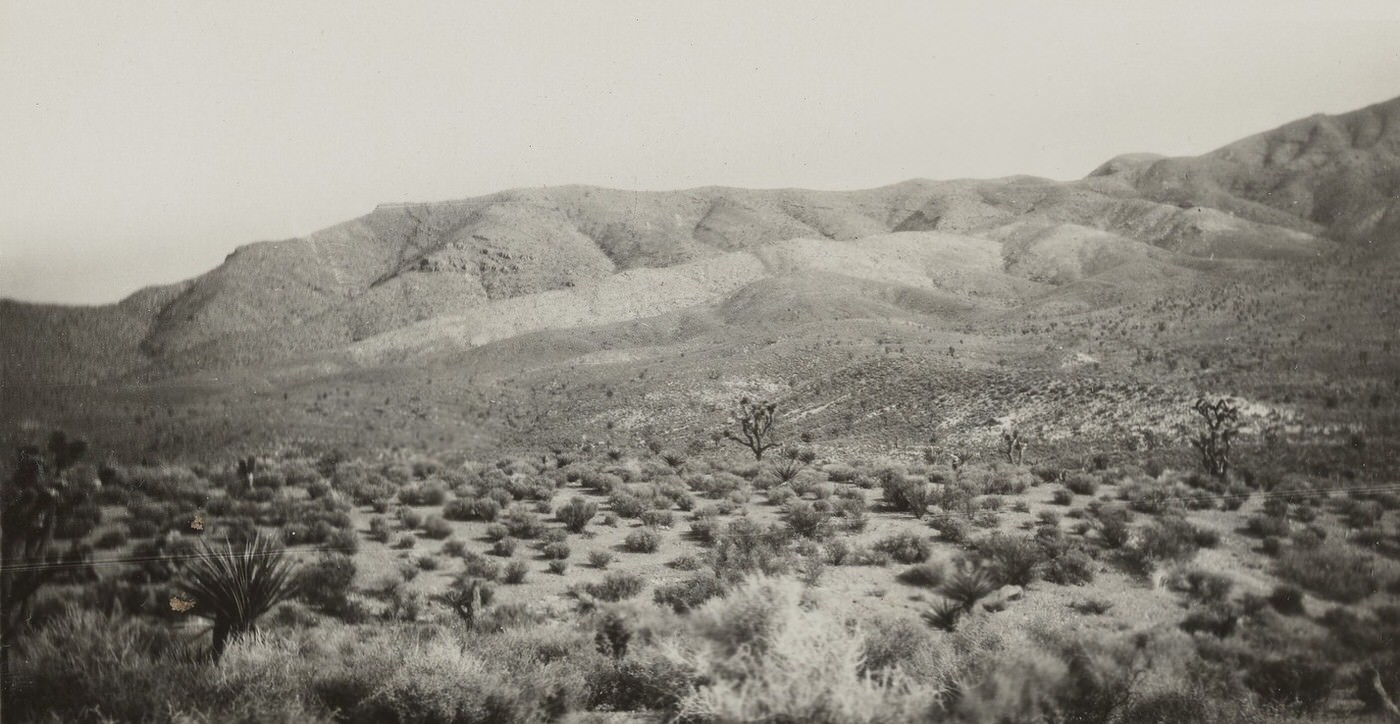
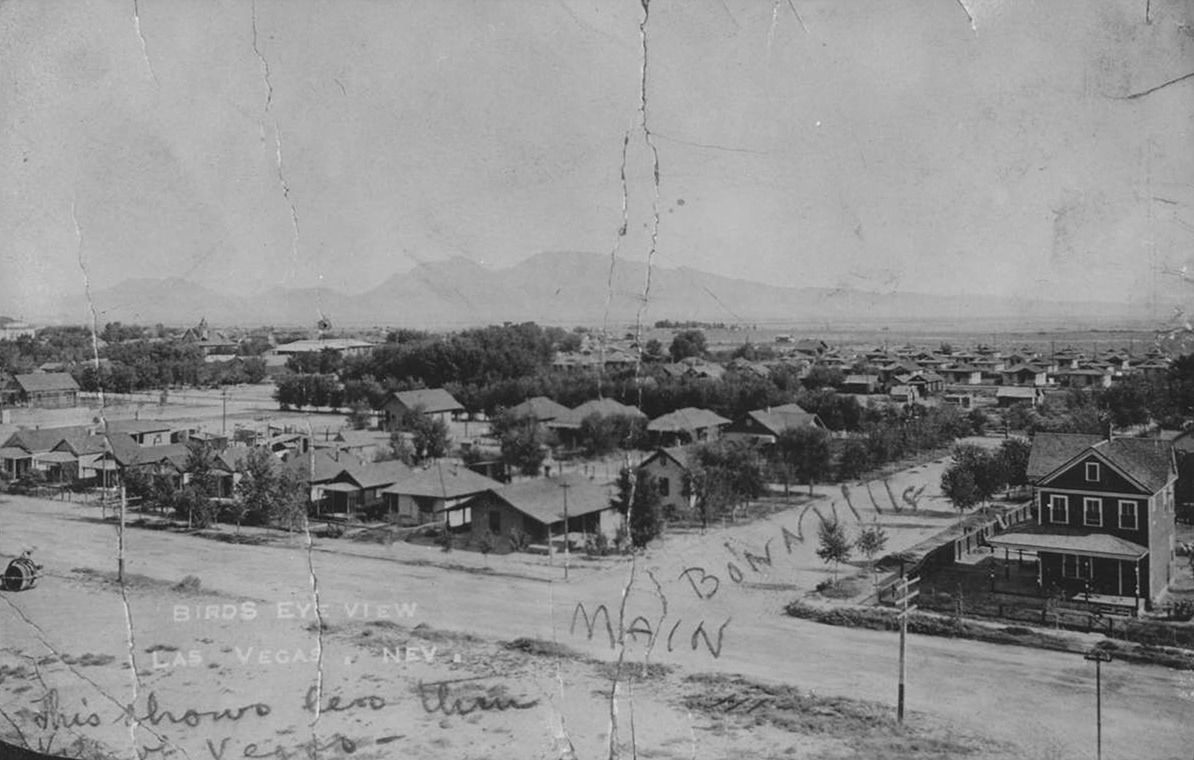
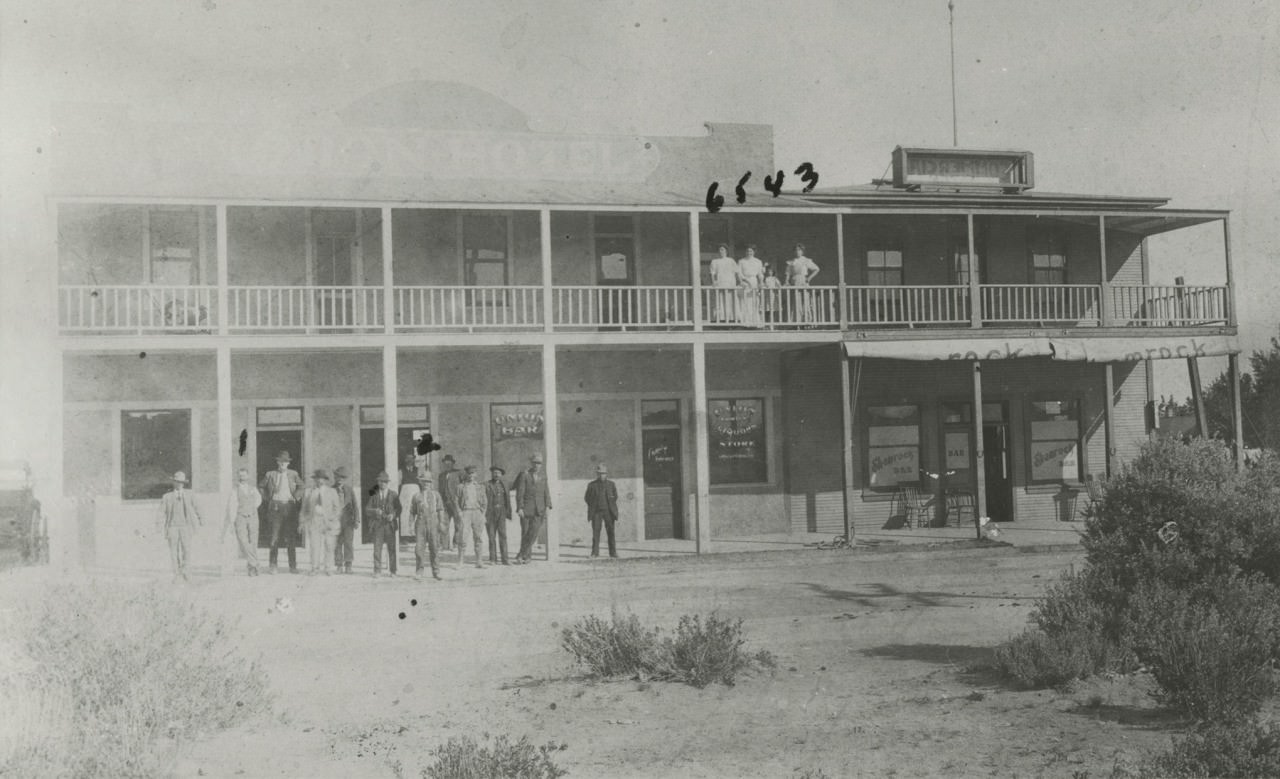
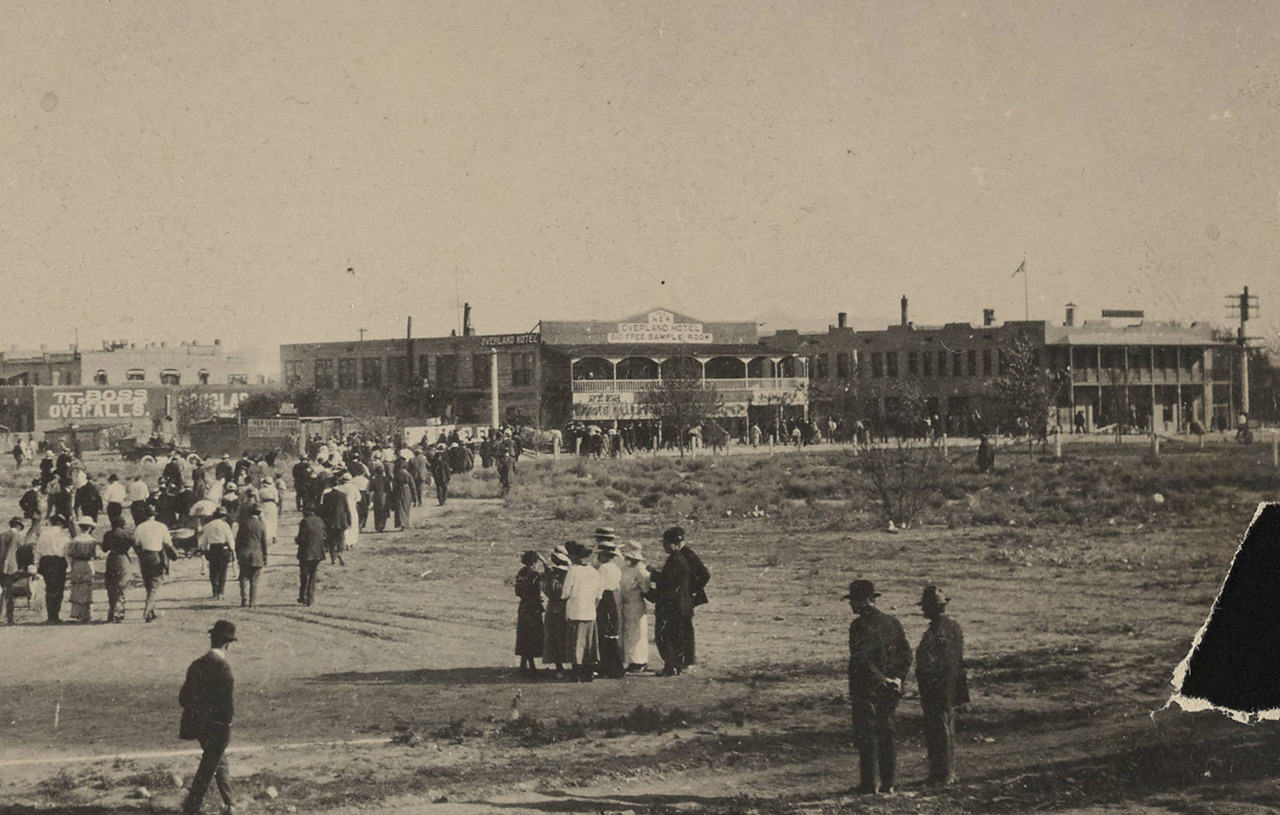
Las Vegas entered the 1910s as a five-year-old town with a working railroad, a functioning main street, and a reputation built mostly on Block 16. The 1910 federal census counted 945 people living within the town limits — a number that undersells the actual population since many workers lived in railroad camps and outlying ranches that weren’t counted with the town proper. Clark County, created just one year earlier in 1909, was still setting up its offices and courts. The desert around the settlement was unchanged — flat, brown, and indifferent to whatever humans chose to build on it.
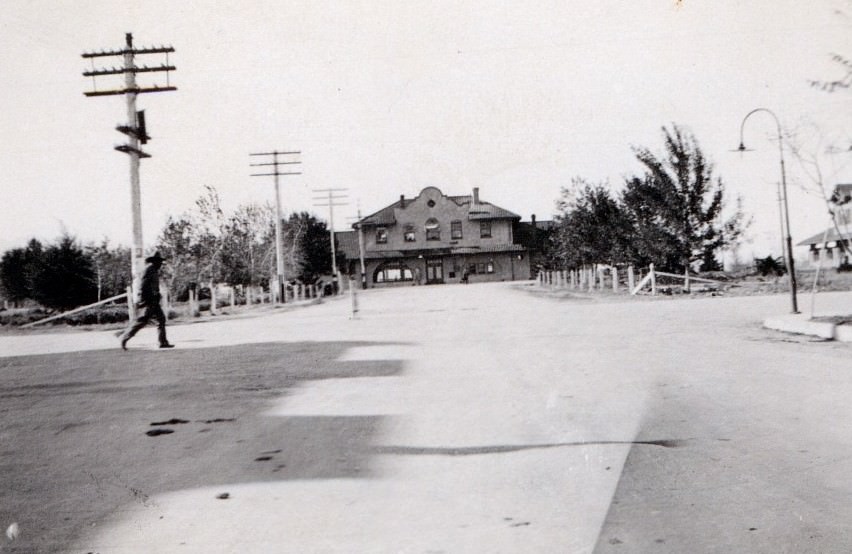
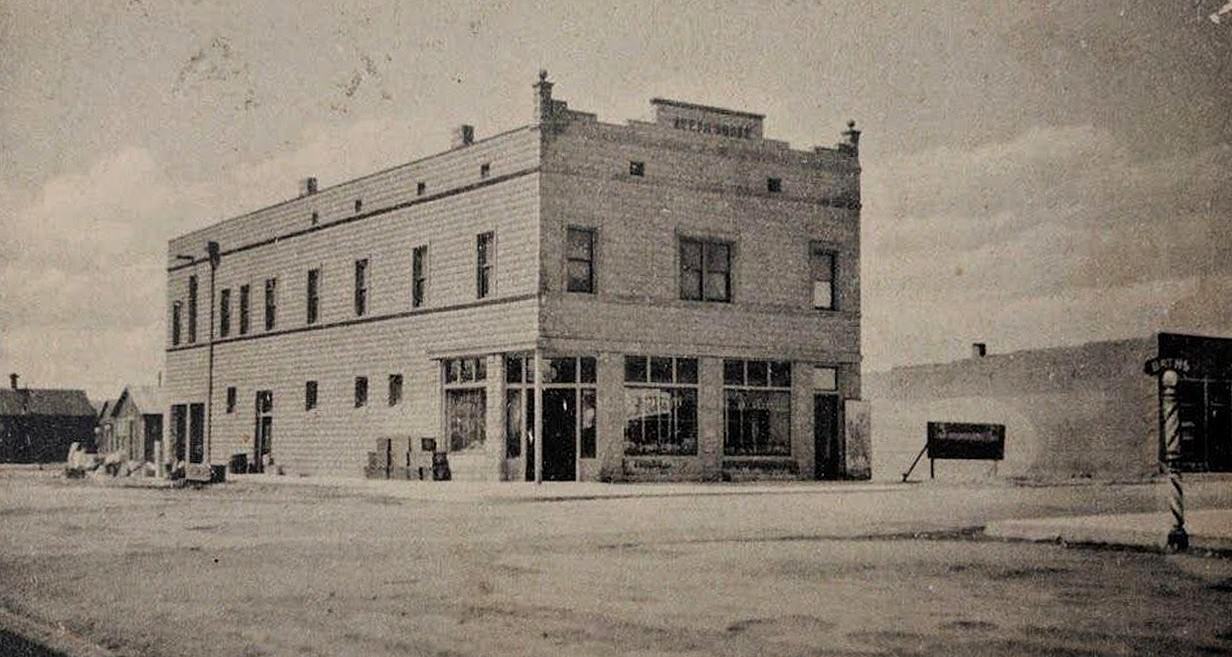
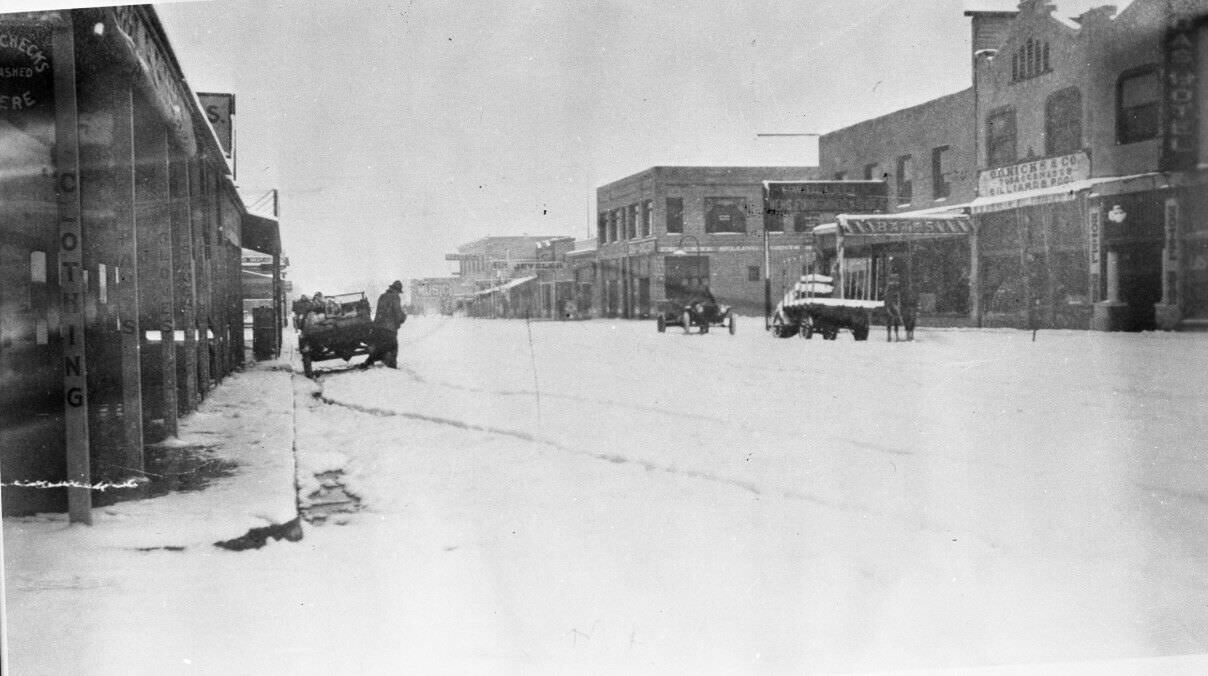
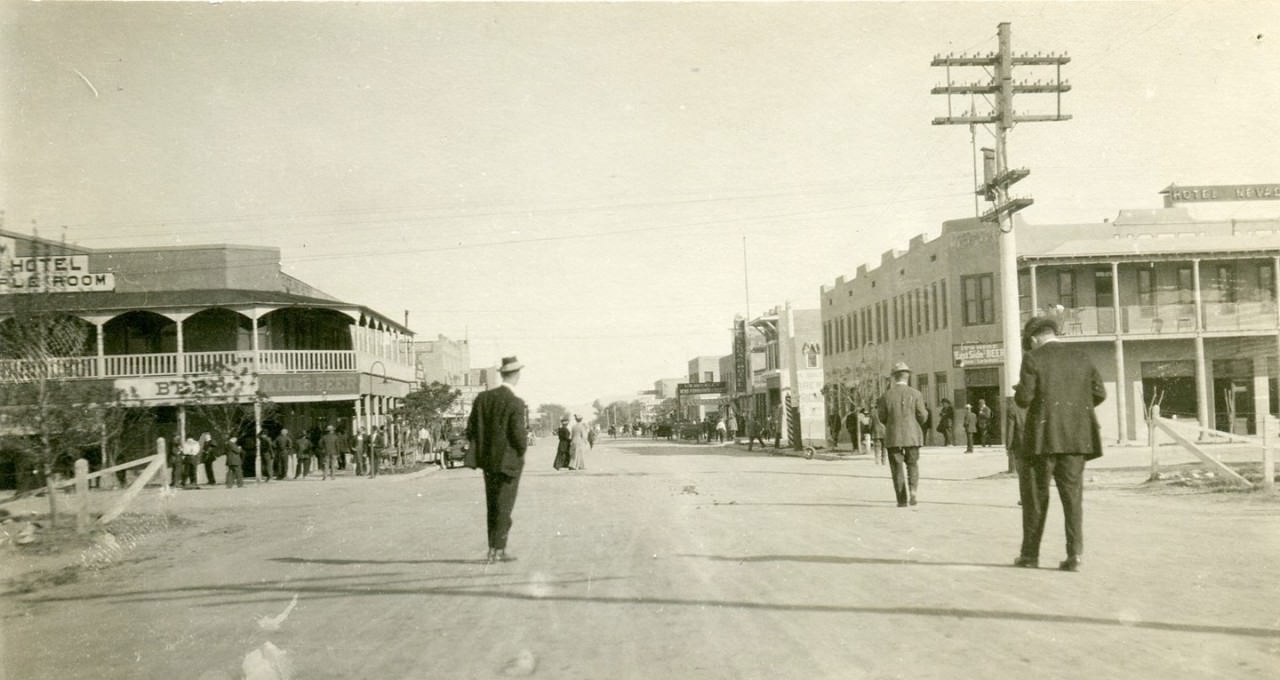
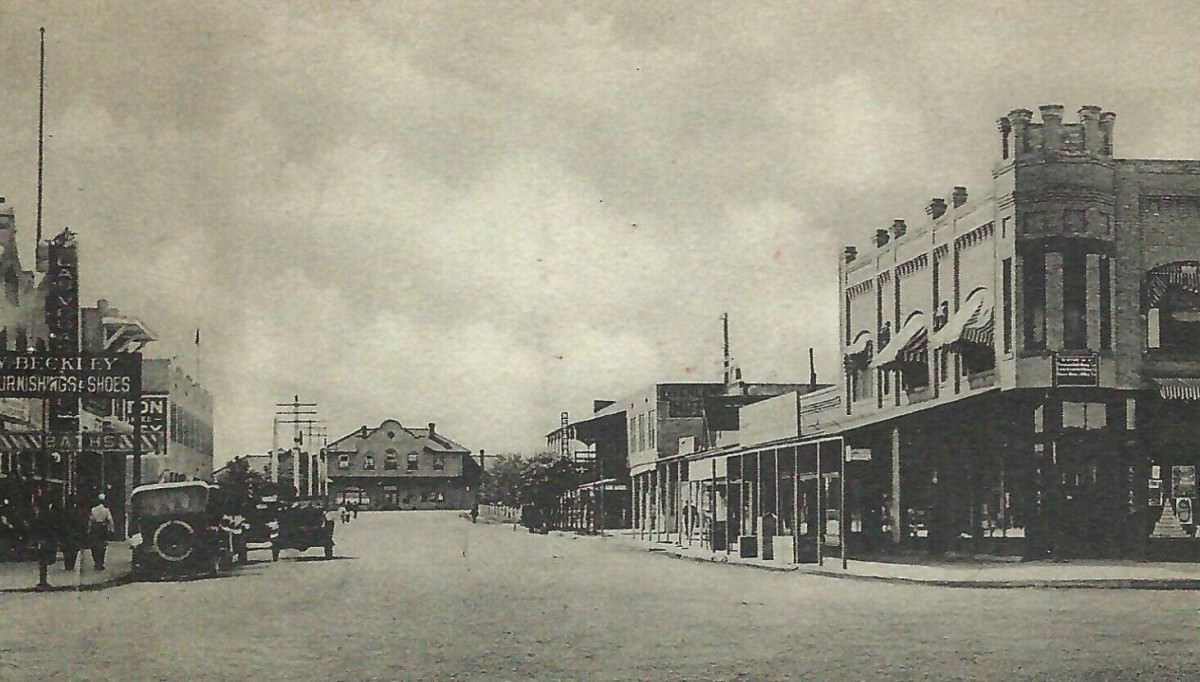
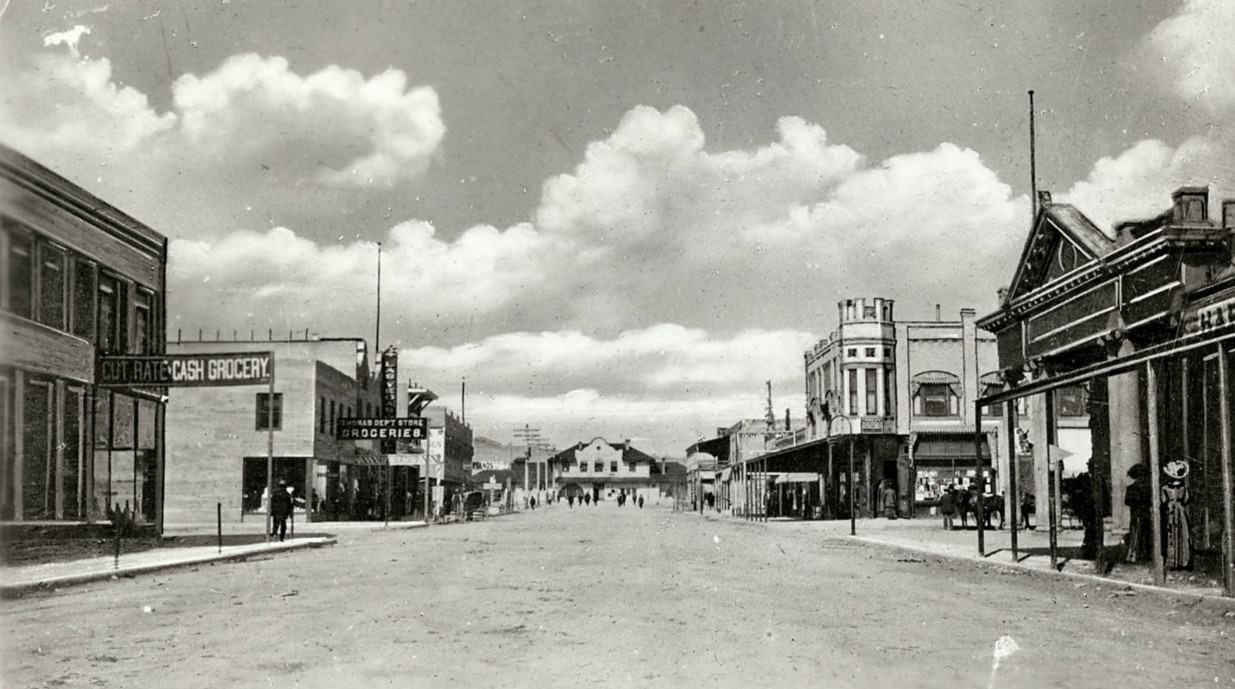
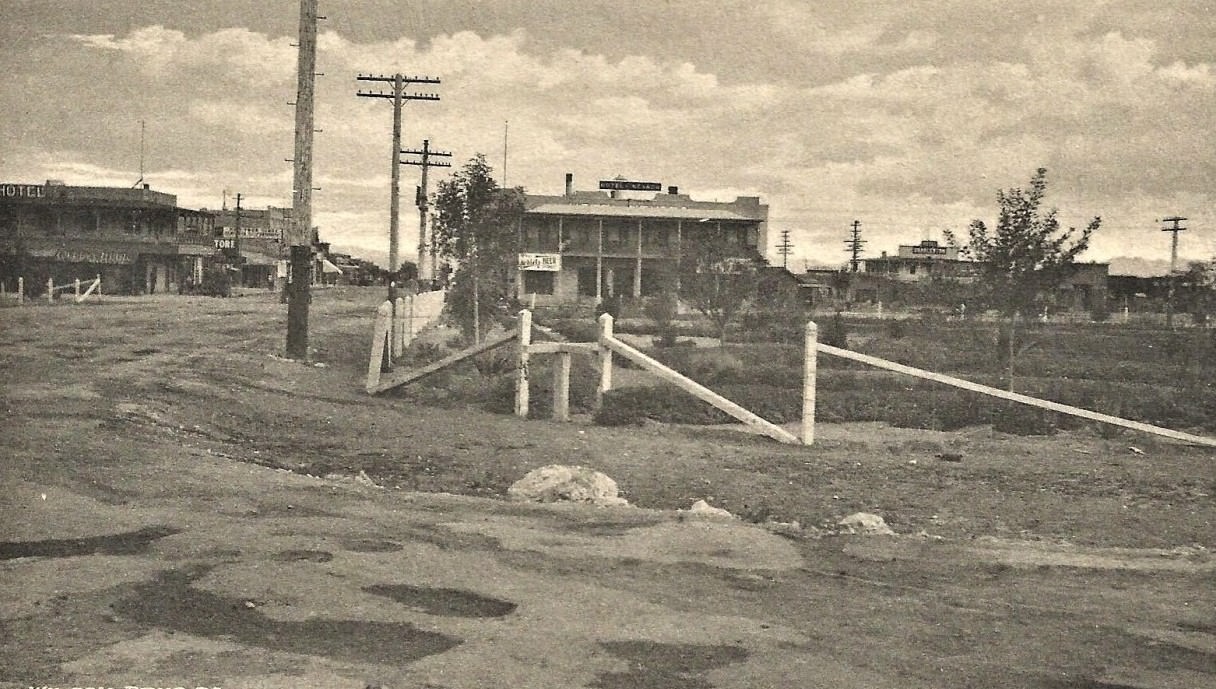
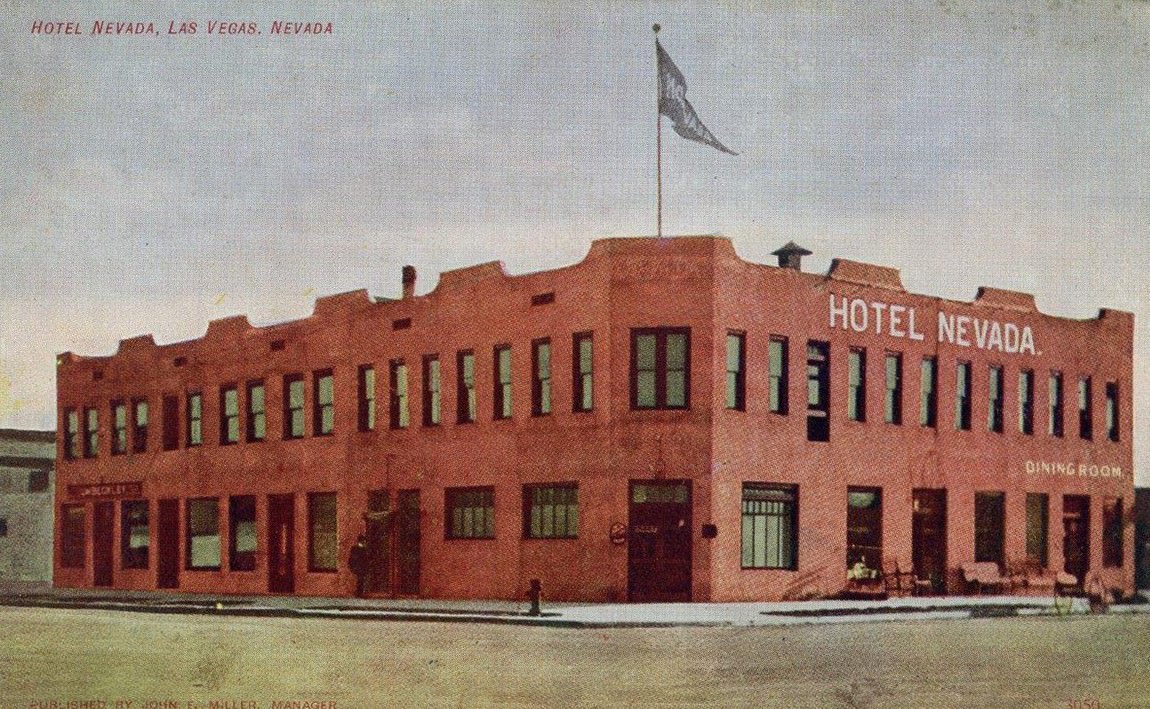
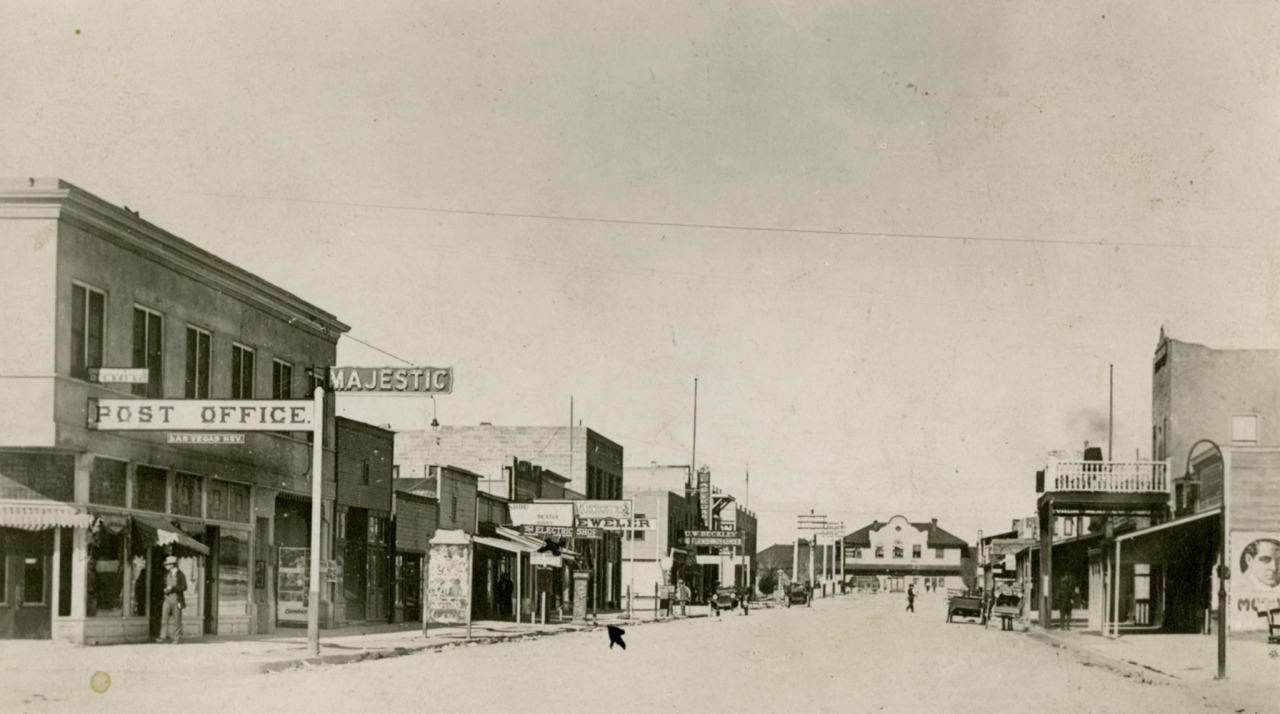
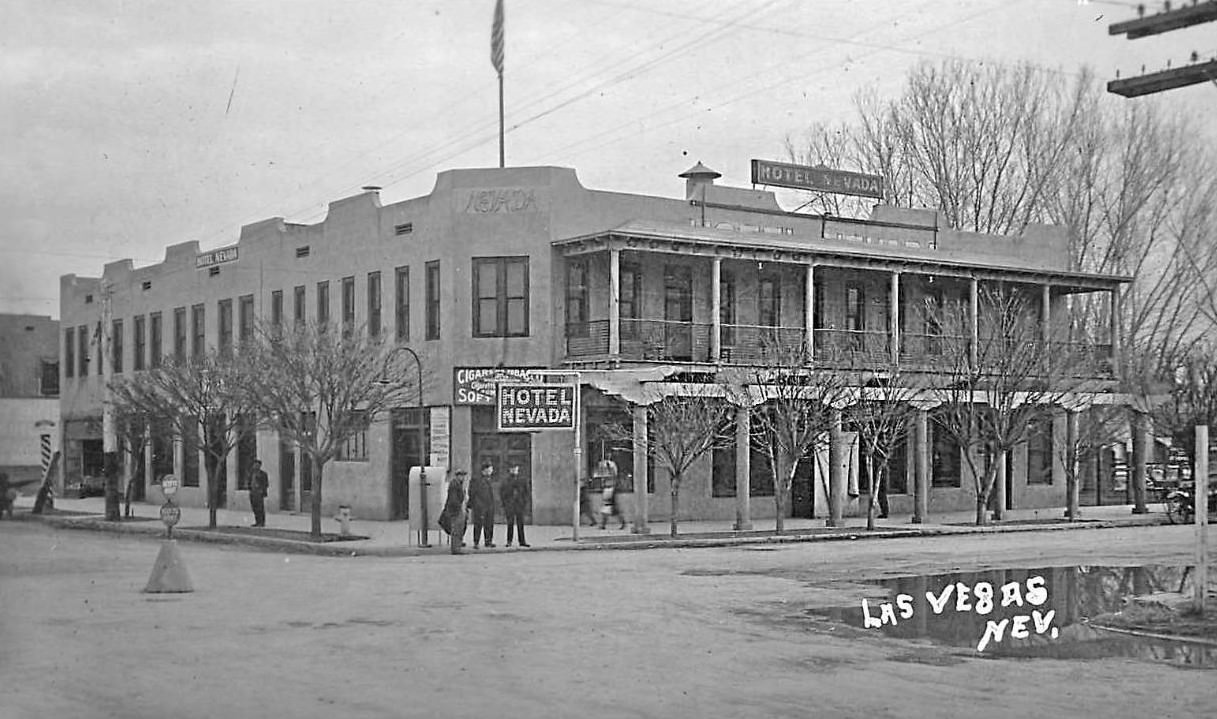
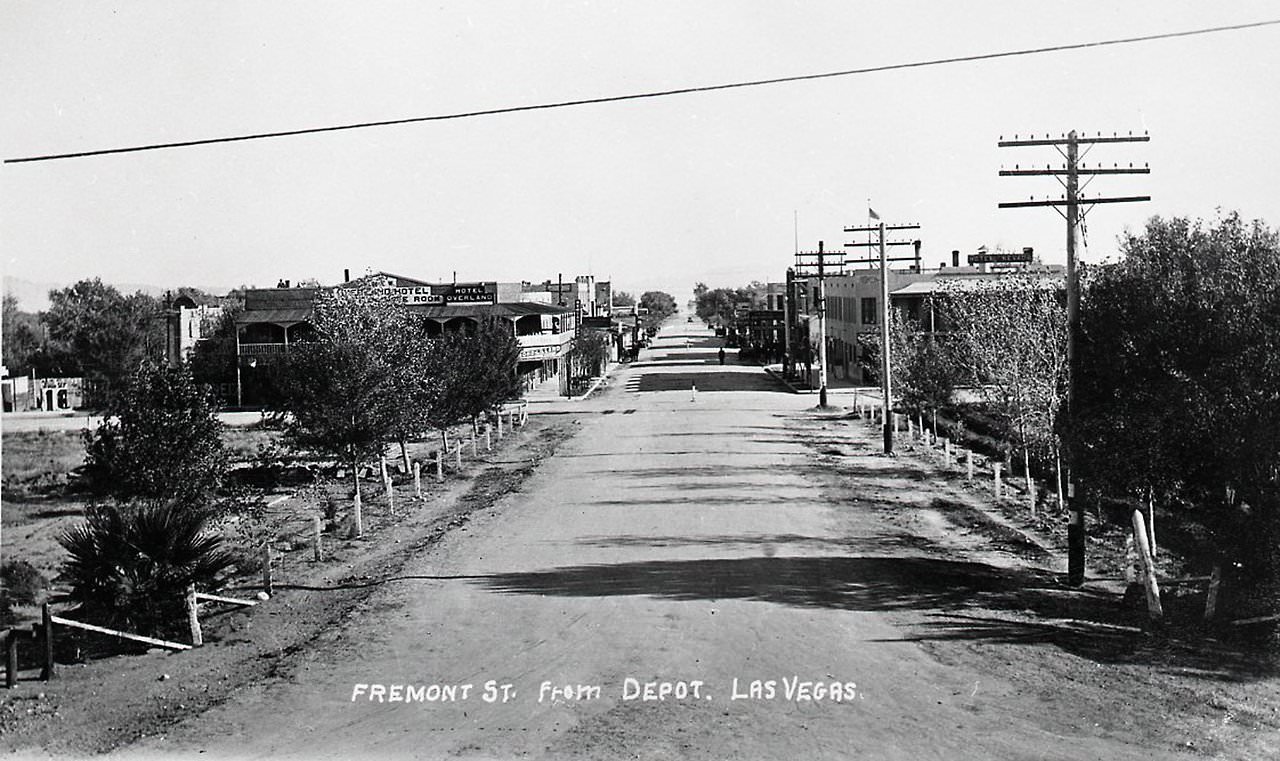
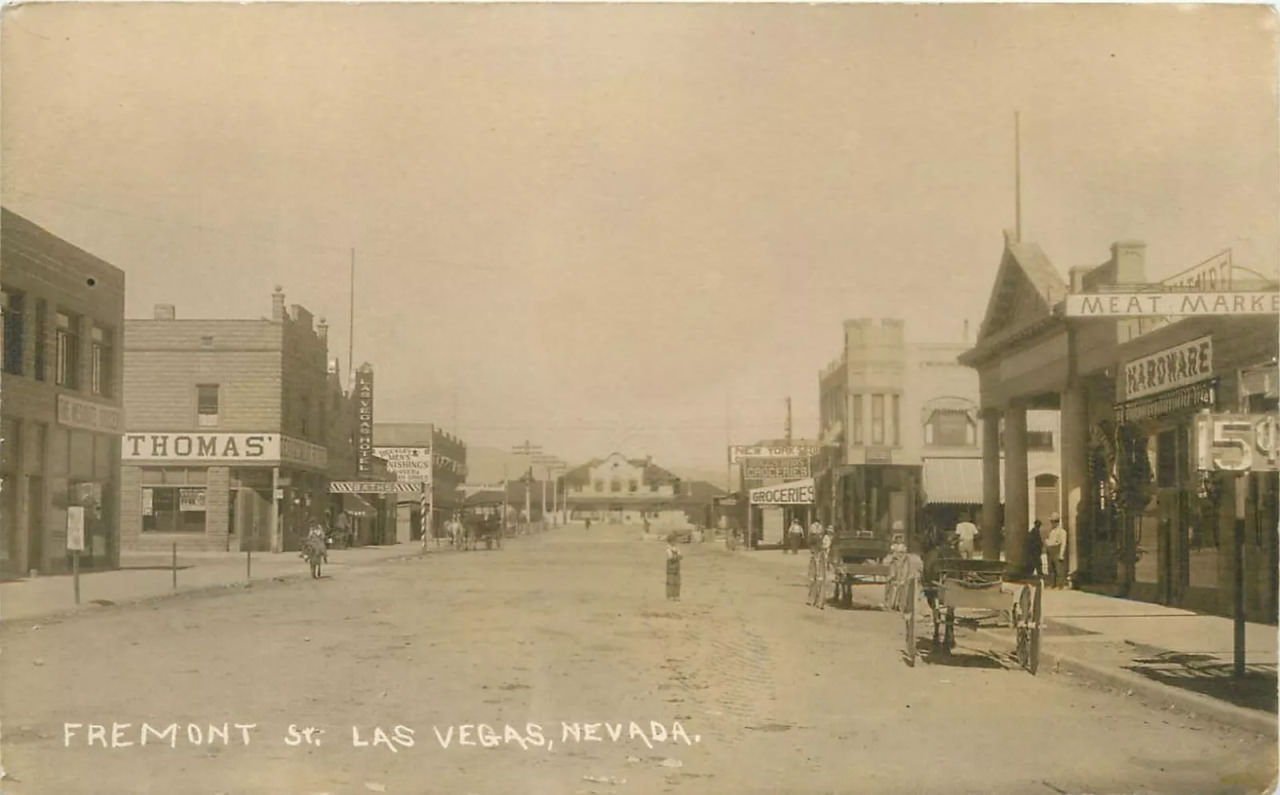
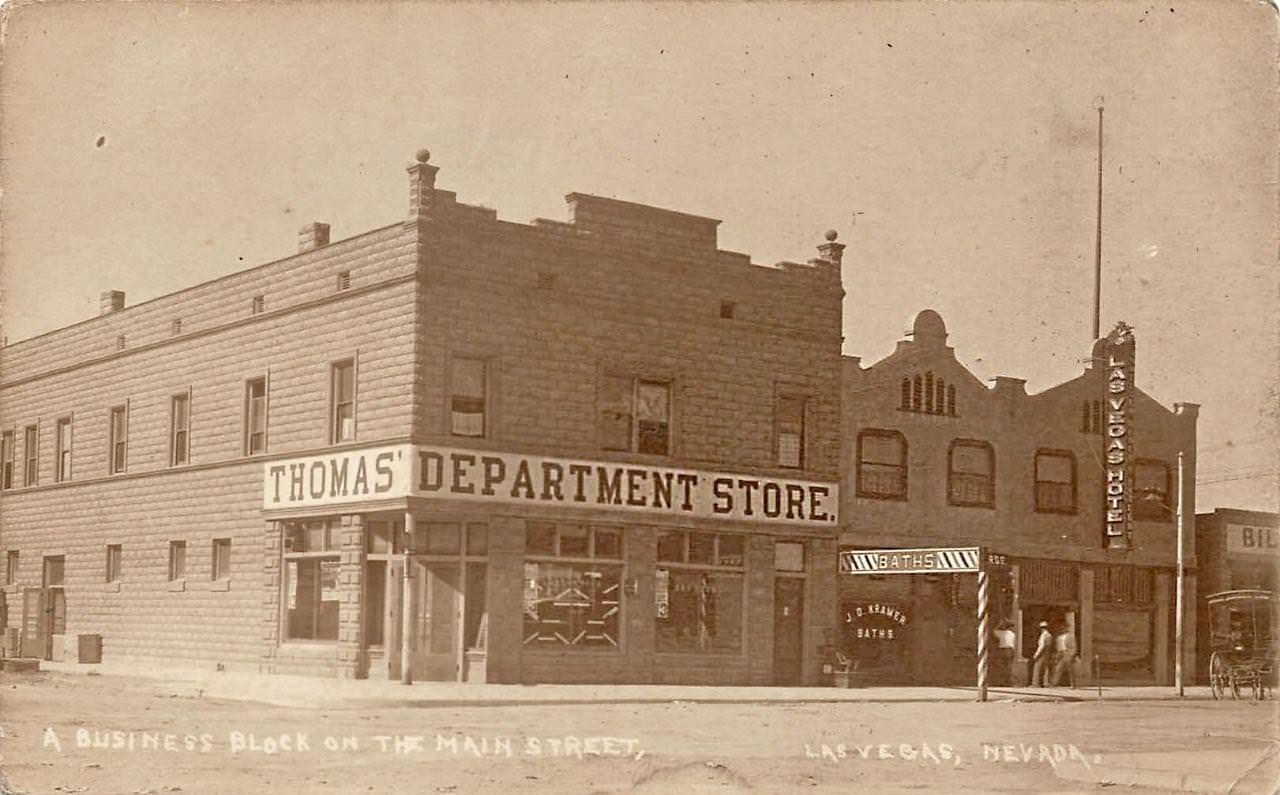
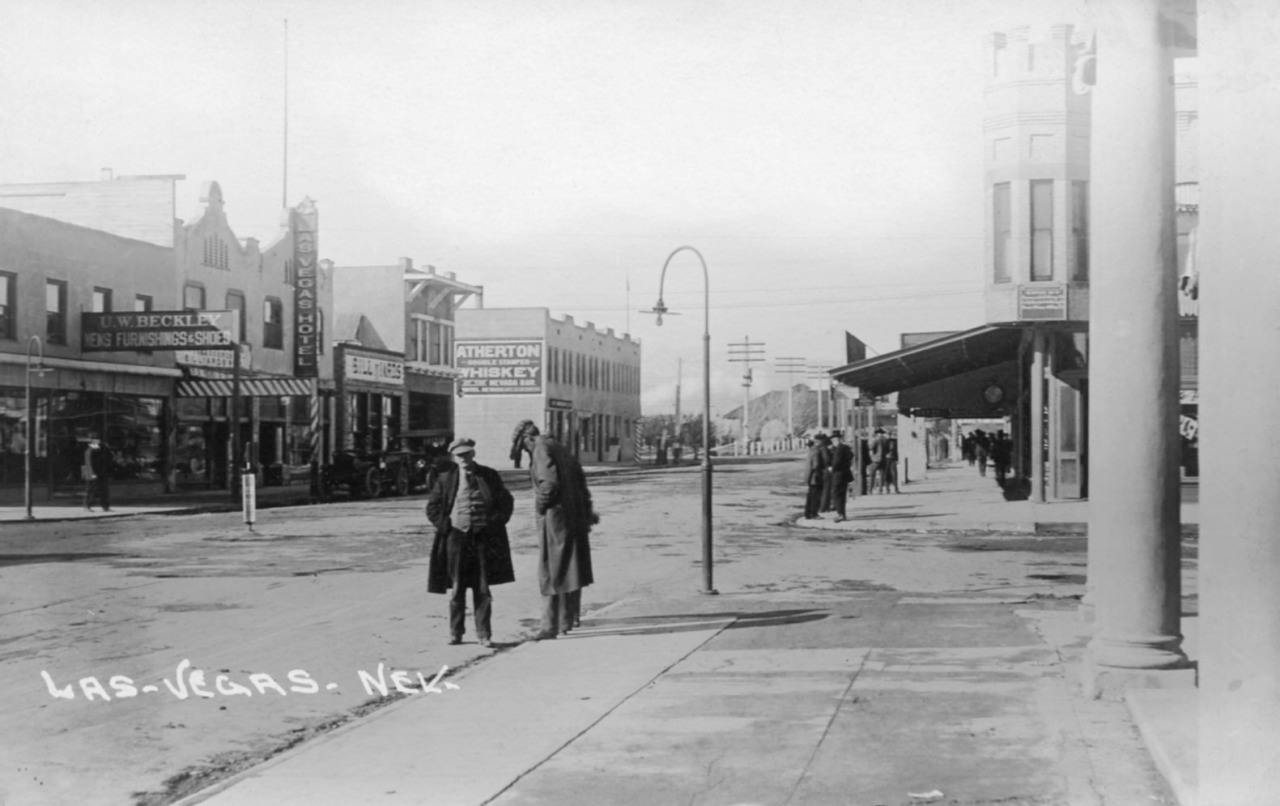
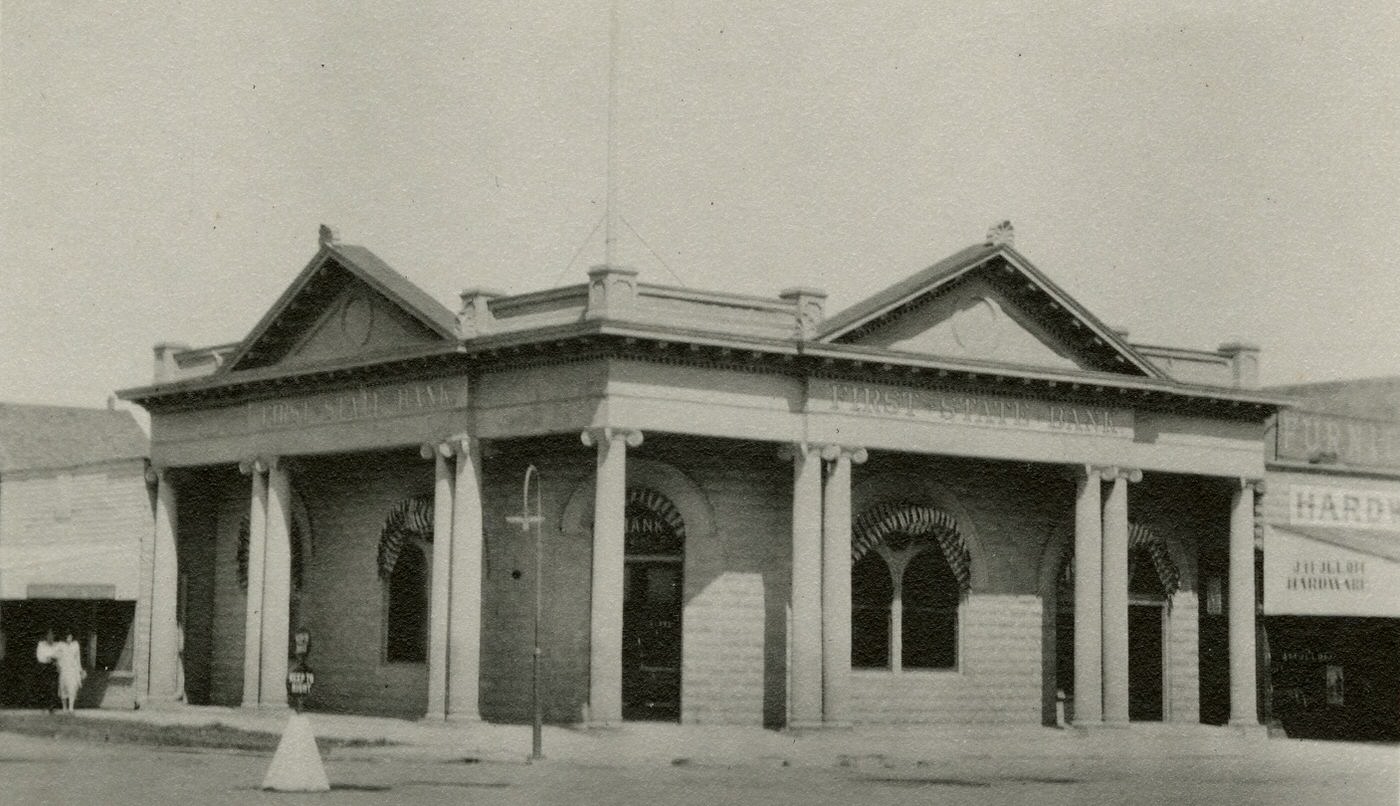
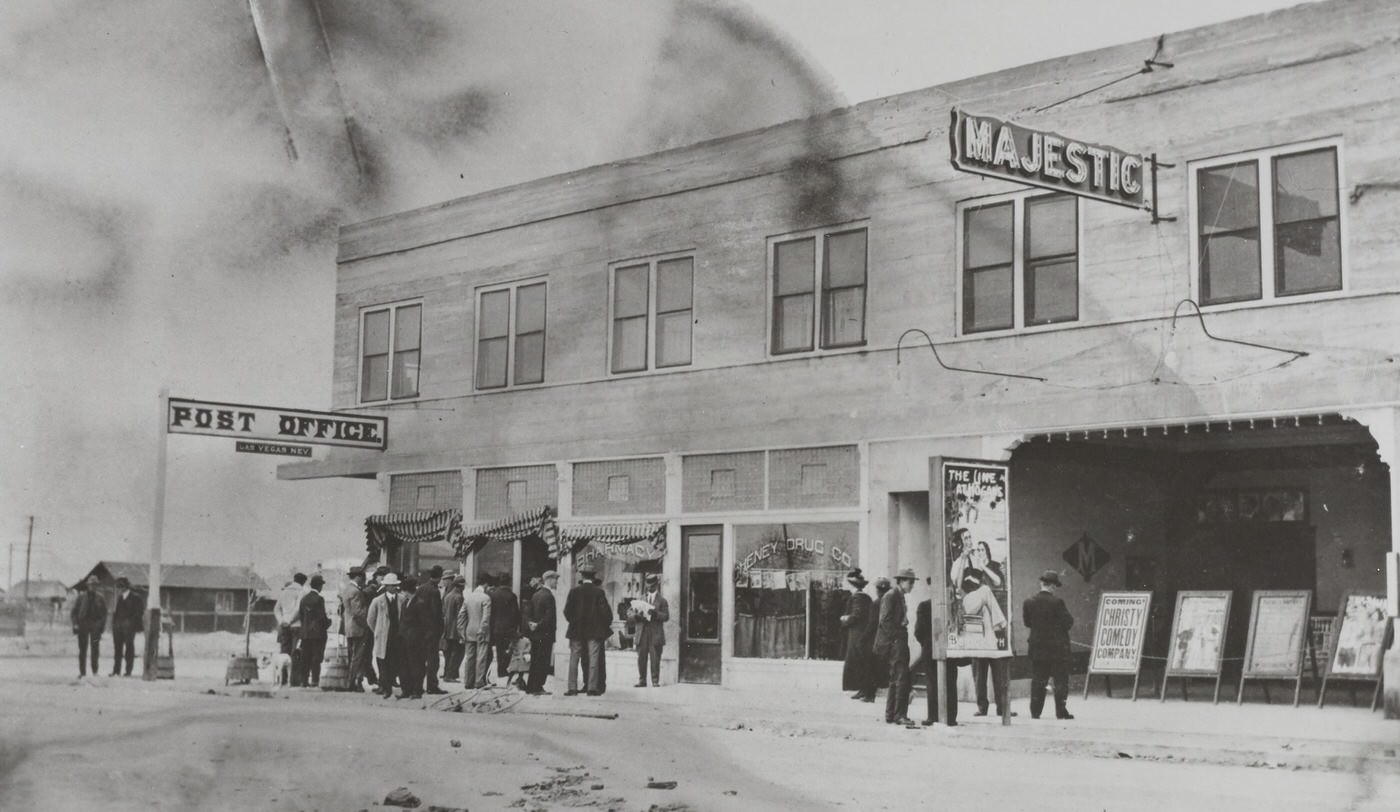
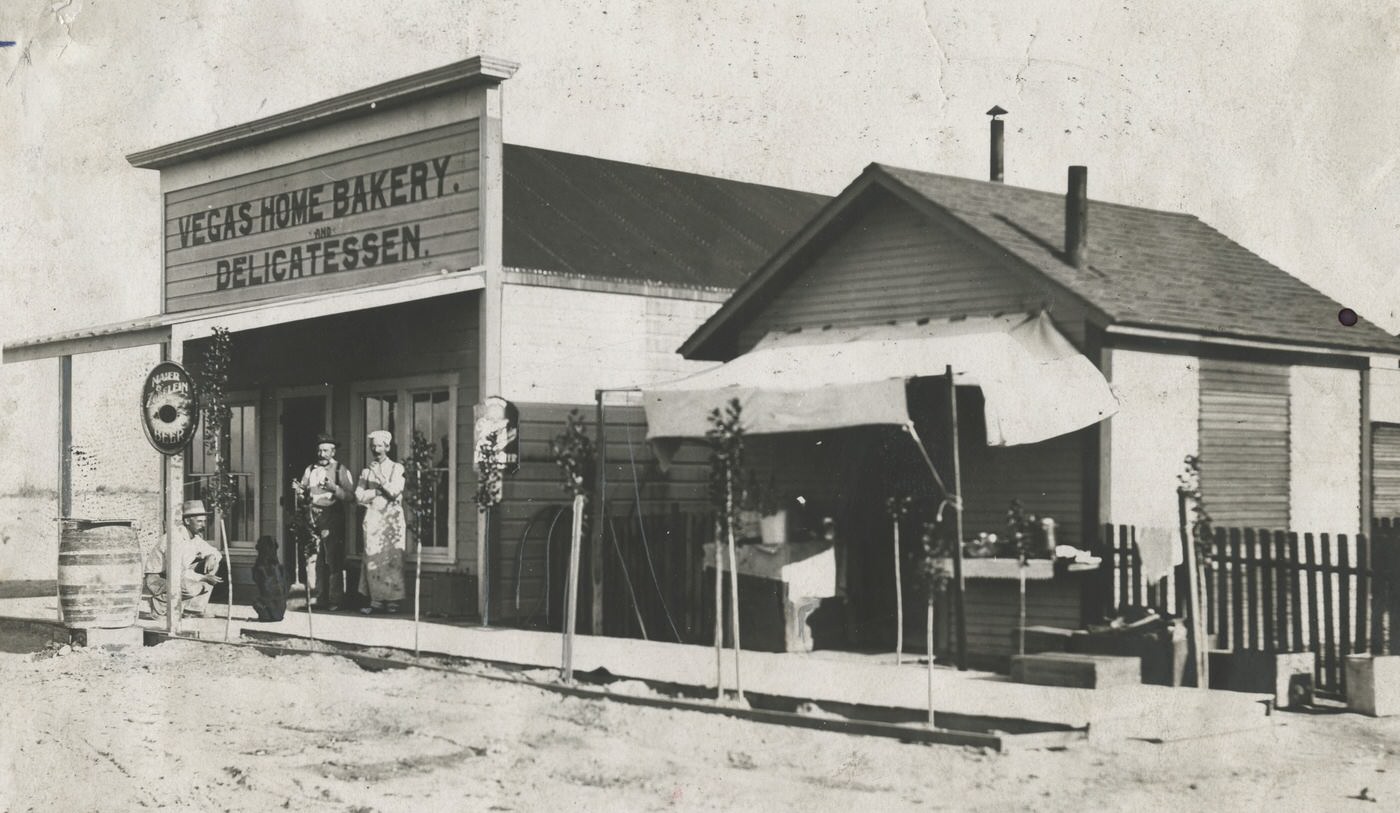
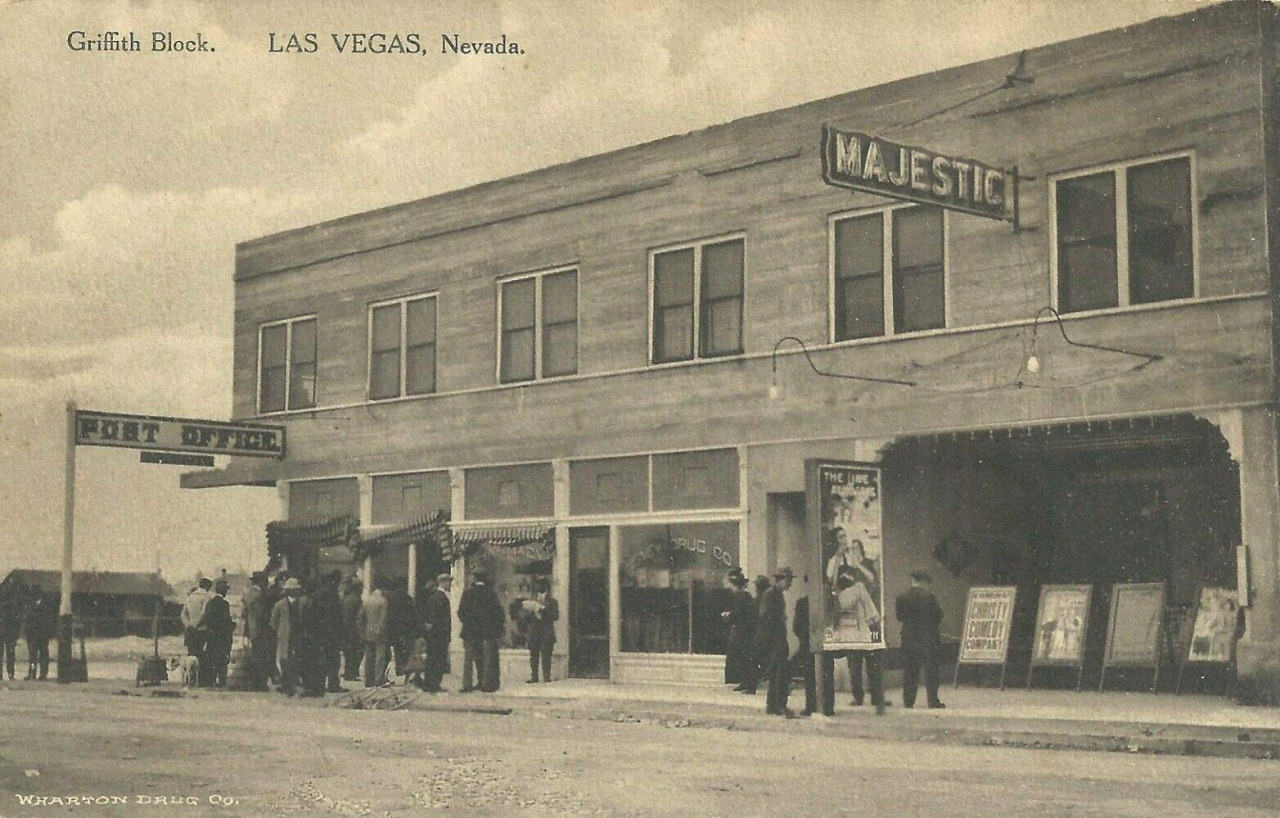
The town had basics in place: a school, several churches, a newspaper, a bank, a post office, and a commercial strip along Fremont Street. What it didn’t have was stability. The economy depended almost entirely on one employer — the San Pedro, Los Angeles & Salt Lake Railroad — and on the mining booms happening to the north. Both of those things could change quickly, and in the 1910s, they did.
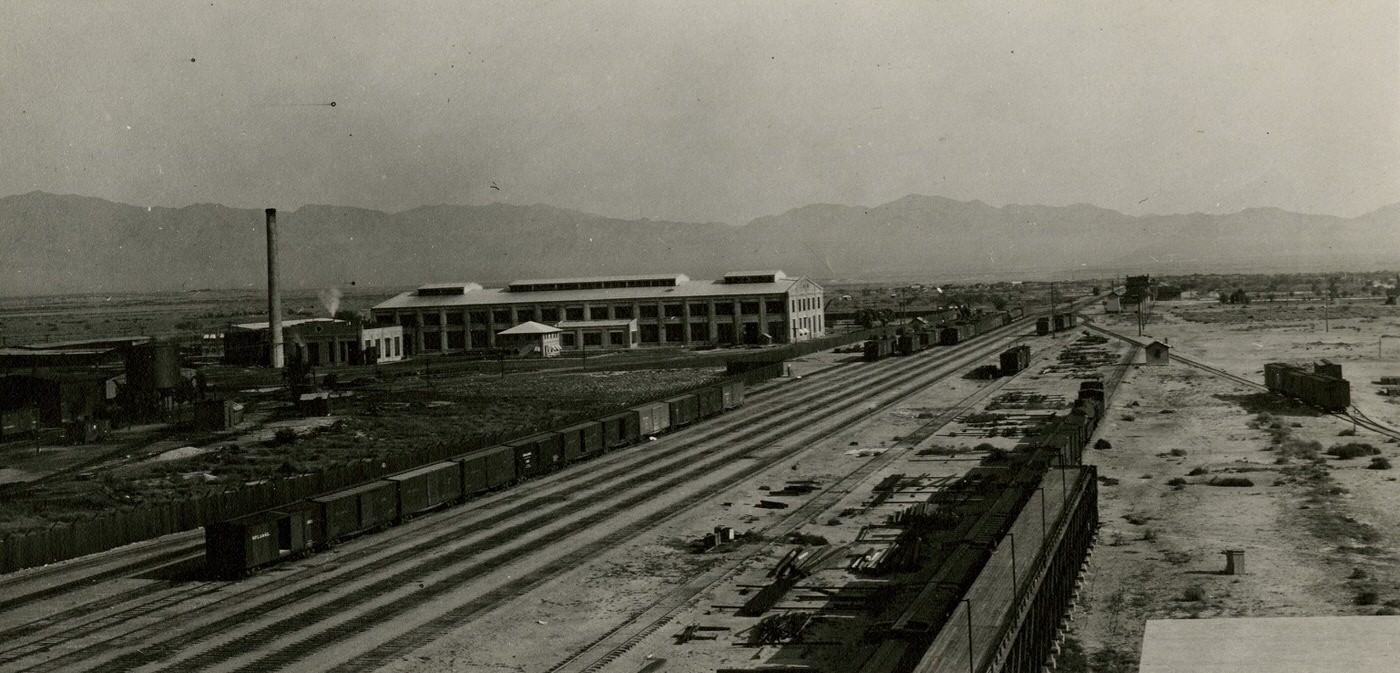
The Railroad Shops: The Town’s Engine
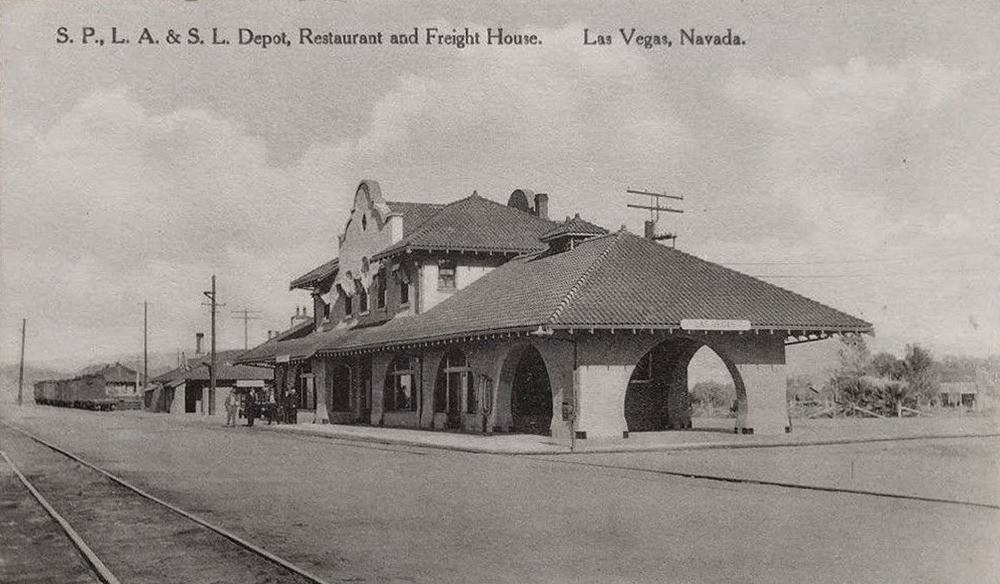
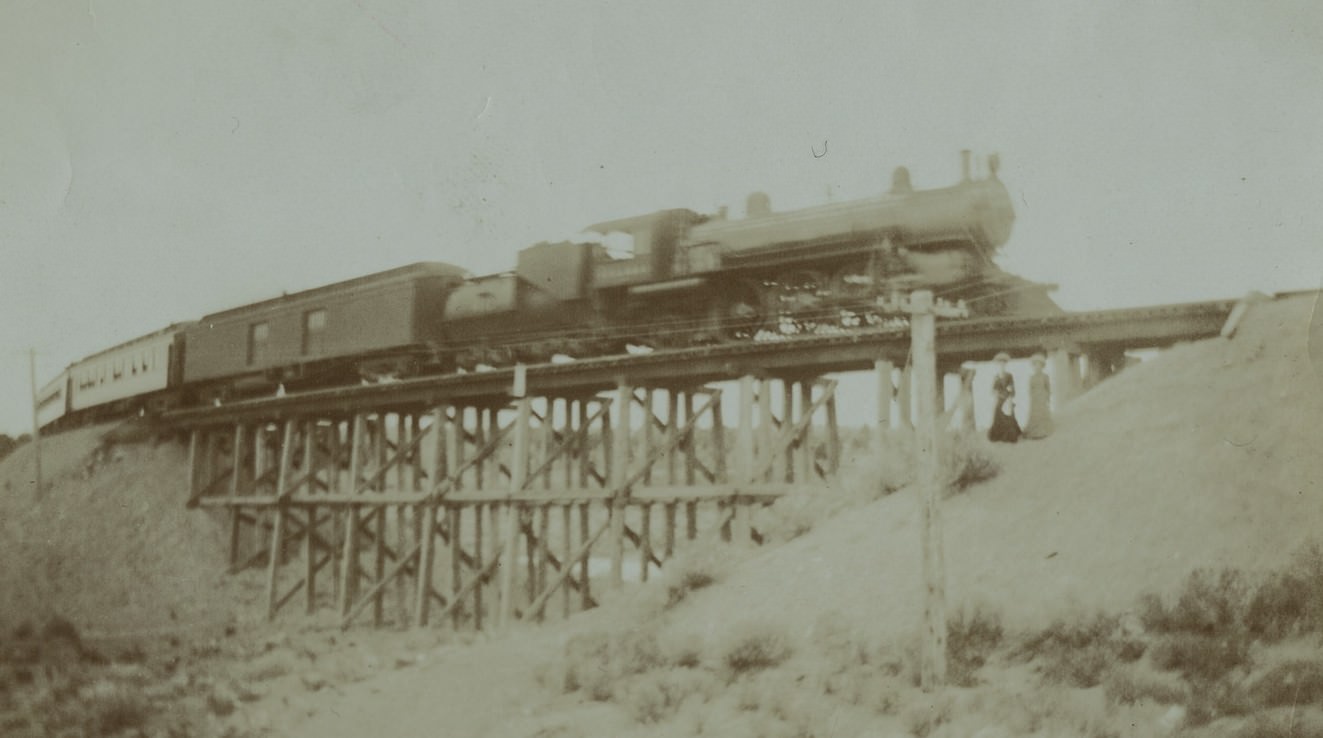
The Las Vegas Shops, the railroad’s maintenance and repair facility, sat on the east side of the tracks and employed between 300 and 500 men throughout the decade. These weren’t ticket agents or conductors. They were machinists, boilermakers, blacksmiths, and laborers who kept the locomotives running on a line that stretched hundreds of miles through some of the harshest terrain in North America.
The shops operated around the clock in three shifts. When a locomotive broke down anywhere between Caliente to the north and Daggett to the south, it was towed or driven to Las Vegas for repair. The facility had machine shops, a roundhouse where locomotives were turned and stored, and a car barn for passenger and freight cars. The hiss of steam and the clang of metal were the constant background sounds of eastern Las Vegas throughout the decade.
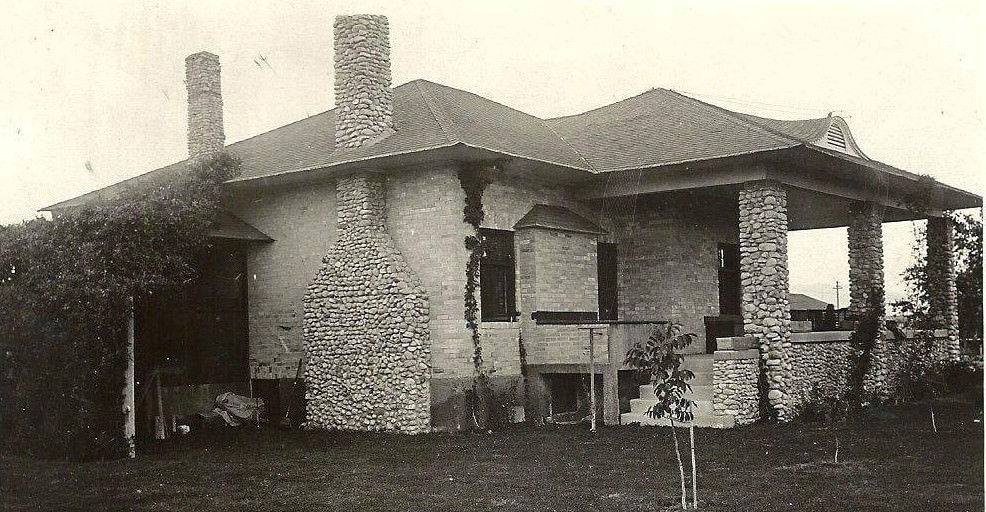
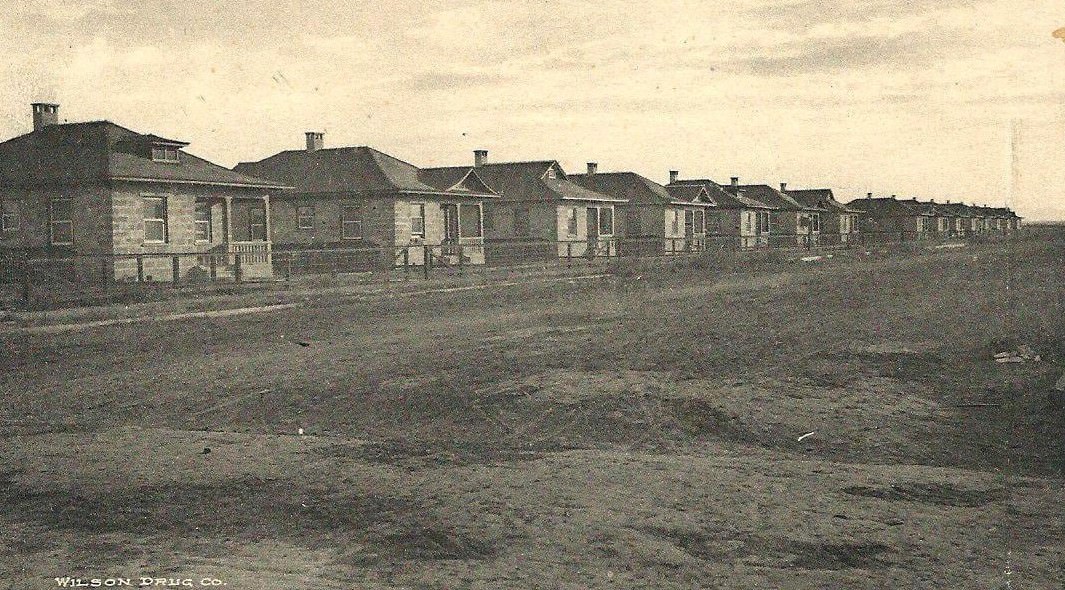
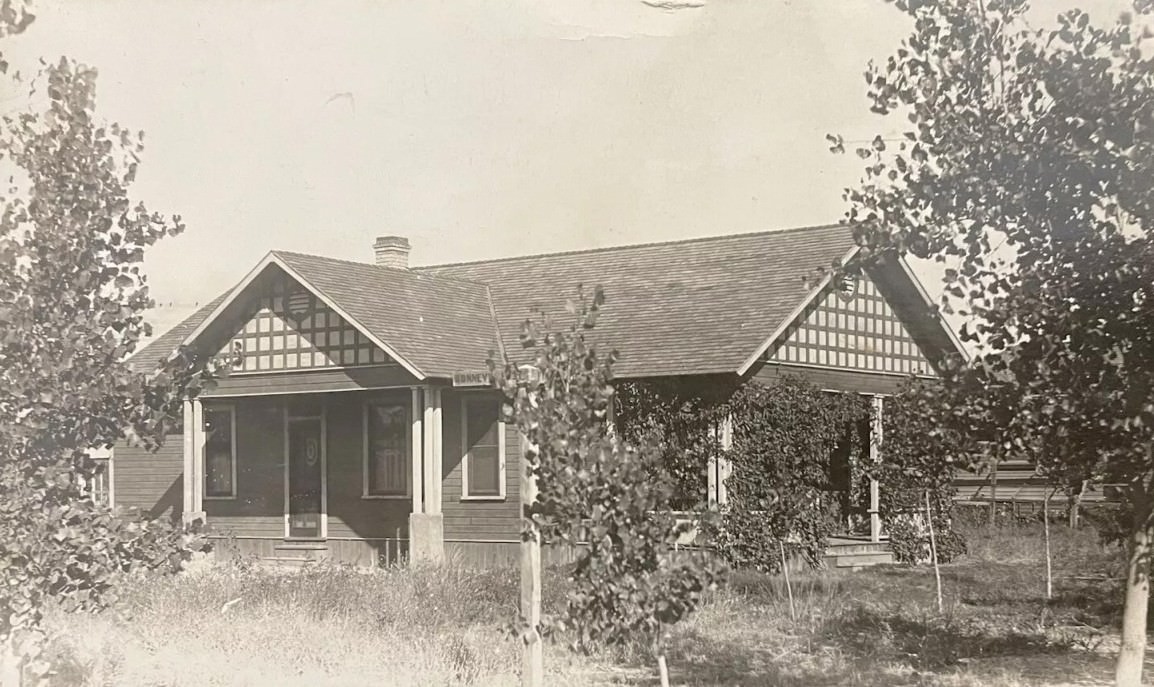
These workers and their families formed the backbone of the town’s stable residential population. They bought homes on the numbered streets east of the tracks. Their children filled the classrooms. Their wives organized church groups and civic clubs. The railroad workers were Las Vegas’s middle class — hourly wage earners with steady paychecks who spent their money locally and invested in the permanence of the town.
The railroad company, now operating under the name Union Pacific after a corporate reorganization, exerted enormous influence over local affairs. It owned significant parcels of land. It controlled the water infrastructure that the town depended on. It had the ability to relocate operations if it chose. Local politicians and business owners understood that the railroad’s goodwill was not optional.
The Mining Boom Fades
The northern Nevada mining boom that had fed Las Vegas’s early growth began cooling off in the 1910s. Goldfield, which had produced millions of dollars in gold ore during its peak years of 1906 to 1910, declined sharply after the richest veins were exhausted. By 1913, Goldfield’s population had fallen from a high of around 20,000 to just a few thousand. Rhyolite, the Death Valley mining camp, was essentially a ghost town by 1911.
This mattered to Las Vegas because the Las Vegas and Tonopah Railroad — the branch line connecting Las Vegas to the northern mining districts — depended on ore traffic and mining supply shipments for most of its revenue. As the mines wound down, that revenue disappeared. The Las Vegas and Tonopah Railroad shut down operations in 1918, unable to sustain itself without the mining economy that had justified its construction.
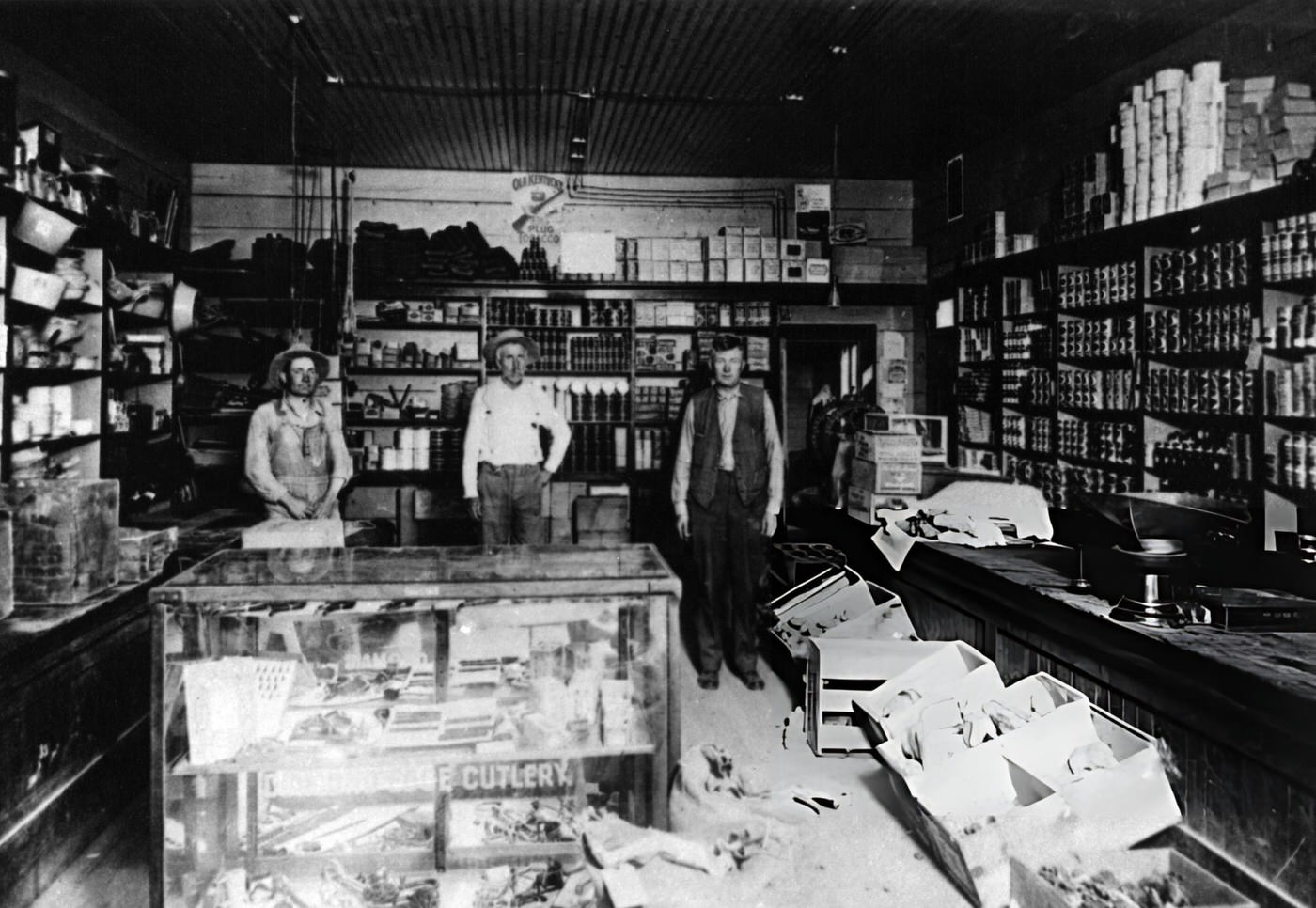
The closure cut off a commercial link that Las Vegas merchants had relied on for over a decade. Hardware stores that had stocked mining equipment saw their orders dry up. Freighting companies that had moved supplies northward by wagon retrenched or closed. The town had to find other reasons to exist, and the 1910s were, in large part, a decade spent figuring out what those reasons were.
Schools, Churches, and Civic Life
The 1910s were when Las Vegas began developing the civic institutions that distinguish a real community from a transient settlement. The town’s population was still small — probably between 1,000 and 2,500 people throughout most of the decade — but a significant portion of it was made up of families putting down permanent roots.
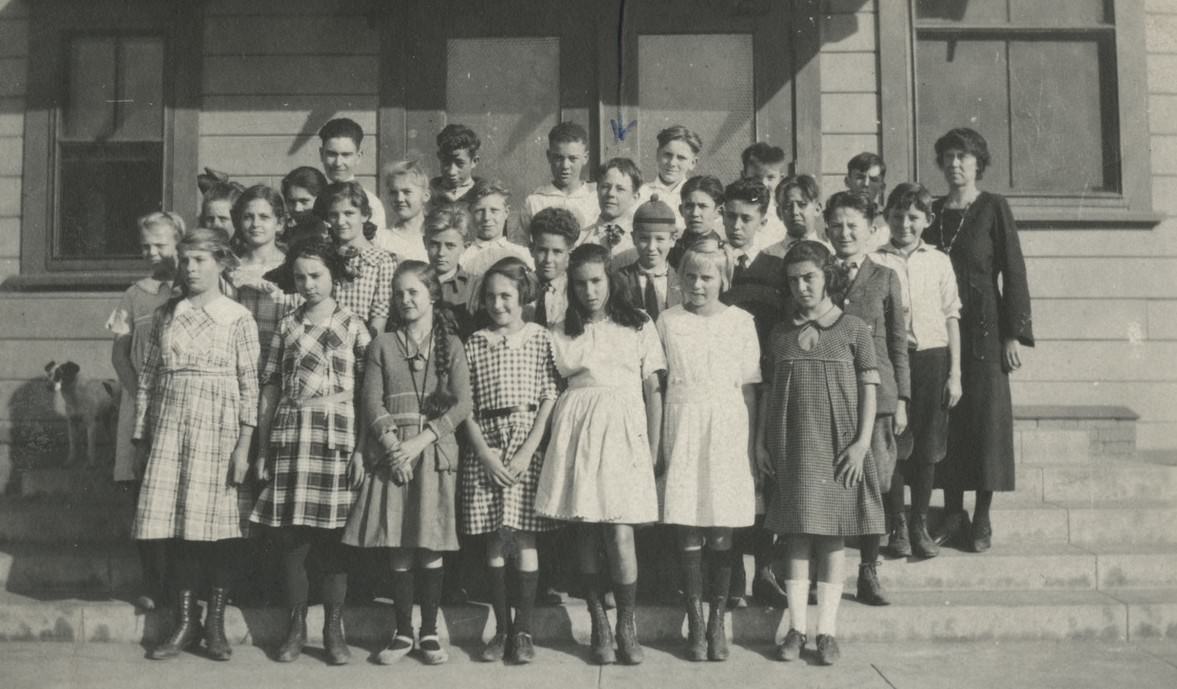
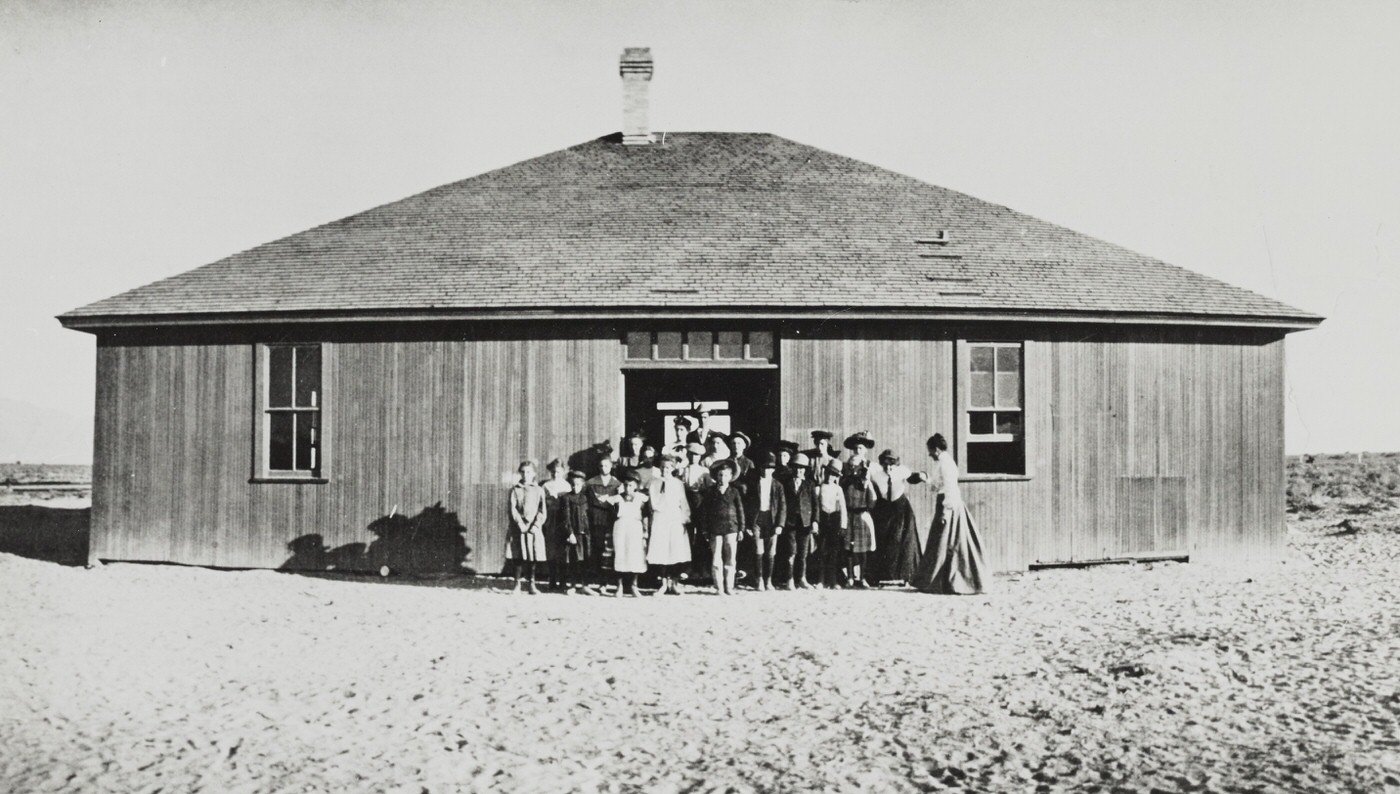
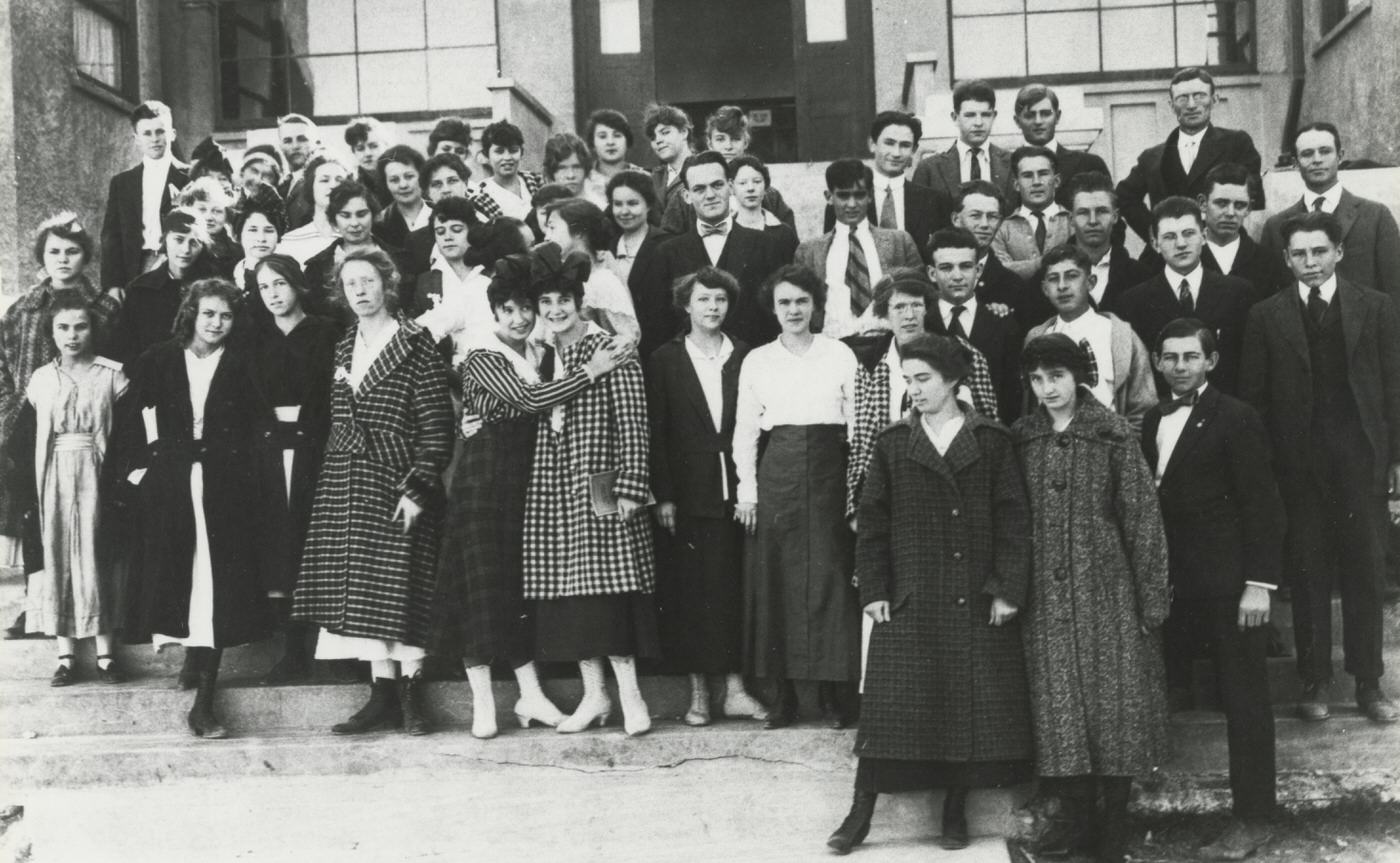
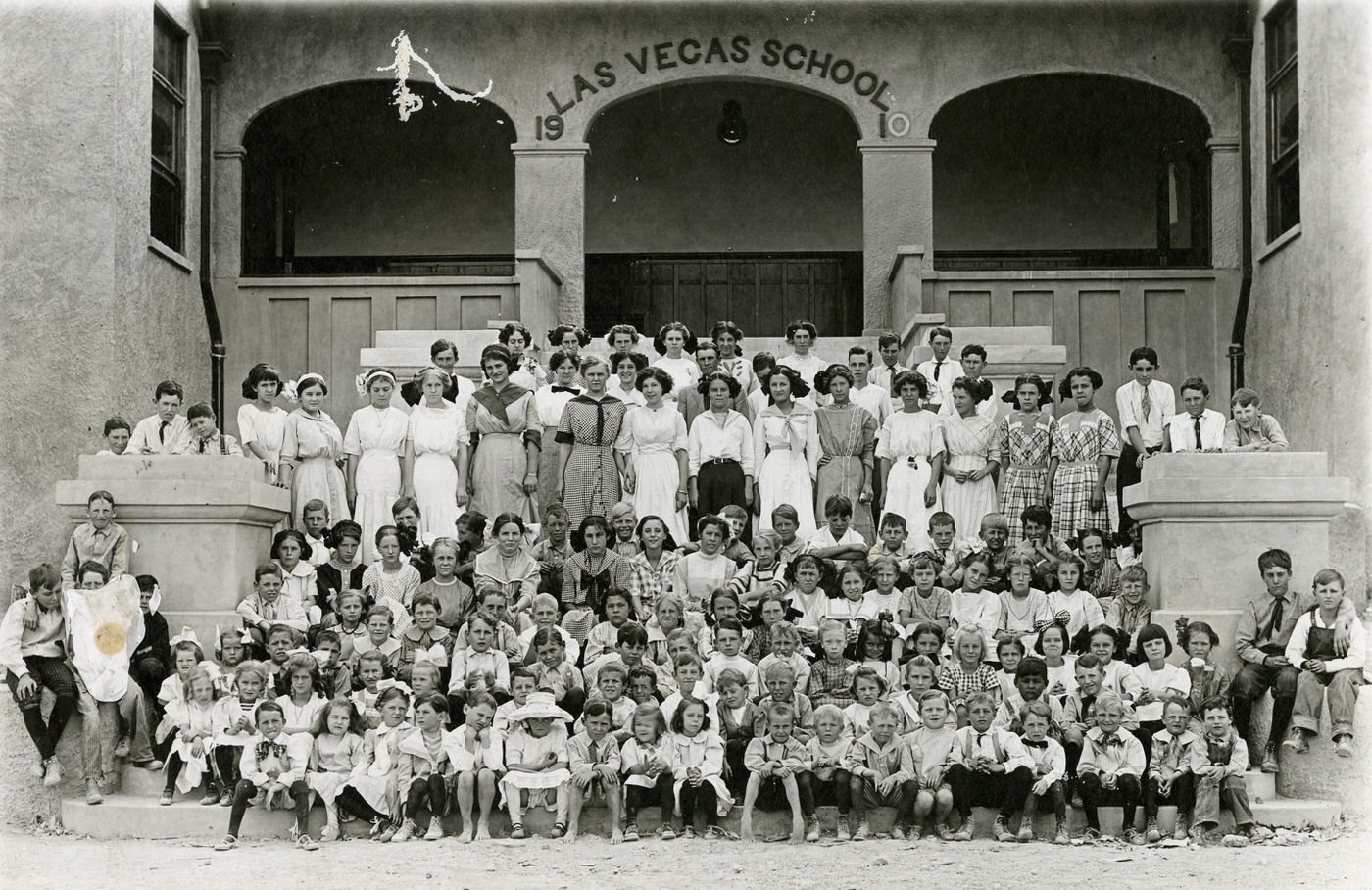
Las Vegas Grammar School, which had opened in 1905, expanded during the decade. A new building was constructed to handle a growing student body. The school curriculum followed Nevada state standards and prepared students for high school in Reno or Carson City, since Las Vegas didn’t have its own high school until later. Teachers were recruited from outside Nevada, given housing stipends to attract qualified candidates to a desert town with limited amenities.
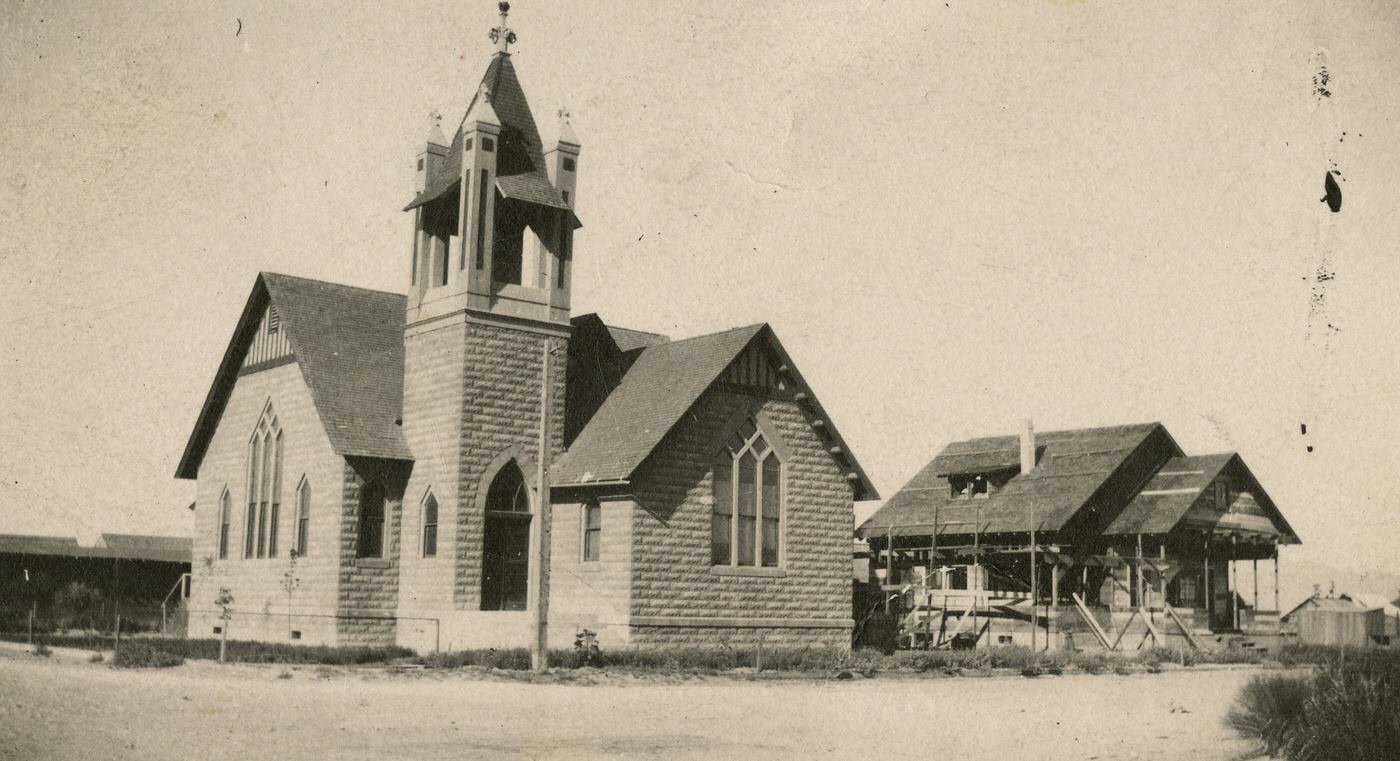
The churches competed quietly for congregation members. The First Methodist Church and the First Baptist Church were both active. A Catholic congregation formed and held services in private homes before building a dedicated space. The ministers were civic figures who weighed in on town policy, pushed for stricter enforcement of Block 16’s boundaries, and organized charitable efforts for families hit hard by economic downturns.
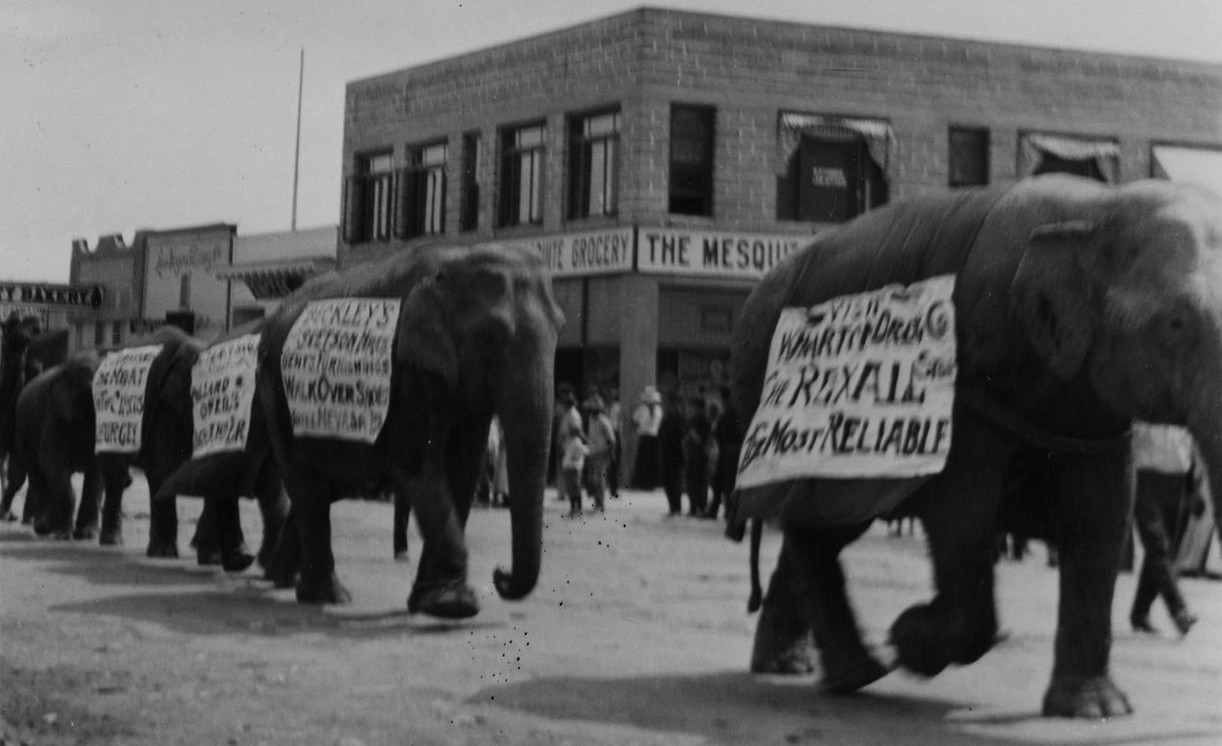
The Elks Lodge, the Masons, and other fraternal organizations set up chapters in Las Vegas during this decade. These clubs were social institutions, but they also functioned as informal business networks. Men who joined the Elks shared dinners and handshakes, but they also exchanged contracts and referrals. Club membership was a way to signal respectability and access the town’s economic establishment.
A women’s club organized in Las Vegas during the 1910s and focused on civic improvement — library access, school quality, and public hygiene. These clubs were common across small Western towns in the Progressive Era and Las Vegas’s chapter followed the same pattern, pushing municipal government toward services that the railroad company and the county government had not prioritized.
The Automobile Arrives
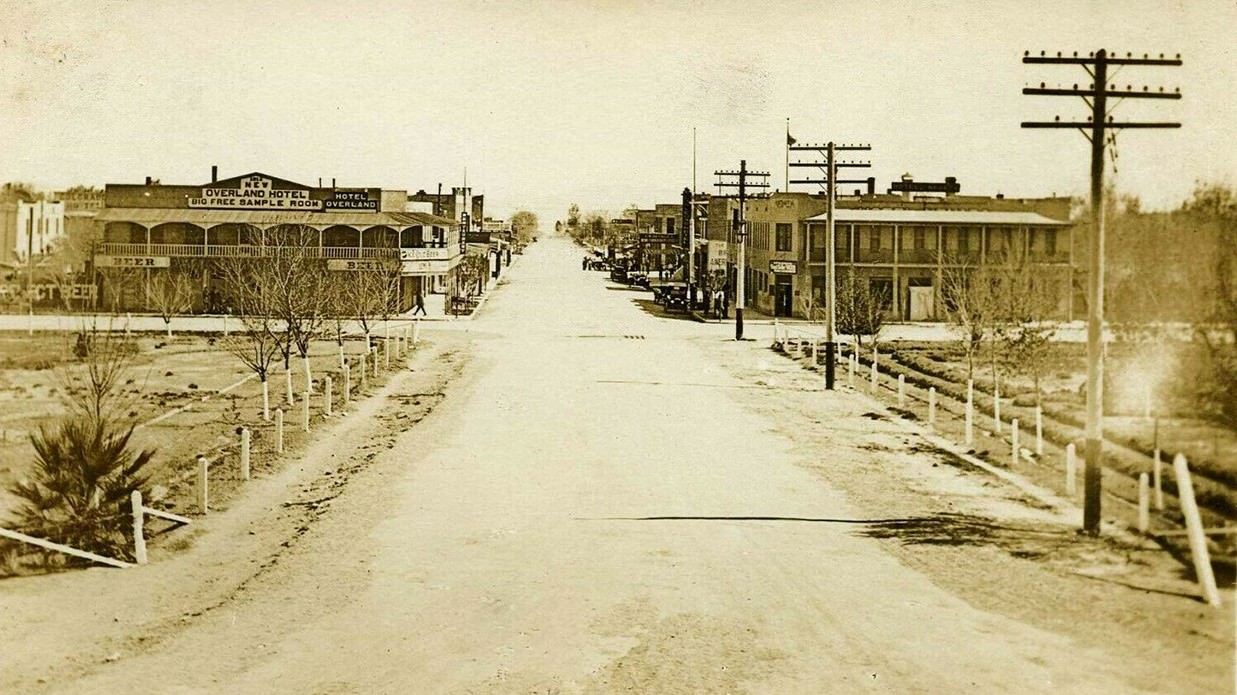
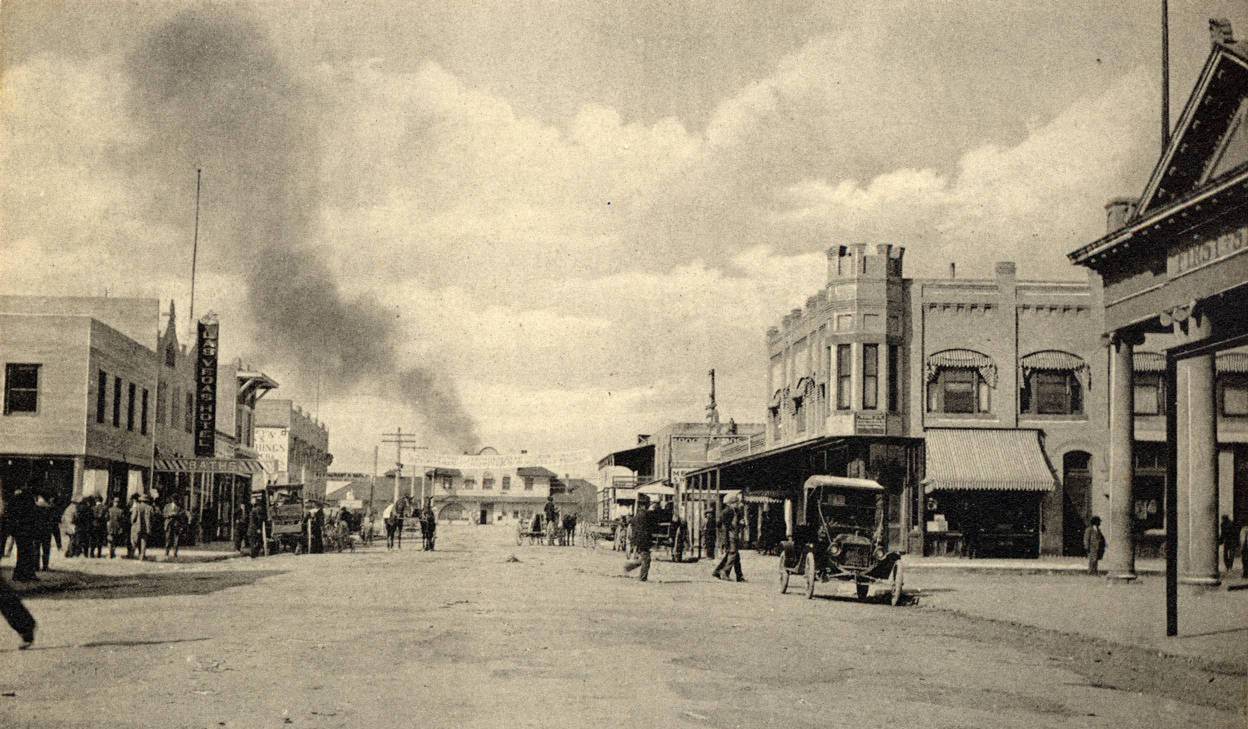
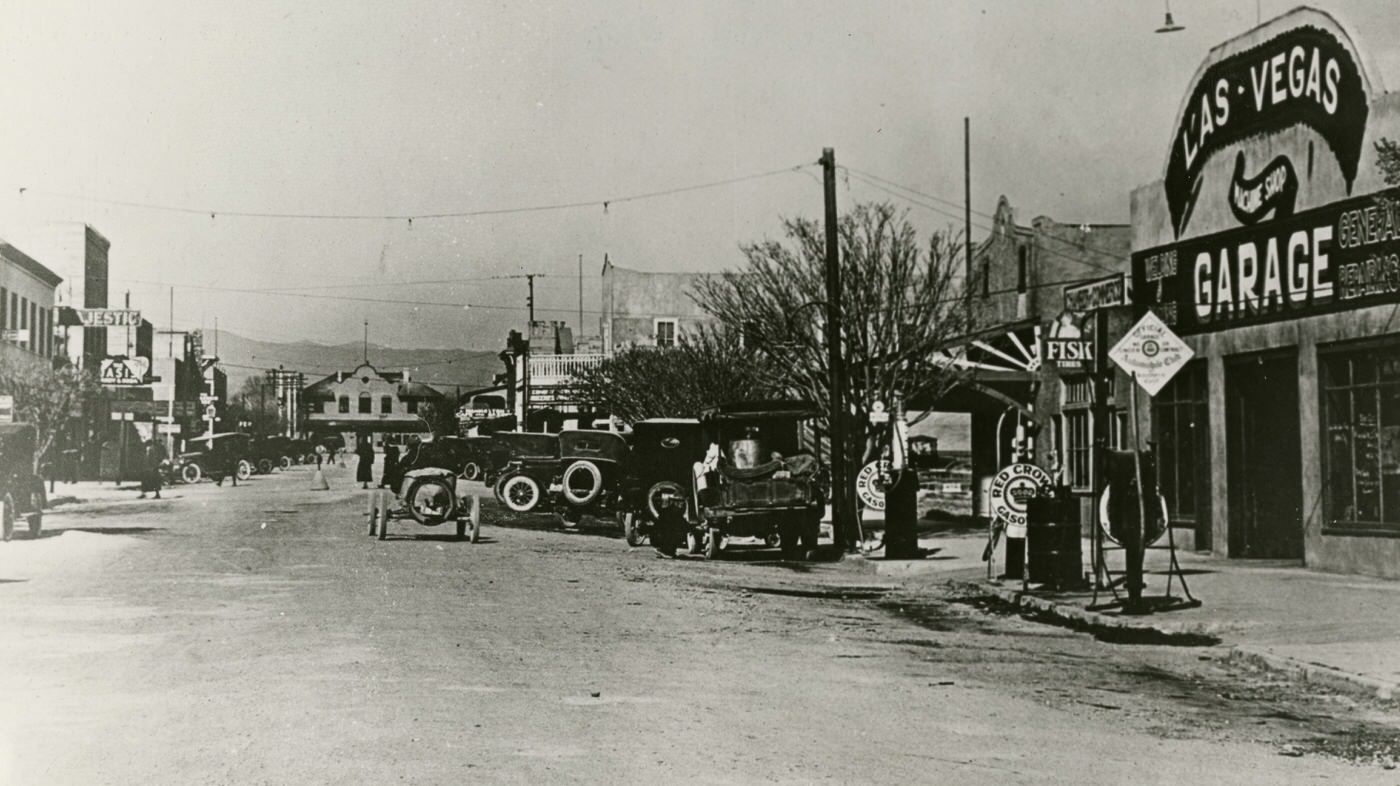
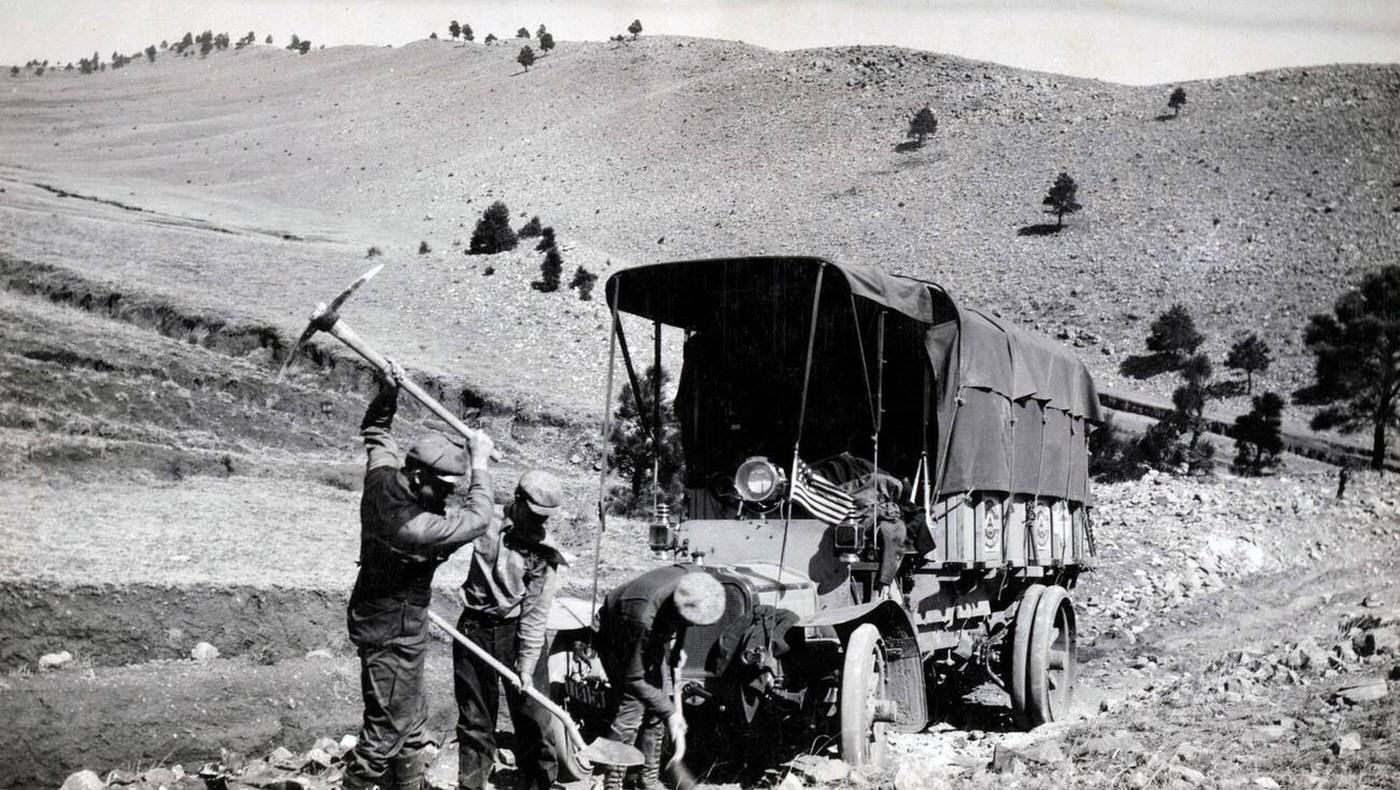
The automobile appeared in Las Vegas during the 1910s, and its arrival was both exciting and revealing. The cars that reached Las Vegas in the early part of the decade did so by traveling over desert tracks that were barely roads. The route between Las Vegas and Los Angeles — approximately 270 miles — had almost no paved surface anywhere along it. Drivers navigated by landmarks, dry washes, and hand-drawn maps. Flat tires were guaranteed. Getting stuck in sand was common. Breakdowns in the open desert, hours from any help, were a real danger.
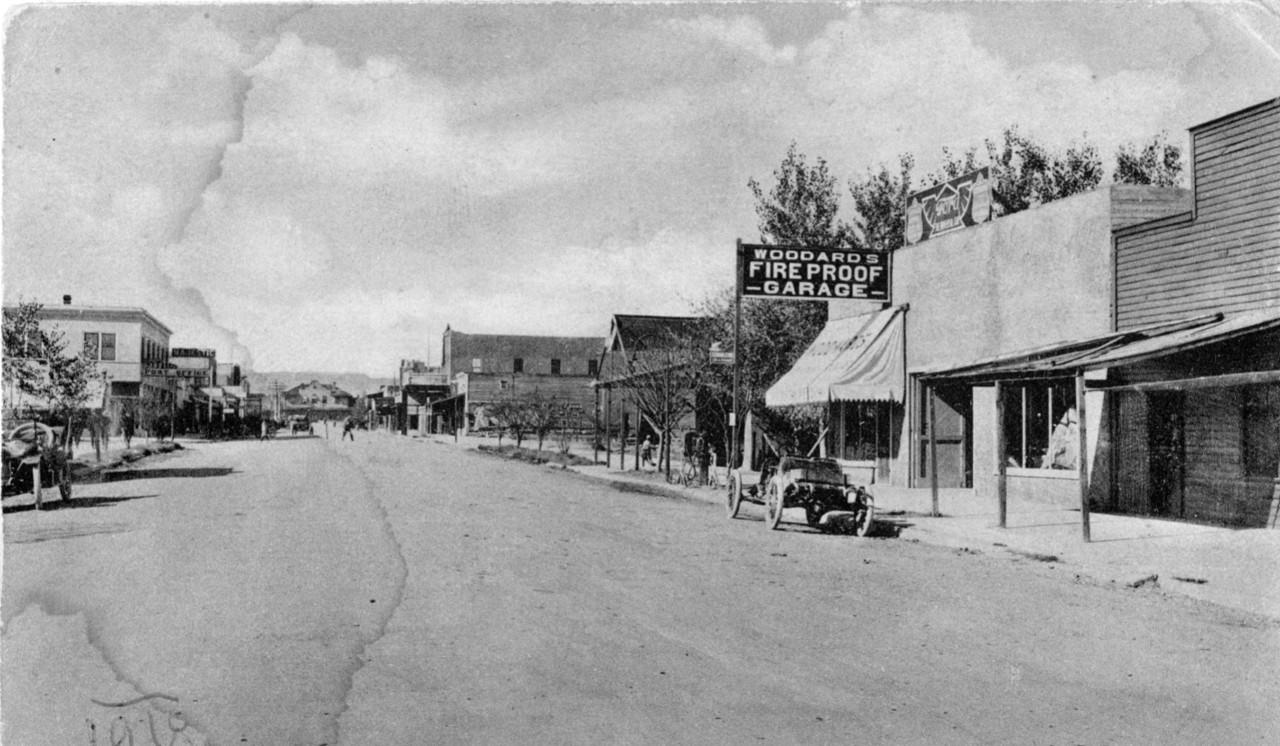
Despite all of this, automobile travel grew throughout the decade. The first automobile dealership in Las Vegas opened during the 1910s, selling and servicing the Fords and Maxwells that ranchers, doctors, and businessmen were buying. A small repair garage opened nearby. Gasoline was sold out of drums at hardware stores before dedicated filling stations appeared.
The Good Roads Movement, which was active nationally throughout the decade, had local advocates in Las Vegas who pushed for improved highway connections. The argument was straightforward: better roads meant more commercial traffic, more visitors, and lower shipping costs for local businesses. Clark County lacked the funds to pave roads itself, but residents and business owners lobbied the state and federal government for highway investment.
The Lincoln Highway, designated in 1913 as the first transcontinental automobile road in the United States, did not pass directly through Las Vegas — it ran farther north through Utah and Nevada’s high desert. But its existence demonstrated that the country was reorganizing itself around the automobile, and Las Vegas needed to be connected to whatever highway network emerged in the Southwest.
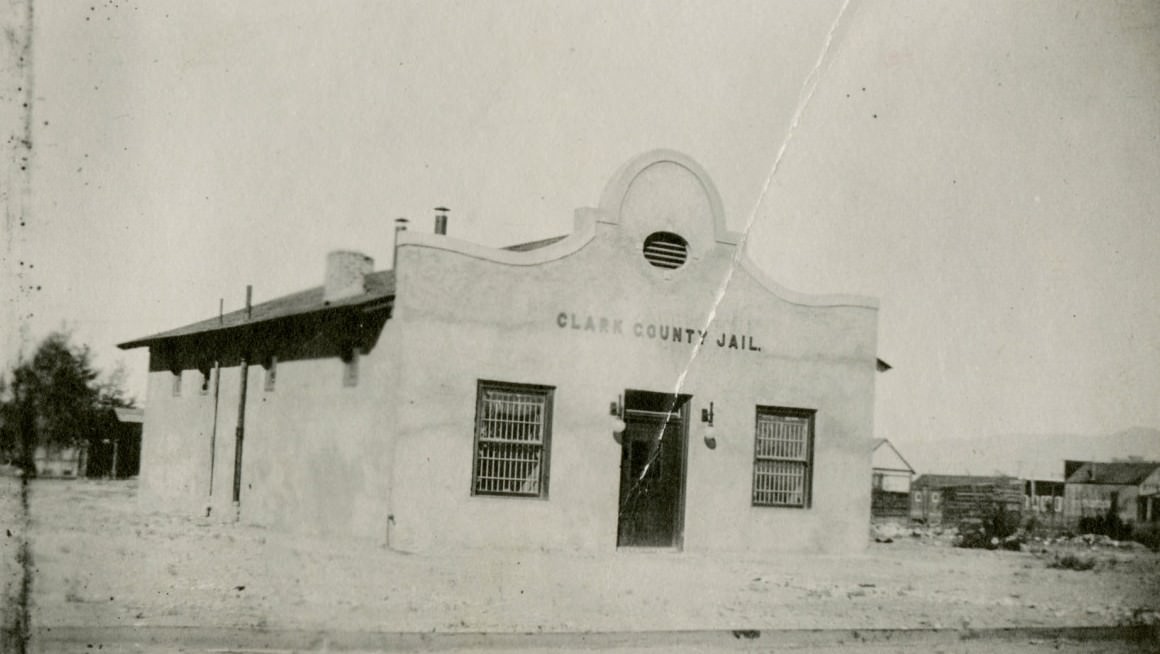
The Clark County Courthouse
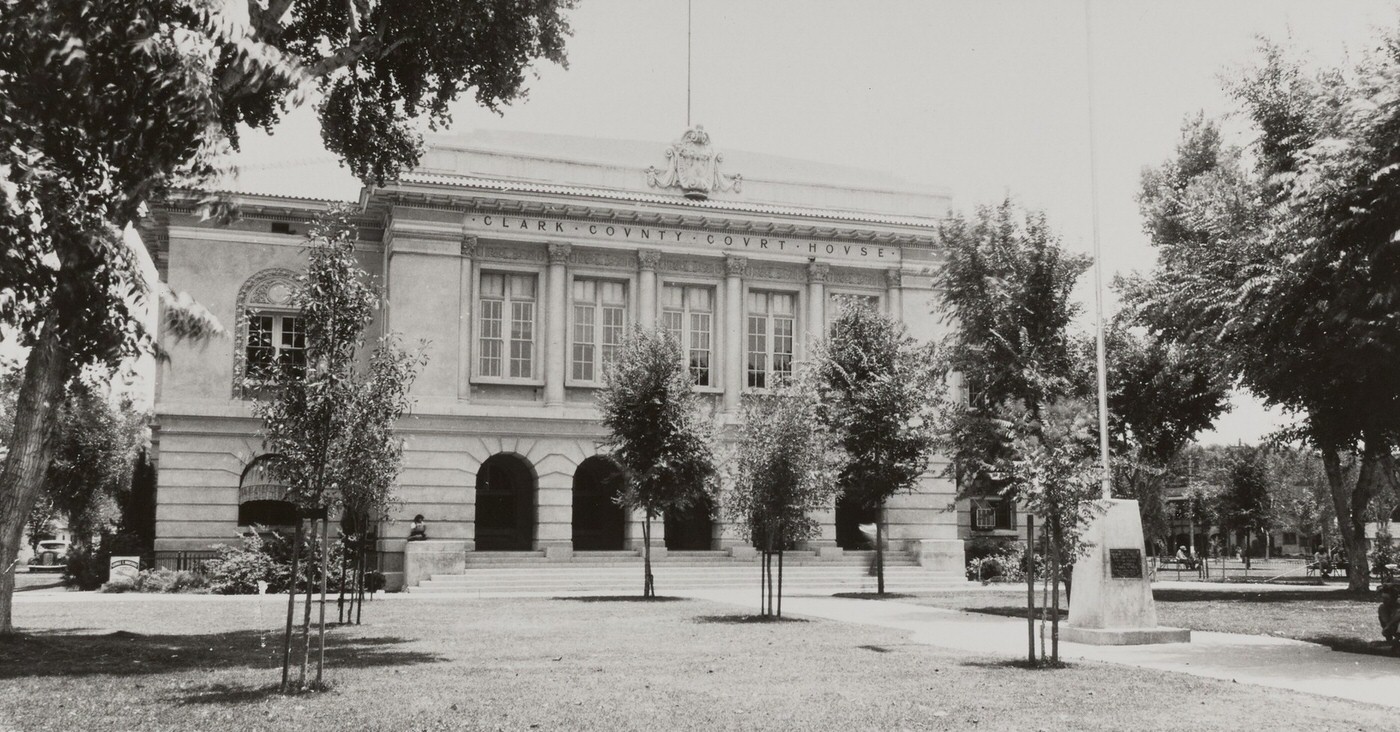
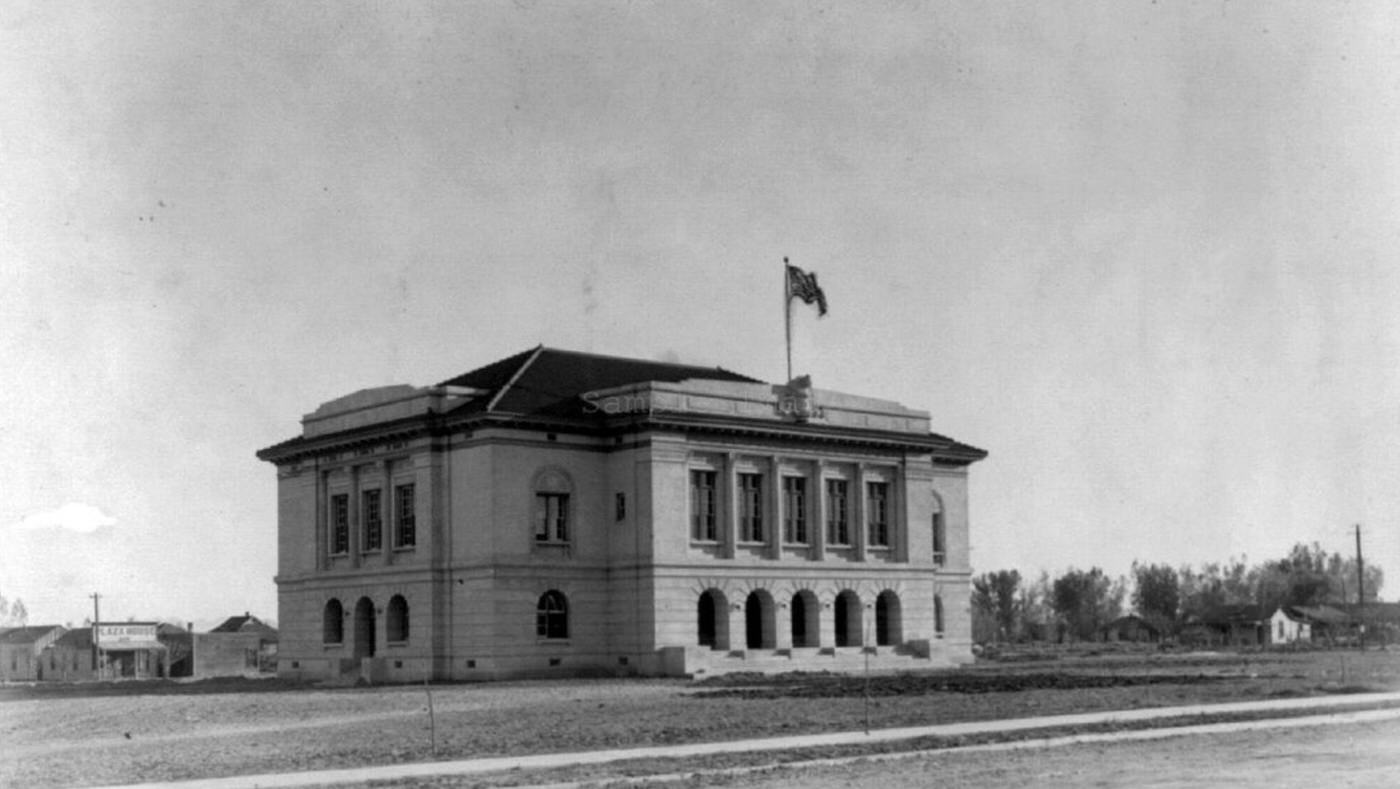
The physical establishment of Clark County’s government infrastructure happened gradually through the 1910s. The county courthouse, built on Third Street, handled property disputes, probate cases, and criminal trials. The county recorder’s office kept land records and mining claims. The county assessor taxed property and reported to the state.
County government was small by any measure. The total county staff through most of the decade could be counted on two hands. The sheriff’s department had a handful of deputies responsible for patrolling an enormous geographic area that included not just Las Vegas but the entire southern portion of Nevada — a territory larger than several Eastern states combined.
The county commission met regularly and handled the practical business of running a desert county: road maintenance, bridge construction, water rights registration, and school funding. These were not glamorous decisions, but they were the decisions that made daily life function. The 1910s were when Clark County built the administrative habits and precedents it would rely on for decades.
One ongoing challenge was the county’s sparse tax base. There weren’t enough taxpayers to fund ambitious infrastructure projects. Roads were mostly unpaved dirt tracks that turned to mud in the rare rainstorms and baked to rutted hardpan in the summer. The county maintained the most important routes and left outlying areas to manage on their own.
Farming Takes Hold
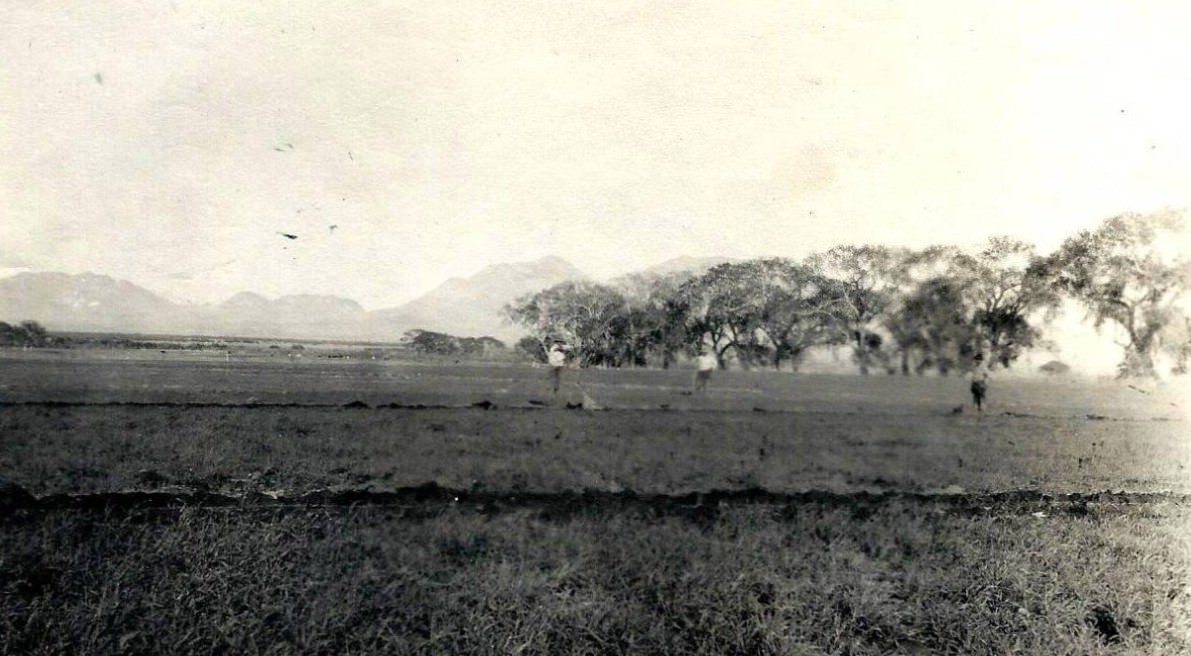
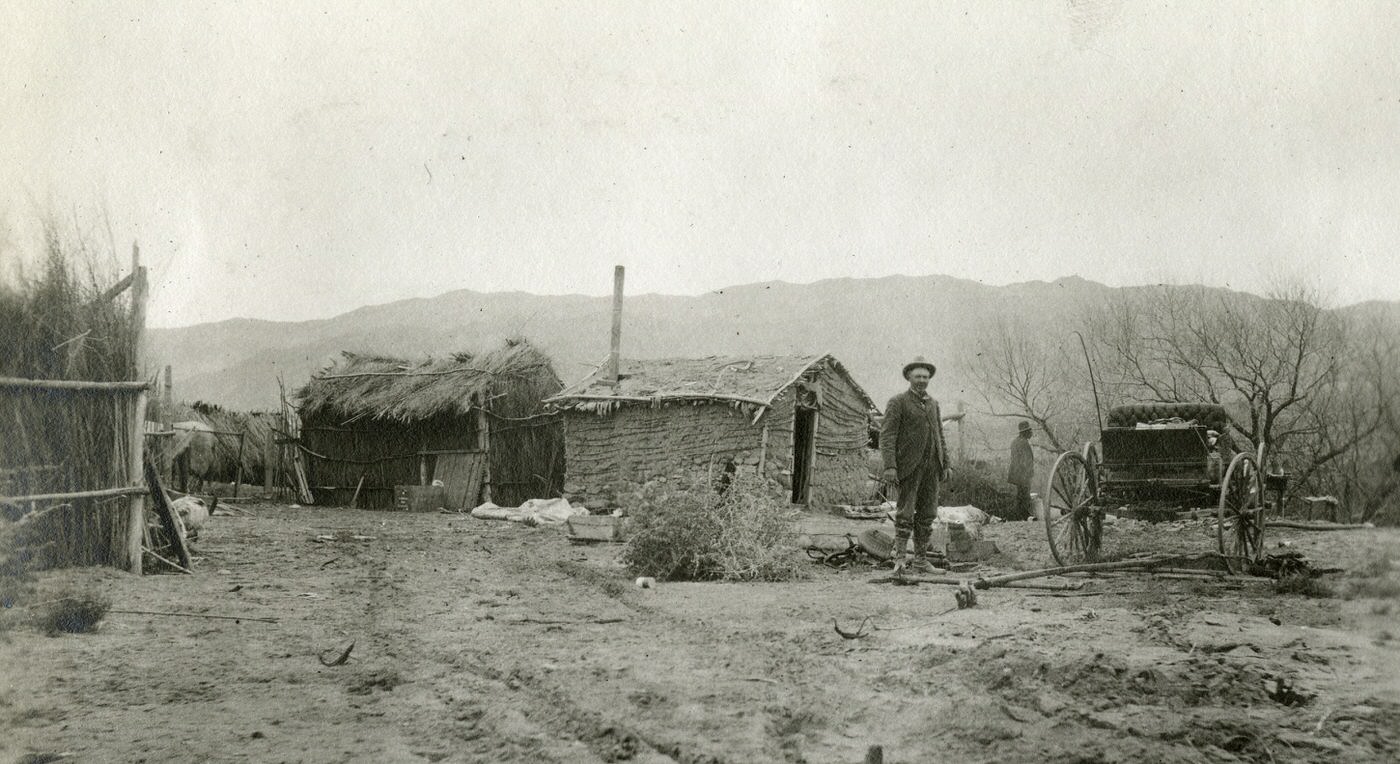
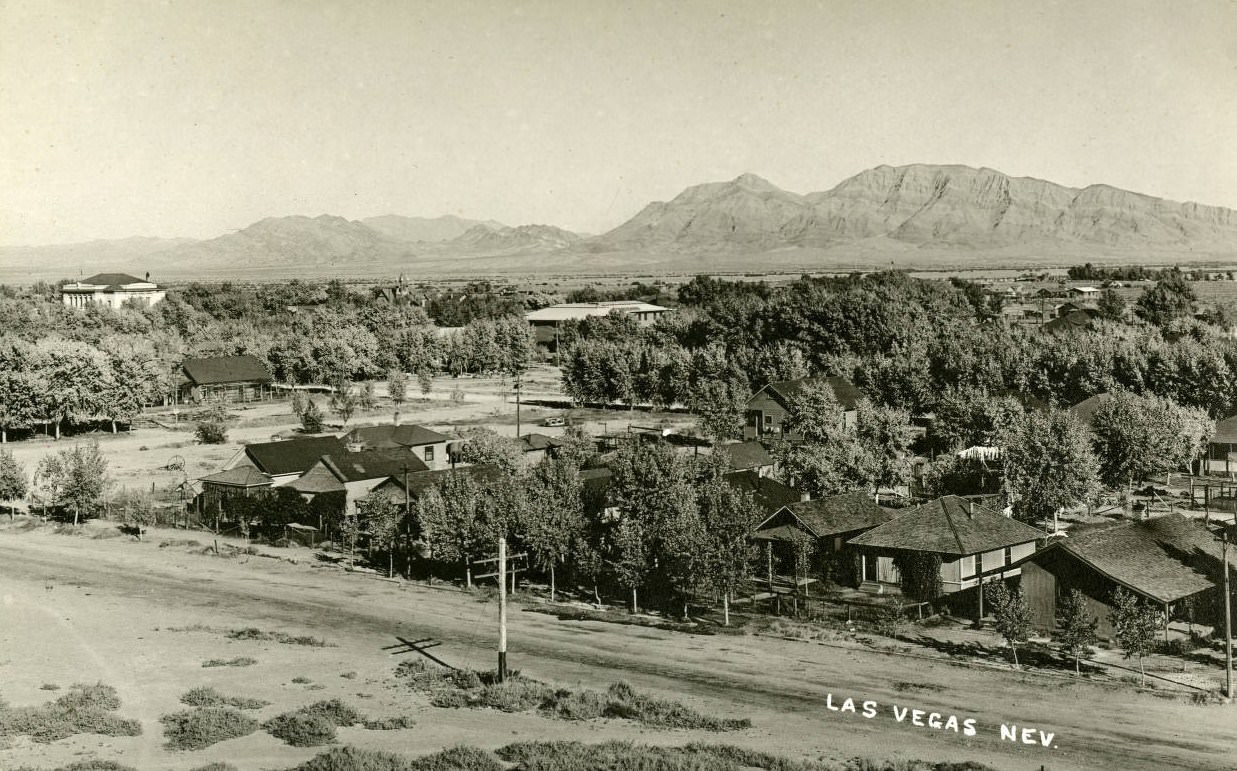
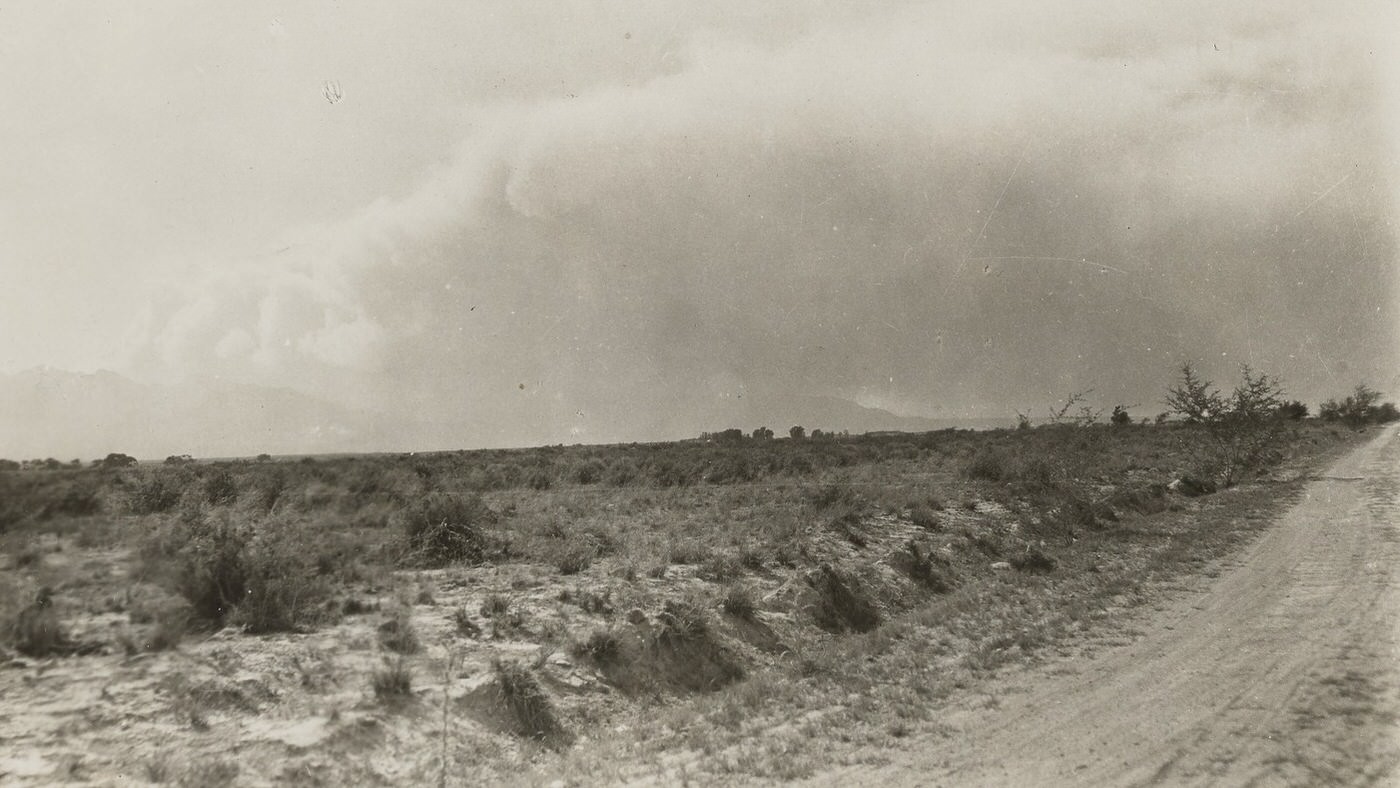
With the mining connection fading, farming expanded to fill part of the economic gap. The Las Vegas Valley’s underground water made irrigated agriculture possible in the middle of the Mojave Desert, and the 1910s saw a real push to develop the valley’s agricultural potential.
Alfalfa remained the dominant crop, and for good reason. It grew well in the alkaline desert soil, it tolerated heat, it needed deep watering rather than frequent watering, and it was easy to sell. Hay buyers connected to the railroad network purchased alfalfa from Las Vegas Valley farmers and shipped it east and west. A good alfalfa crop could sustain a family farm and generate enough surplus to sell.
Fruit orchards also appeared during this decade. Grapes, peaches, and figs were grown in the cooler months along the valley’s irrigation ditches. Small vegetable gardens fed local households and sold produce to the town’s grocery stores. Some farmers experimented with dairy operations, supplying fresh milk and butter to a growing population that had no access to refrigerated transport from California.
The Nevada Land and Livestock Company, which controlled significant grazing acreage in the valley, ran cattle operations through the decade. Cowboys working its ranges were a regular sight in Las Vegas, coming in for supplies and payday spending in the same pattern that miners had followed.
The railroad made farming commercially viable by providing a way to move produce out of the valley. Without it, the Las Vegas agricultural economy would have been purely subsistence-level. With it, valley farmers could grow for regional markets and earn enough to reinvest in their operations.
Water Politics Get Serious
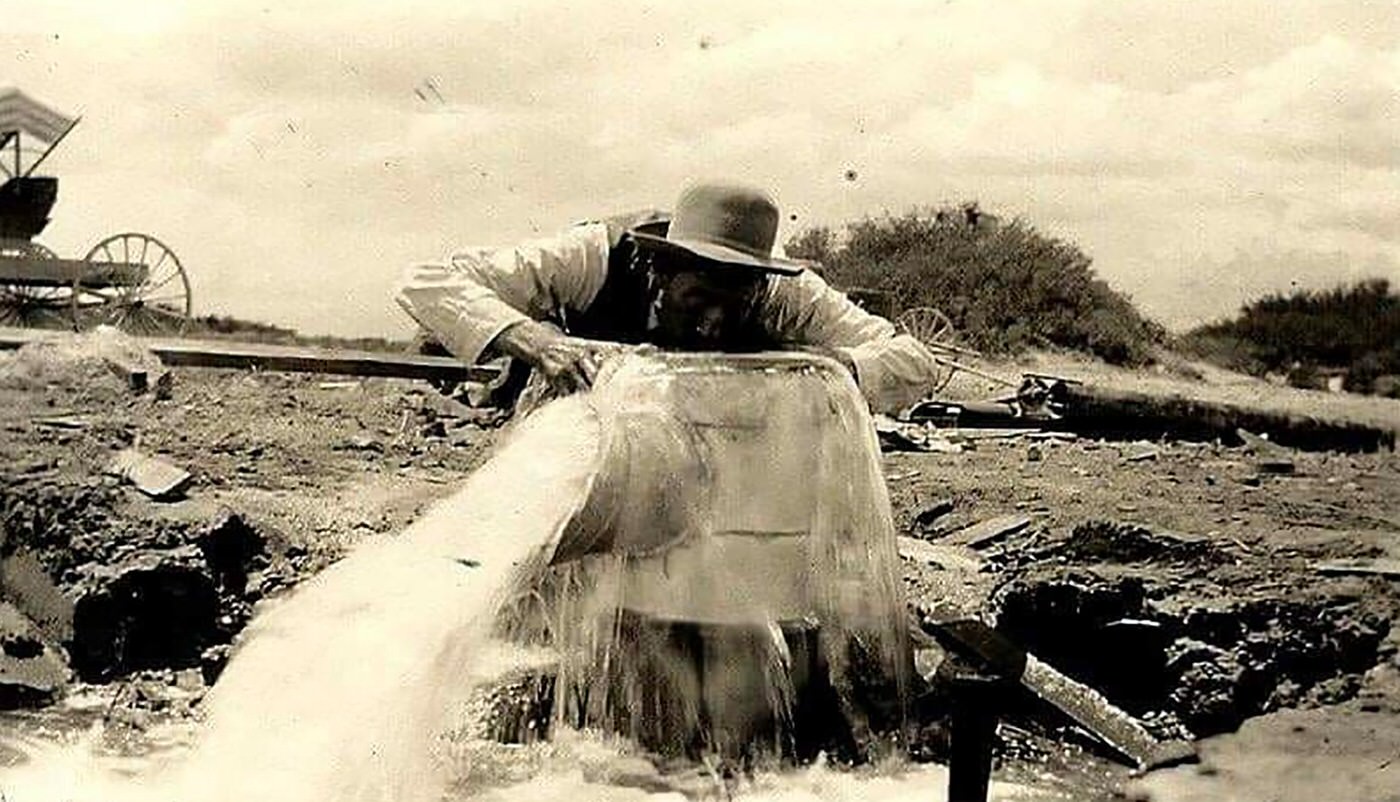
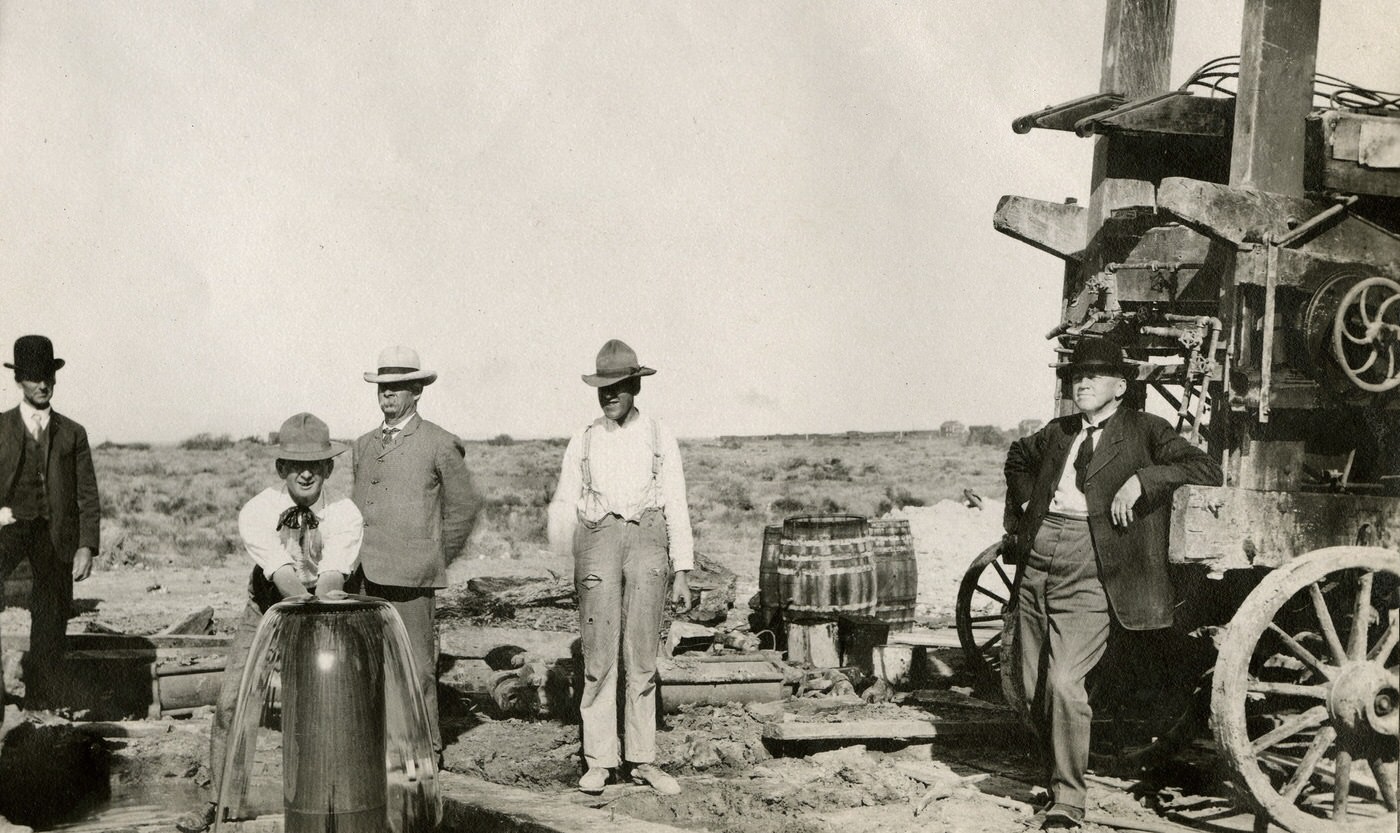
Water was not taken for granted in the 1910s. The artesian wells that had supplied Las Vegas since its founding were showing signs of declining pressure. Early in the decade, the natural pressure that had pushed water to the surface without pumping began dropping as more wells were drilled and more water was withdrawn. By mid-decade, many wells that had once flowed freely required pumping to bring water up.
This was an early warning. The Las Vegas Valley sat on a finite underground water supply — a fossil aquifer filled over thousands of years and not being replenished at anywhere near the rate it was being drawn down. The town’s leaders understood the problem but didn’t have clear solutions. Drilling deeper and installing pumps kept the water flowing, but everyone involved knew that approach had limits.
The Las Vegas Land and Water Company, a subsidiary of the Union Pacific Railroad, controlled the town’s formal water distribution system. It charged rates for water delivery and maintained the pipes and infrastructure. Residents who weren’t connected to the main system — which included most of the outlying farms — drilled their own wells and managed their own pumps.
Disputes over water rights were common and sometimes heated. Nevada water law followed the doctrine of prior appropriation, meaning that whoever first put water to use had the senior claim to it. This created a hierarchy of water rights that older farms and the railroad held at the top, with newer operations scrambling for what was left. The county courts handled water disputes regularly throughout the decade.
The Prohibition Question
Nevada had not banned alcohol when the 1910s began, and Block 16 still operated its saloons openly. But the national temperance movement was gaining strength across the country, and Nevada’s own temperance activists were pushing for restrictions at the state level.
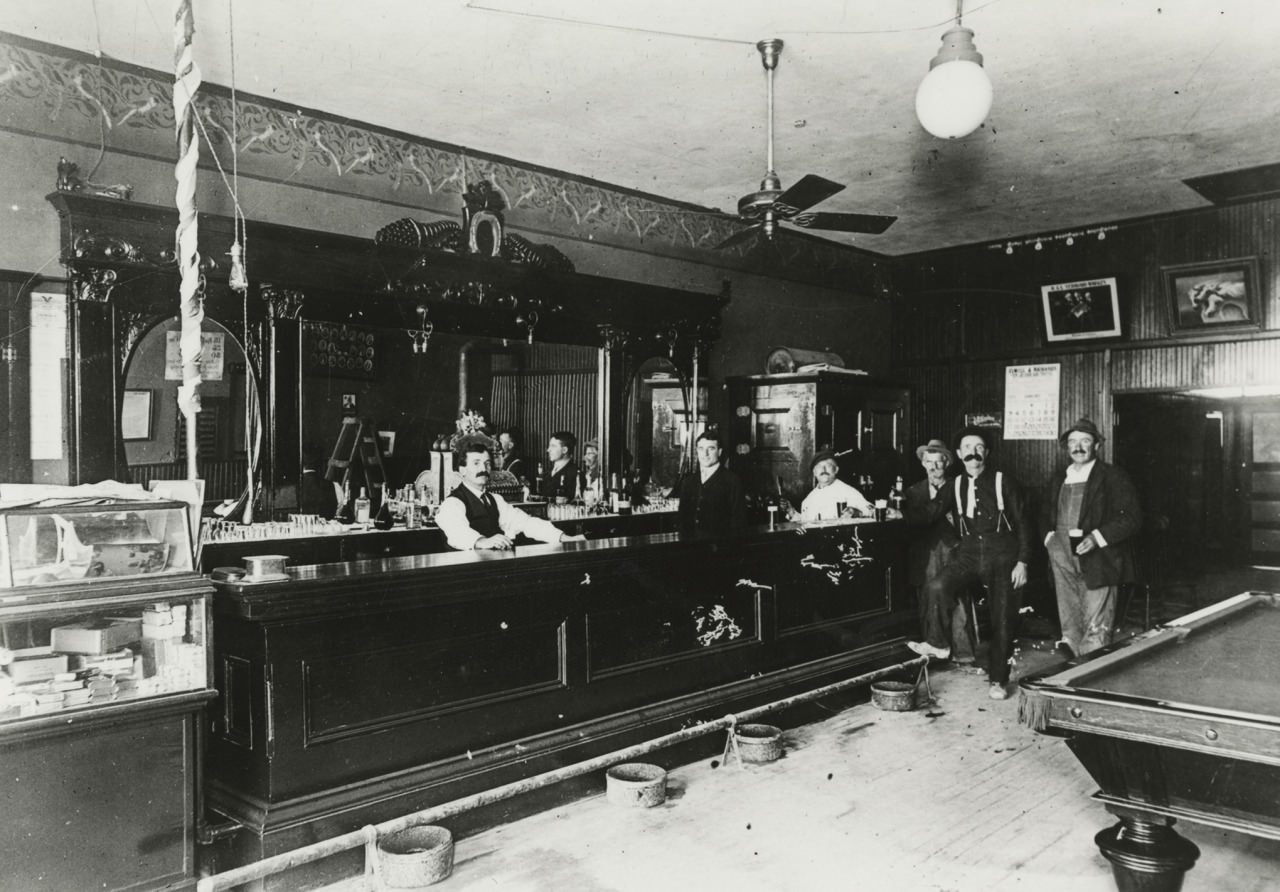
Nevada passed a local option law in 1911 that allowed individual counties to vote on whether to allow alcohol sales. Clark County voted to stay wet, meaning saloons stayed open. Block 16 continued operating with its full roster of saloons, and the Arizona Club remained the most prominent establishment on the block.
The bigger threat came nationally. The 18th Amendment, which established Prohibition across the entire United States, was ratified in January 1919 and took effect in January 1920. Las Vegas knew it was coming. Saloon owners on Block 16 spent the second half of the decade figuring out how to adapt. Some stockpiled liquor. Some converted their spaces to soft drink parlors in preparation for the legal transition. Others began building connections to bootleggers who would supply illegal alcohol after the ban took effect.
Gambling had already been outlawed in Nevada in 1909, and that ban held throughout the 1910s. Card games continued in back rooms, and operators paid occasional fines as a cost of doing business, but the open casino floors of the early Block 16 era were gone. The combination of no legal gambling and impending Prohibition was squeezing the block’s economy from both directions.
World War I and Las Vegas
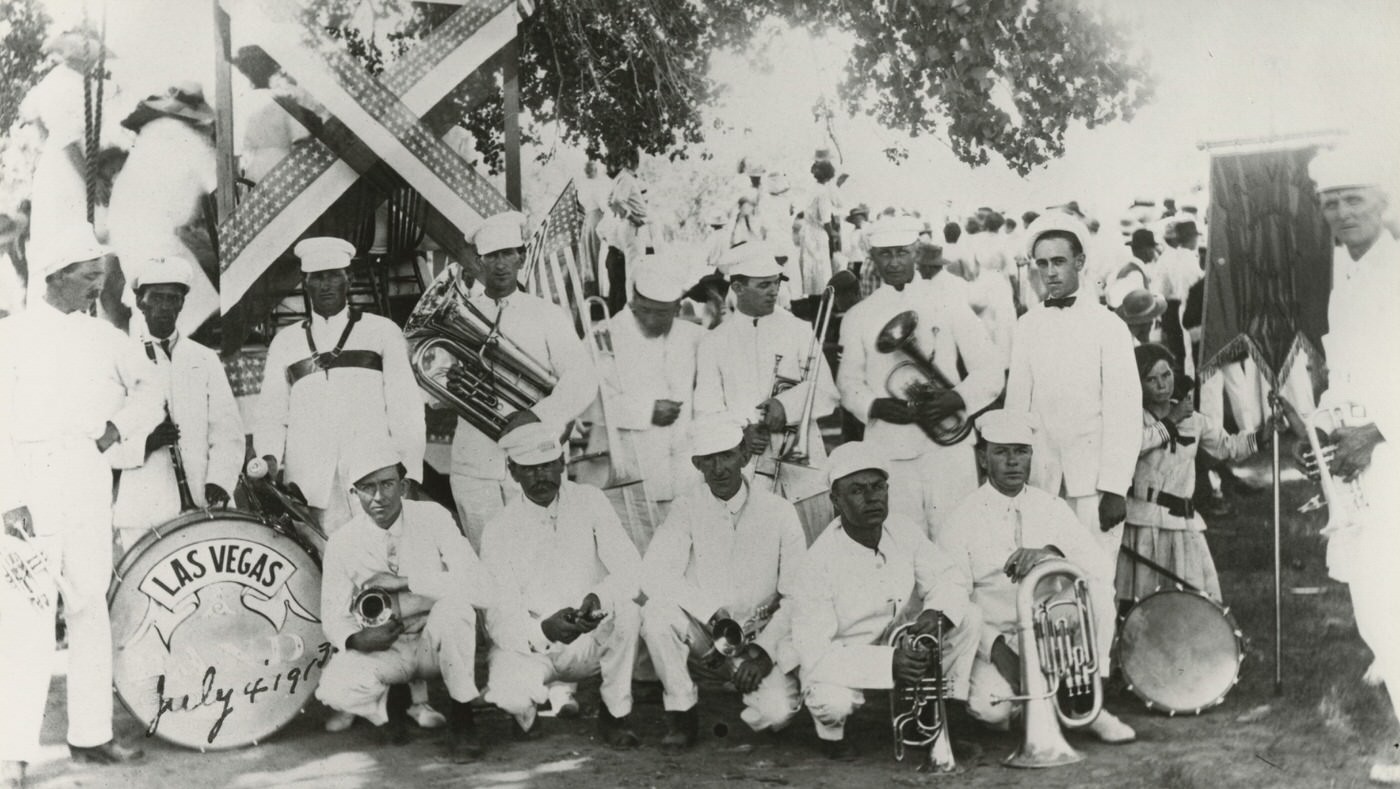
When the United States entered World War I in April 1917, Las Vegas felt the effects almost immediately. Young men from the town and surrounding ranches registered for the draft under the Selective Service Act. Some enlisted voluntarily before the draft notices arrived. Clark County’s contribution to the war was proportional to its size — small in absolute numbers, significant relative to the community.
The war affected the local economy in specific ways. The price of alfalfa jumped because hay was needed to feed military horses and mules. Valley farmers who had been earning modest returns on their crops suddenly found strong buyers at higher prices. Ranch cattle also rose in value as beef demand increased.
The railroad’s role became more critical during the war. The federal government, concerned about efficient movement of troops and supplies, placed all American railroads under government control in December 1917. The United States Railroad Administration operated the Union Pacific’s lines, including the Las Vegas corridor, until 1920. This meant federal oversight of the Las Vegas Shops, federal pay scales for railroad workers, and federal priorities for which freight moved first.
Men who remained in Las Vegas during the war bought Liberty Bonds, participated in Red Cross drives, and planted war gardens to grow vegetables locally and reduce demand on national food supplies. The women’s clubs coordinated much of this civic effort, rolling bandages and organizing food drives in addition to their regular activities.
The war ended in November 1918. The men who came back to Las Vegas returned to a town that was essentially the same as they had left it — small, dry, railroad-dependent, and uncertain about its long-term future.
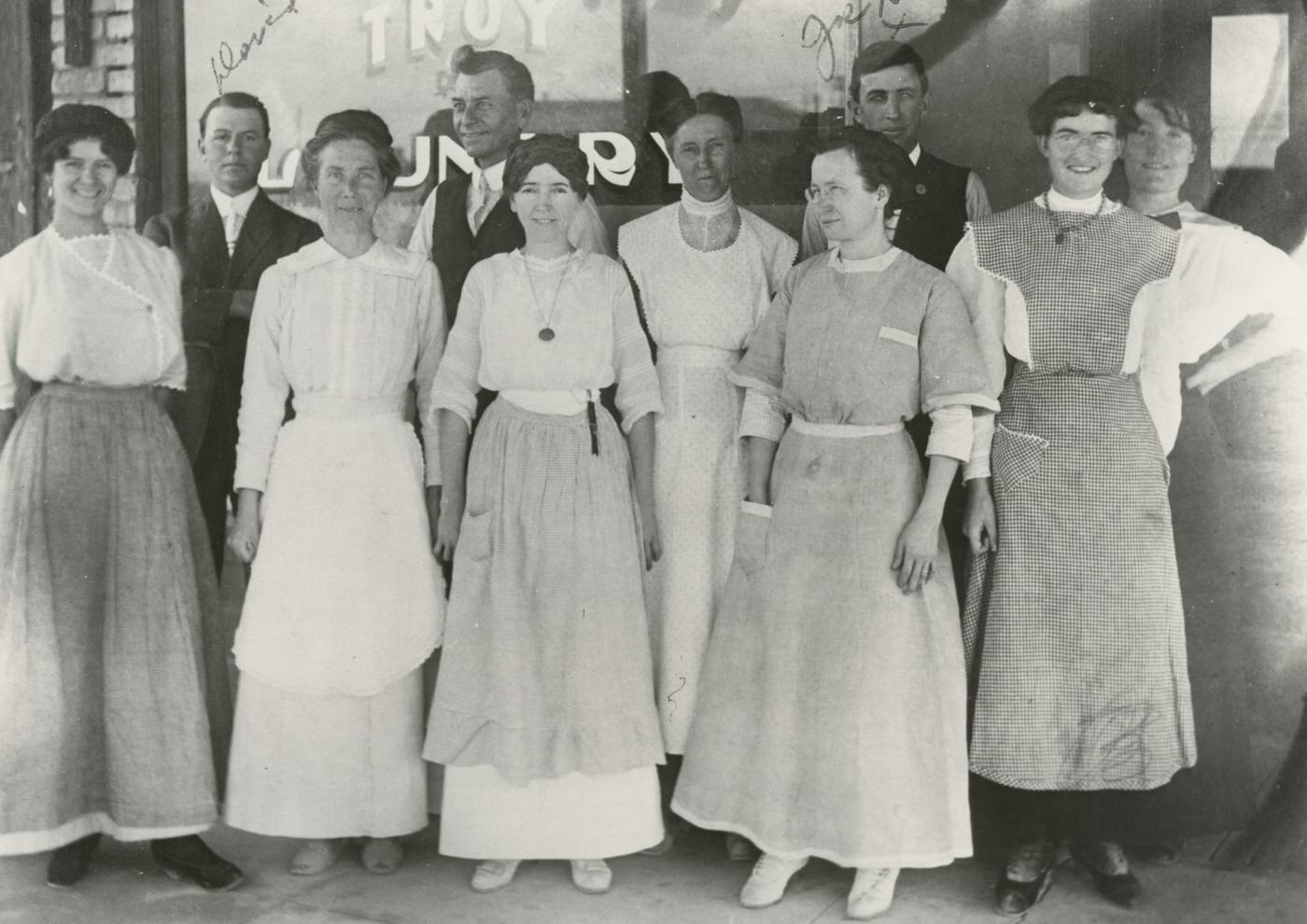
Las Vegas at the End of the 1910s
The 1910 census had counted 945 people in Las Vegas. The 1920 census would count 2,304 — a significant percentage increase, but still a tiny town by any national standard. Fresno, California, had more than 45,000 people in 1920. Reno, Nevada’s largest city, had about 12,000. Las Vegas was a small settlement at the end of a decade spent navigating the loss of its mining economy, the expansion of its farming sector, the loss of legal gambling and the coming loss of legal alcohol, and the disruptions of a world war.
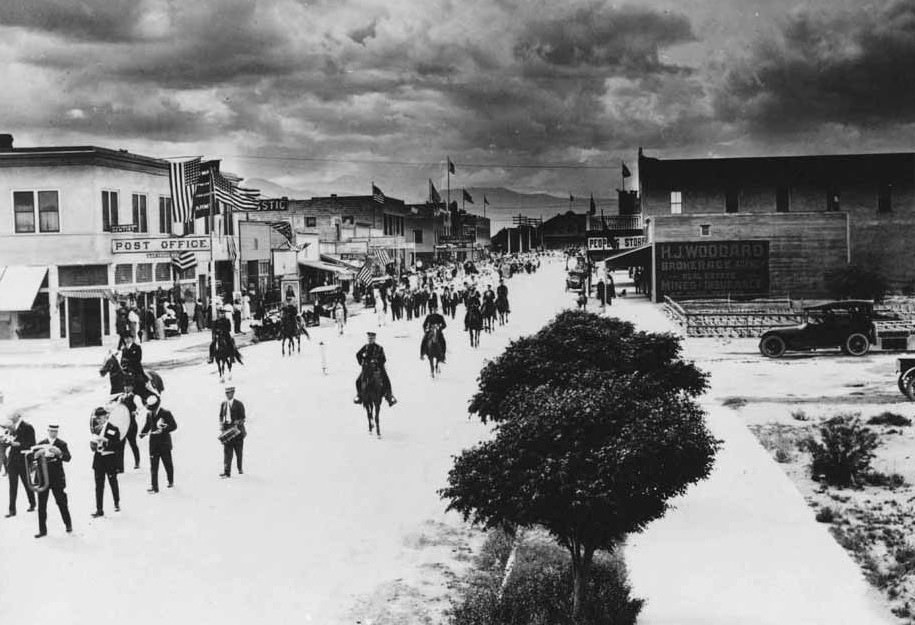
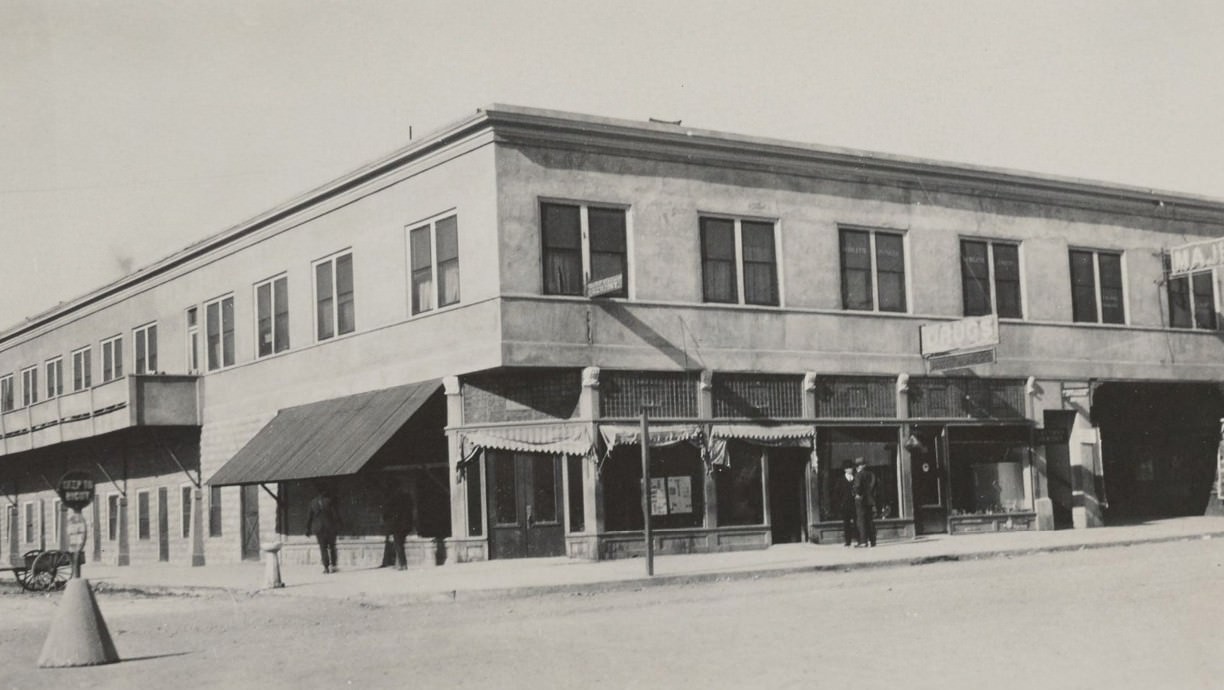
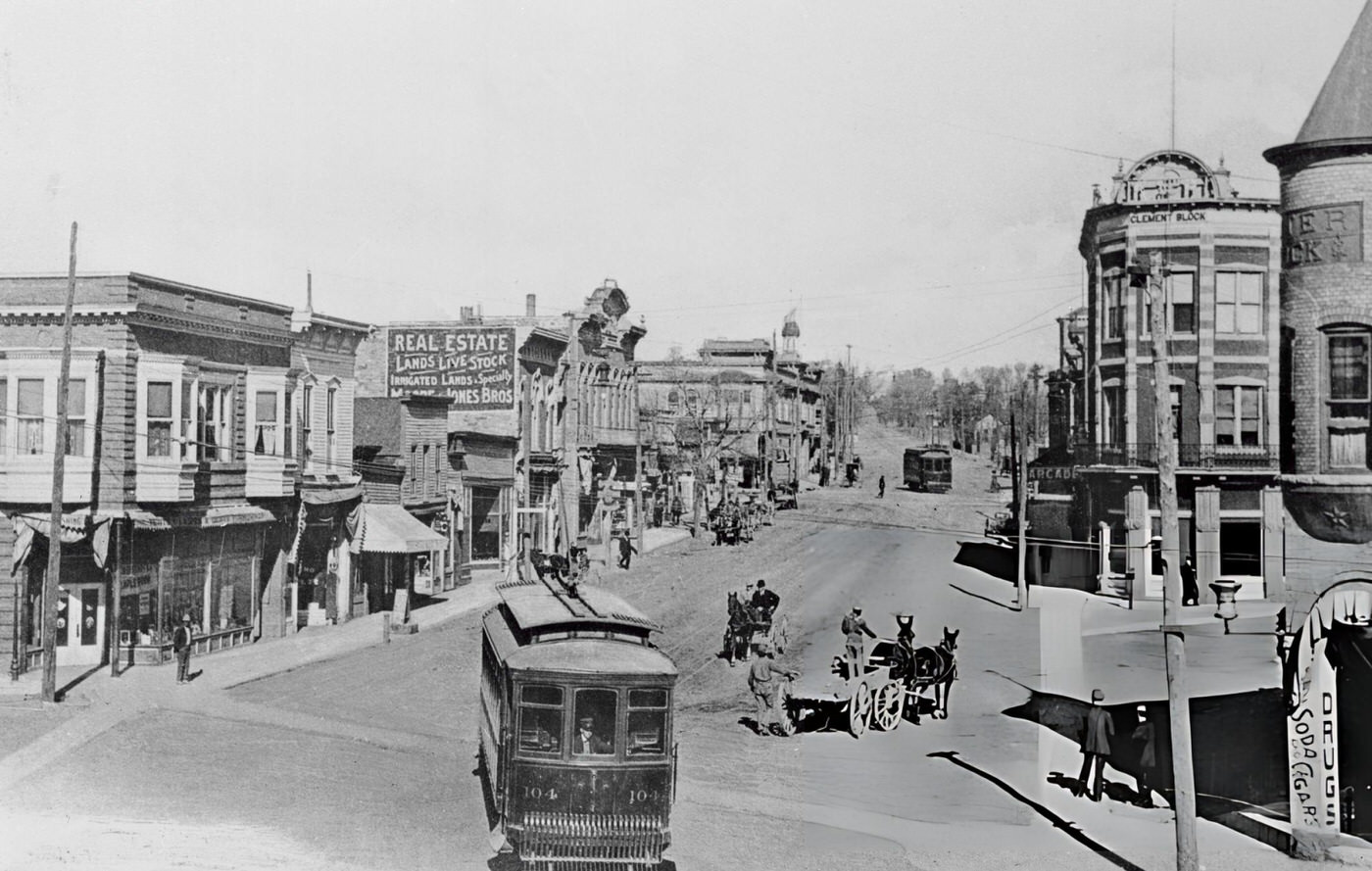
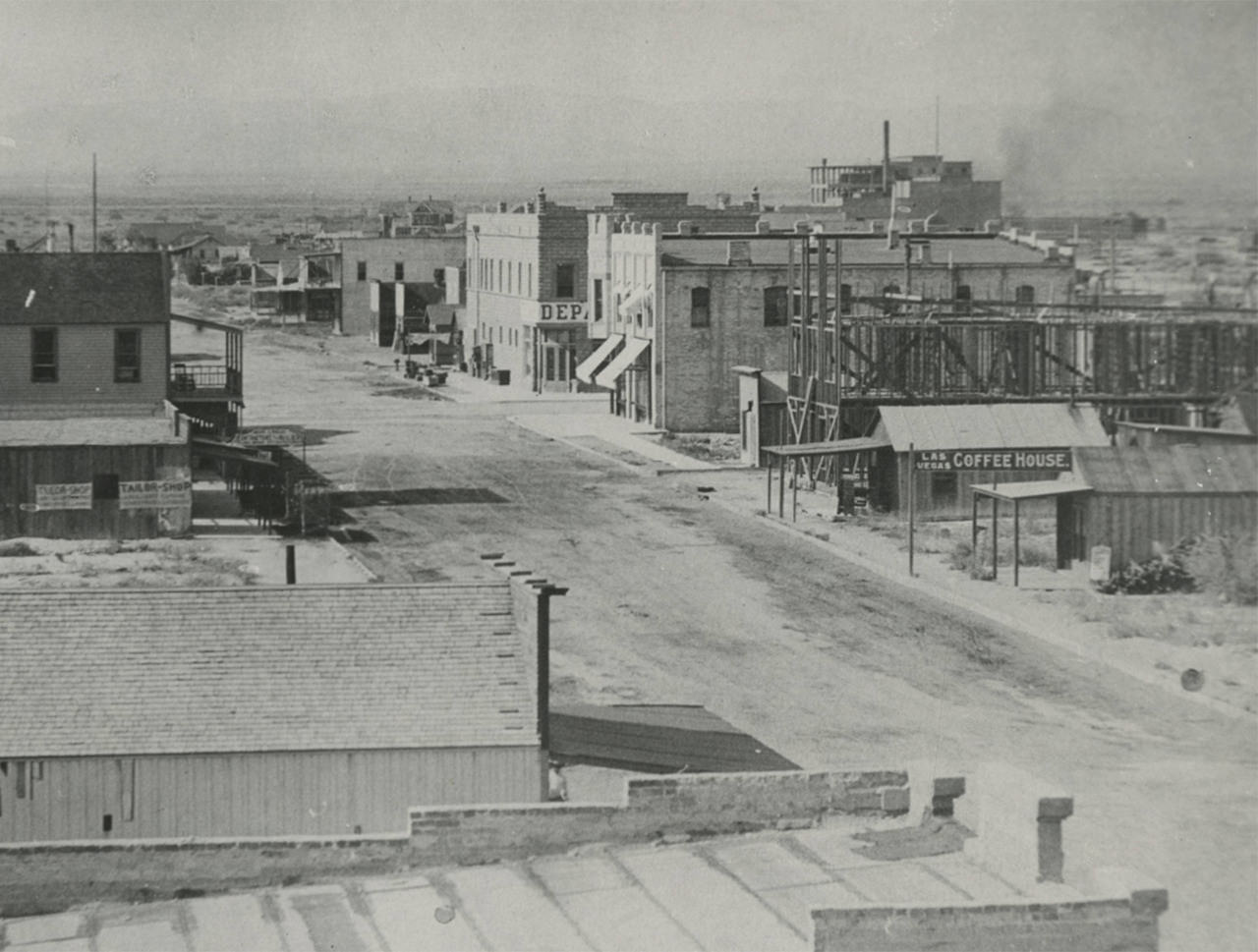
Fremont Street in 1919 had more businesses than it had in 1909, but not dramatically more. The buildings were a little more solid. The population had more women and children in it, which meant more stability and more demand for schools and churches and less dependence on Block 16’s economy. The automobile was beginning to change how people thought about distance, though the roads weren’t yet good enough to act on that change.
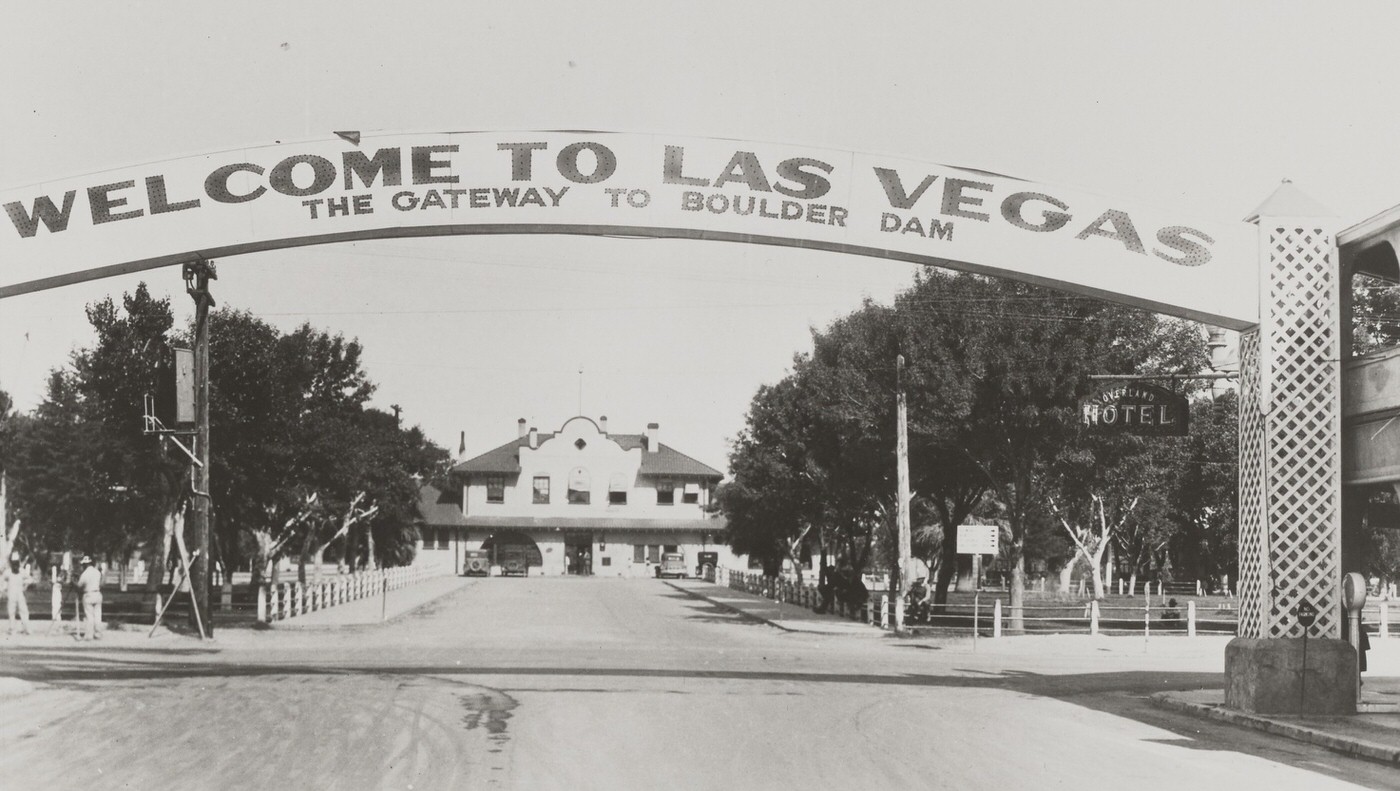
The decade’s real work was quiet. Las Vegas in the 1910s built the governmental structures, the civic organizations, the agricultural base, and the residential culture that a permanent town requires. None of that made headlines. None of it attracted attention from outside Nevada. But without it, the larger transformations that were coming in the 1930s — the dam, the gambling, the resort hotels — would have had nothing to build on.
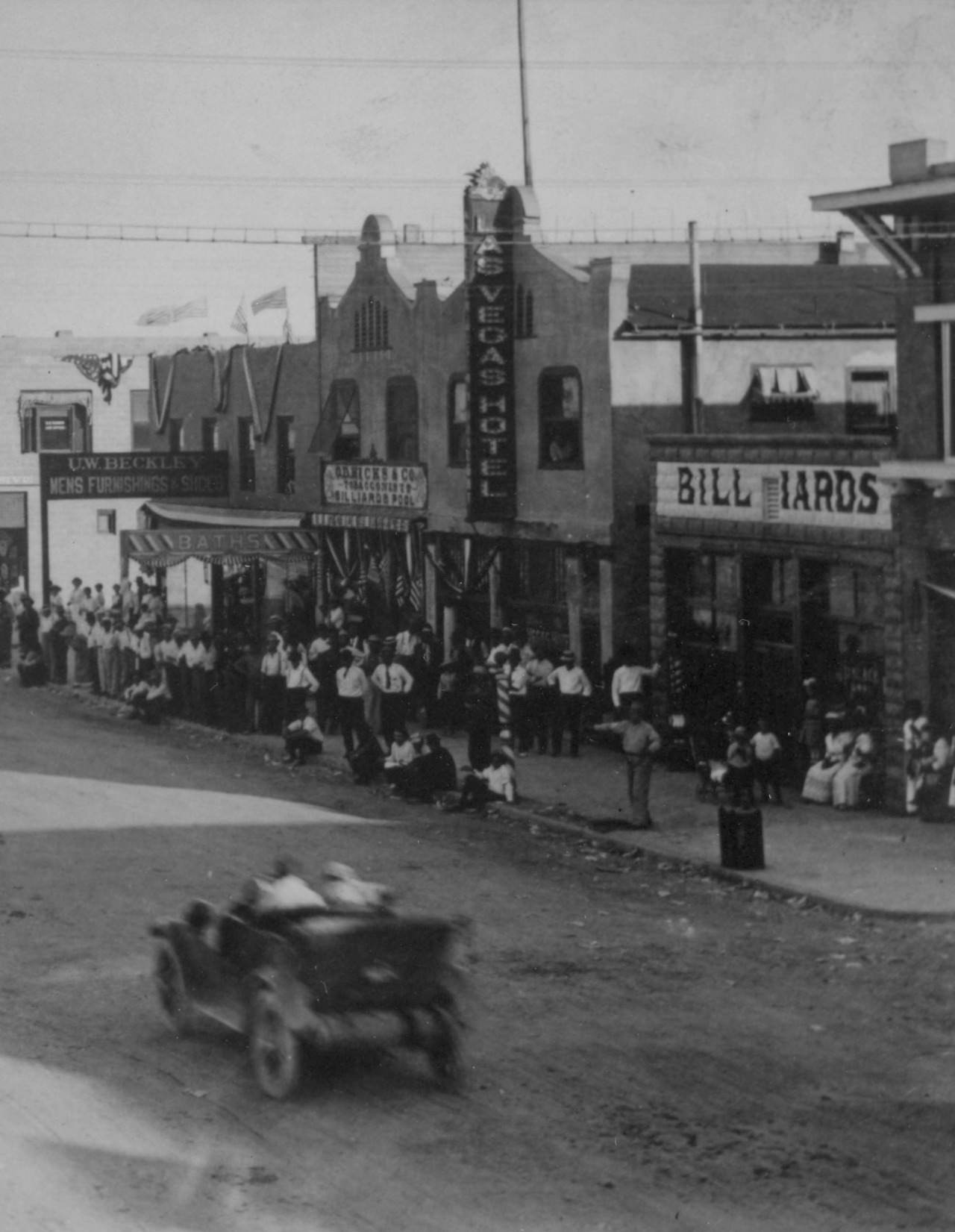
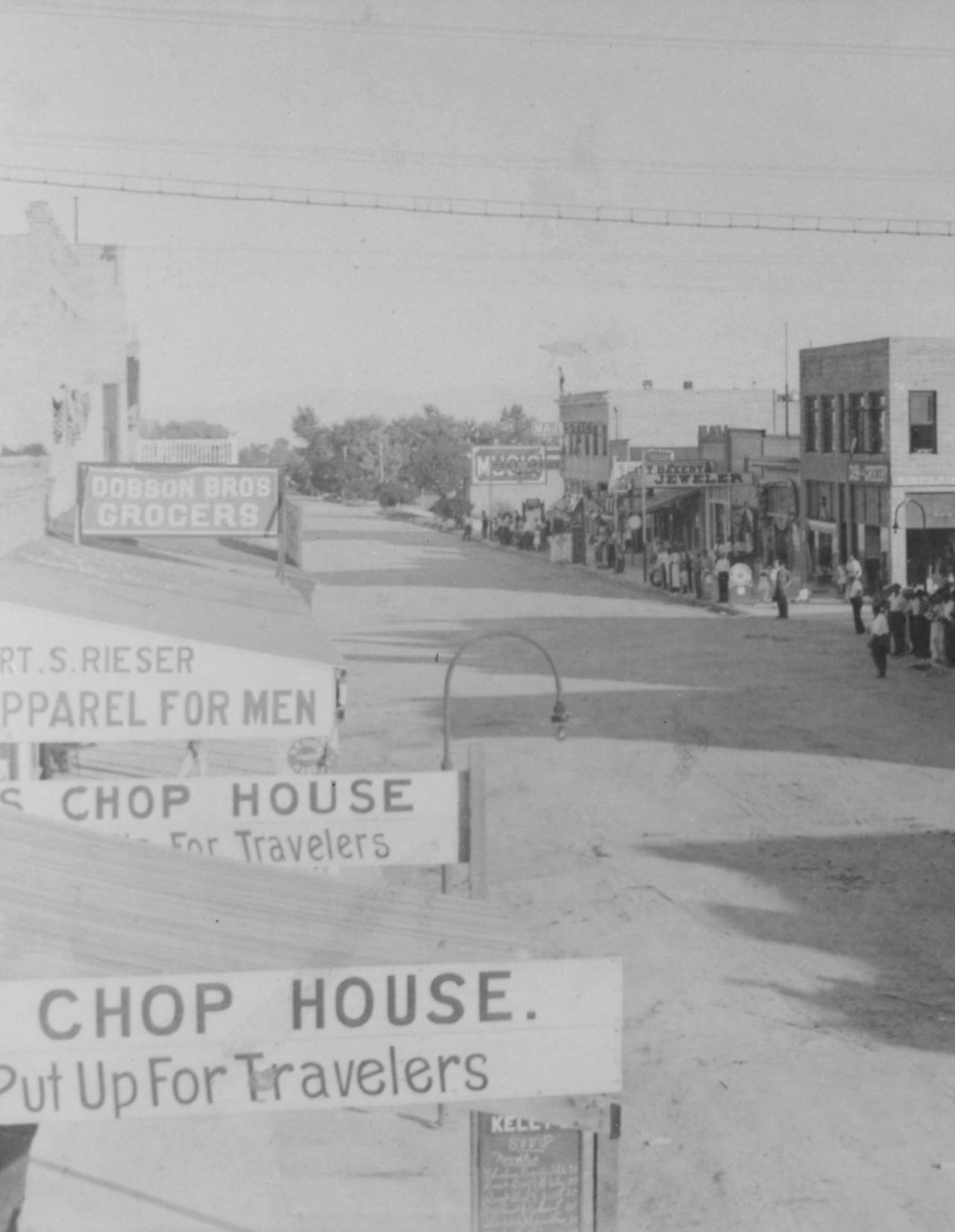
Image Credits: UNLV Special Collections, George Wharton James Papers, Wikimedia, Ferron-Bracken Collection, Sunnie Gillette Collection, Nevada State Museum, Ferron and Bracken Photograph Collection,
Found any mistakes? 🥺 Let us Know
